
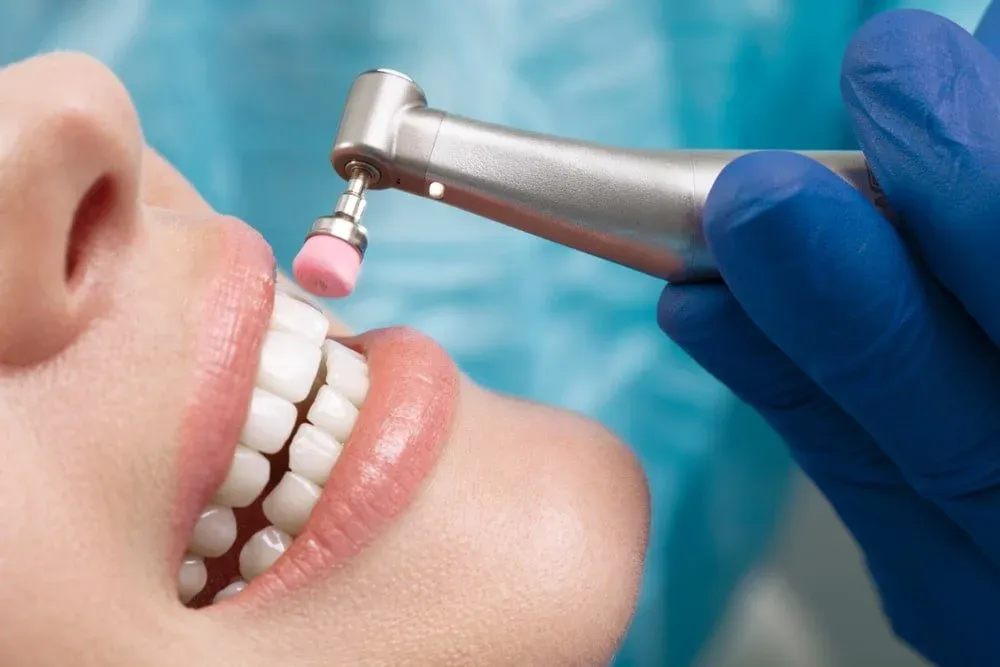
Scaling and root planing is a deep cleaning below the gumline that treats gum disease. Scaling removes plaque and hardened tartar from the teeth and roots inside the gum pockets, and root planing smooths the root surfaces so the gums can heal and tighten back around the teeth.
It is usually the first step in treating periodontitis without surgery. Here is how it differs from a regular cleaning and what recovery is like.
Deep cleaning vs regular cleaning
A regular cleaning is for gums that are healthy or only mildly inflamed. A deep cleaning is treatment for gum disease that has reached below the gumline. There is also a third term you may hear, full mouth debridement, which is something different again.
| Regular cleaning | Scaling and root planing | Full mouth debridement | |
|---|---|---|---|
| Purpose | Keep healthy gums healthy | Treat gum disease | Clear heavy tartar so the mouth can be examined |
| Where it cleans | Tooth surfaces and just under the gumline | Deep into gum pockets, down the roots | Mainly the heavy buildup on the teeth |
| Freezing | Not usually needed | Usually, local anesthetic | Sometimes |
| What comes next | Your next routine cleaning | A re-check, then a periodontal maintenance schedule | A full exam, then a cleaning or deep cleaning |
What is full mouth debridement?
Full mouth debridement is a preliminary cleaning used when tartar is so heavy that the dentist cannot see the teeth and gums clearly or measure the gum pockets. It removes enough buildup to allow a proper exam at a later visit. It is not a treatment for gum disease on its own, so it is followed by either a regular cleaning or scaling and root planing, depending on what the exam finds.
Why you might need scaling and root planing
Gum disease starts as gingivitis, where the gums are red, puffy and bleed easily. The American Dental Association explains that gingivitis is still reversible and can usually be eliminated by a professional cleaning. If it is left, it can progress to periodontitis, where the gum and bone that support the teeth start to break down and pockets form between the gums and the teeth.
Once tartar sits inside those pockets, a toothbrush and floss cannot reach it. Our post on plaque vs tartar explains why hardened tartar has to be removed professionally.
Signs that a deep cleaning may be needed include:
- Gums that bleed when you brush or floss
- Red, swollen or tender gums
- Bad breath or a bad taste that keeps coming back
- Gums pulling back so teeth look longer
- Teeth that feel loose or have started to shift
To confirm it, your dentist or hygienist uses a periodontal probe, a thin instrument marked like a small ruler, to measure the space between each tooth and the gum. Healthy gums usually measure around 1 to 3 millimetres. Deeper readings, especially with bleeding, along with bone loss on X-rays, point to periodontitis. Cleveland Clinic describes how these measurements are used to stage the disease.
What happens during the appointment
According to Cleveland Clinic, a deep cleaning takes one to two hours in total and can be done in one visit or split over two, with half of the mouth treated at each appointment.
- Freezing. Local anesthetic numbs the area being treated, so you feel pressure and vibration rather than sharp discomfort.
- Scaling. An ultrasonic scaler uses vibration and water to break up tartar, and hand instruments remove what is left, above and below the gumline.
- Root planing. The root surfaces are smoothed so bacteria have a harder time sticking and the gums can reattach more closely.
- Rinsing and checking. The pockets are flushed and checked. In some cases an antibiotic is placed in the pockets or prescribed afterwards.
If dental anxiety makes longer appointments hard, ask about sedation dentistry options before booking.
Recovery and aftercare
Many people go back to their normal routine the same day. What you might notice afterwards:
- Sore gums for a couple of days. Over the counter pain relief can help.
- Sensitivity to hot and cold, which Cleveland Clinic says should settle within a month or two. Our guide to teeth sensitive to cold has tips that help in the meantime.
- A little bleeding when you brush for the first few days.
- Teeth that feel slightly loose until the gums tighten up.
- Small gaps between teeth or teeth that look a little longer, as swollen gums shrink back to a healthier shape.
To help the gums heal:
- Wait until the freezing wears off before eating, so you do not bite your cheek or tongue.
- Stick to softer foods for a day or two and avoid very hot, spicy or crunchy foods.
- Rinse gently with warm salt water.
- Keep brushing with a soft brush and keep cleaning between your teeth, even if your gums bleed a little at first.
- Avoid smoking, which slows healing and makes gum disease harder to control.
Call the clinic if bleeding will not stop, pain relief does not help or swelling gets worse.
After treatment: re-checks and maintenance
After the gums have had a few weeks to heal, the pockets are measured again to see how they have responded. Many pockets become shallower as inflammation settles. Areas that stay deep may need more treatment, sometimes with a periodontist.
Periodontitis can be controlled, but it is not cured. Bone that has been lost does not grow back on its own, and bacteria can build up in the pockets again over time. That is why a deep cleaning is followed by periodontal maintenance: regular professional cleanings on a schedule set for you, often more frequent than a standard cleaning. Ideally, with good home care and regular maintenance, you will not need scaling and root planing again.
Cost and insurance
The cost of scaling and root planing depends on how many areas need treatment and how much time it takes, so it is confirmed after your exam. Coverage for periodontal treatment varies between insurance plans, so it is worth checking yours.
At Vigée Dental, our hygiene team uses ultrasonic and hand scaling, and when gum disease is present we recommend scaling and root planing followed by a periodontal maintenance schedule. We are fee for service, we help you submit insurance claims, and financing is available. Book a hygiene appointment online.
Frequently asked questions
Does scaling and root planing hurt?
The area is frozen first, so many people feel pressure and vibration rather than pain during treatment. Your gums may be sore and your teeth sensitive for a few days afterwards.
How long does a deep cleaning take?
About one to two hours in total. It can be done in one visit or split over two appointments, with half of the mouth treated each time.
Can a deep cleaning loosen teeth?
Teeth can feel slightly loose for a short time while the gums heal. The cleaning itself does not loosen teeth. Any looseness usually comes from bone already lost to gum disease, and removing the tartar helps the gums tighten around the teeth.
Will I need scaling and root planing again?
Ideally it is a one time treatment. Keeping up your periodontal maintenance visits and daily cleaning at home is what helps keep gum disease from coming back.