
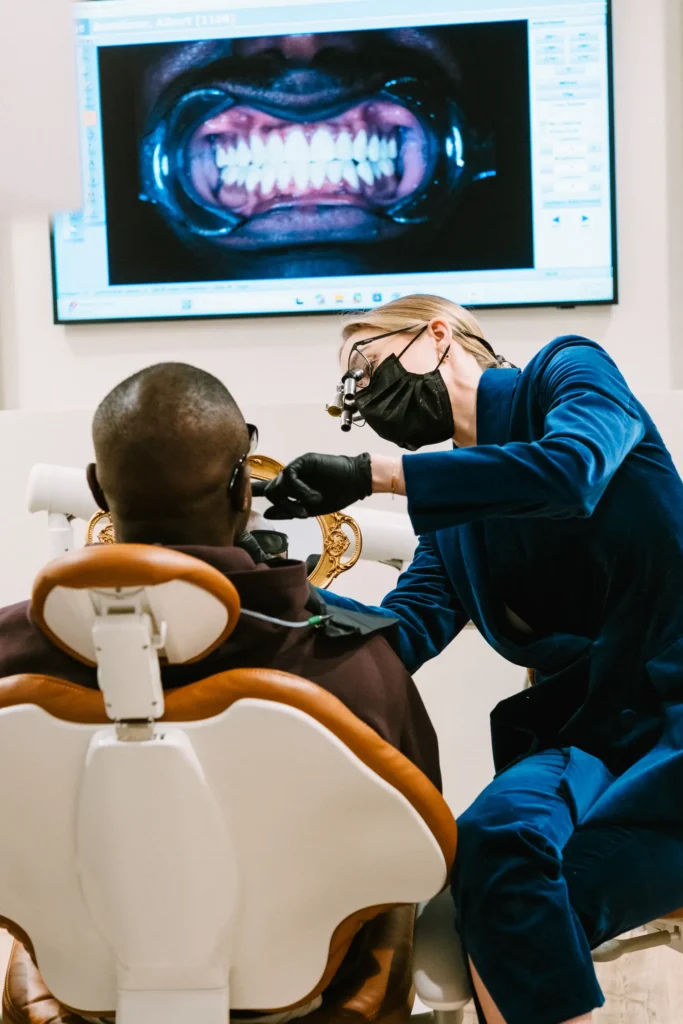
Gum recession happens when the gum tissue around a tooth pulls back and exposes more of the tooth, and sometimes the root. It usually develops slowly, so many people do not notice it until a tooth starts to feel sensitive or looks longer than it used to.
The good news is that recession can almost always be slowed or stopped once the cause is found. This guide covers why it happens, how to spot it early and what treatment looks like at each stage.
What causes gums to recede?
Recession rarely has a single cause. Many people have two or three of these at once:
- Gum disease. Bacteria along and below the gumline cause inflammation that gradually destroys the gum and bone holding teeth in place. This is a common cause in adults.
- Brushing too hard. A hard-bristled brush or a vigorous scrubbing motion can wear the gum away, usually on the teeth that are easy to reach.
- Thin gum tissue. Some people are born with thinner, more delicate gums that recede more readily, even with good care.
- Clenching and grinding. Heavy, repeated forces on teeth can contribute to recession and to notches along the gumline.
- Tooth position. Teeth that sit further forward in the arch, or that were moved outward during orthodontic treatment, can have very little bone and gum covering them.
- Smoking and vaping, which reduce blood flow to the gums and slow healing.
- Lip and tongue piercings that repeatedly rub against the same patch of gum.
Who is at risk?
Recession becomes more common with age, but it is not simply a part of getting older. You are at higher risk if you have a history of gum disease, a family history of thin gums, crowded or protruding teeth, a clenching or grinding habit, or if you smoke or vape. People with diabetes also tend to have a higher risk of gum problems in general.
Early signs to watch for
- Teeth that look longer than they used to
- Sensitivity to cold, sweet or brushing near the gumline
- A notch or ledge you can feel with a fingernail where the tooth meets the gum
- A yellowish root surface showing near the gum
- Small dark gaps opening between teeth near the gums
- Gums that bleed, look red or feel tender
Recession is easy to miss in a mirror because it happens so gradually. At a checkup, your dental team measures how much root is exposed so any change over time is visible.
Why gum recession matters
The crown of a tooth is protected by enamel, a very hard outer layer. The root is not. It is covered by a much softer layer, so once it is exposed it is more prone to:
- Sensitivity, because tiny channels in the root lead towards the nerve
- Wear, from brushing and from acidic food and drink
- Decay, which can progress faster on root surfaces than on enamel
If the recession is caused by gum disease, the bone supporting the tooth can also be lost. Over time that can loosen teeth. This is why recession is worth taking seriously even when it does not hurt.
Can receding gums grow back?
Gum tissue does not grow back on its own once it has receded. Products that claim to regrow gums at home do not do this. What you can do is stop the recession getting worse, protect the exposed root and, where it is needed, restore lost tissue with a gum graft.
How gum recession is treated
Treatment depends on the cause and on how far the recession has progressed.
Early or mild recession
- Treating inflammation. A professional cleaning removes plaque and tartar, and a deeper cleaning below the gumline may be recommended if gum pockets have formed.
- Changing how you brush. A soft brush, light pressure and a gentle circular motion protect the tissue you have. An electric brush with a pressure sensor can help people who brush hard.
- Managing sensitivity. Desensitising toothpaste at home and fluoride treatments in the office calm exposed roots.
Moderate recession
- Bonding. Tooth-coloured material can cover exposed root surfaces and fill notches at the gumline, which protects the root and often reduces sensitivity.
- A night guard. If clenching or grinding is contributing, a custom guard reduces the load on your teeth while you sleep.
Advanced recession
- Gum grafting. A gum specialist (periodontist) takes tissue, often from the roof of the mouth, or uses donor tissue, and places it over the exposed root. Grafting can cover roots, thicken thin gums and help stop further recession.
How to prevent gum recession
- Brush twice a day with a soft brush and light pressure
- Clean between your teeth every day with floss, interdental brushes or a water flosser
- Keep up with regular hygiene visits, so early changes are caught while they are small
- Avoid smoking and vaping
- Wear a night guard if you clench or grind
- Ask about your gum health before starting orthodontic treatment
Gum care at Vigée Dental
Our hygiene visits are tailored to your own gum health rather than a fixed schedule, and we look at contributing factors like your bite and clenching, not just the gums themselves. If you have noticed sensitivity or teeth that look longer, learn about our dental hygiene care or book a visit online.
Frequently asked questions
Is gum recession serious?
It is common and often mild, but it should not be ignored. Left unchecked it can lead to sensitivity, root decay and, when gum disease is involved, loose teeth.
How fast do gums recede?
Usually slowly, over months or years. Faster changes can happen with active gum disease, which is one reason regular checkups matter.
Can brushing cause receding gums?
Yes. Brushing too hard, or with a hard brush, is a common cause. Gentle brushing with a soft brush is enough to remove plaque.
Does gum recession always need a graft?
No. Many cases only need the cause addressed and the area monitored. Grafting is usually reserved for more advanced recession, very thin gums or roots that are at risk.