
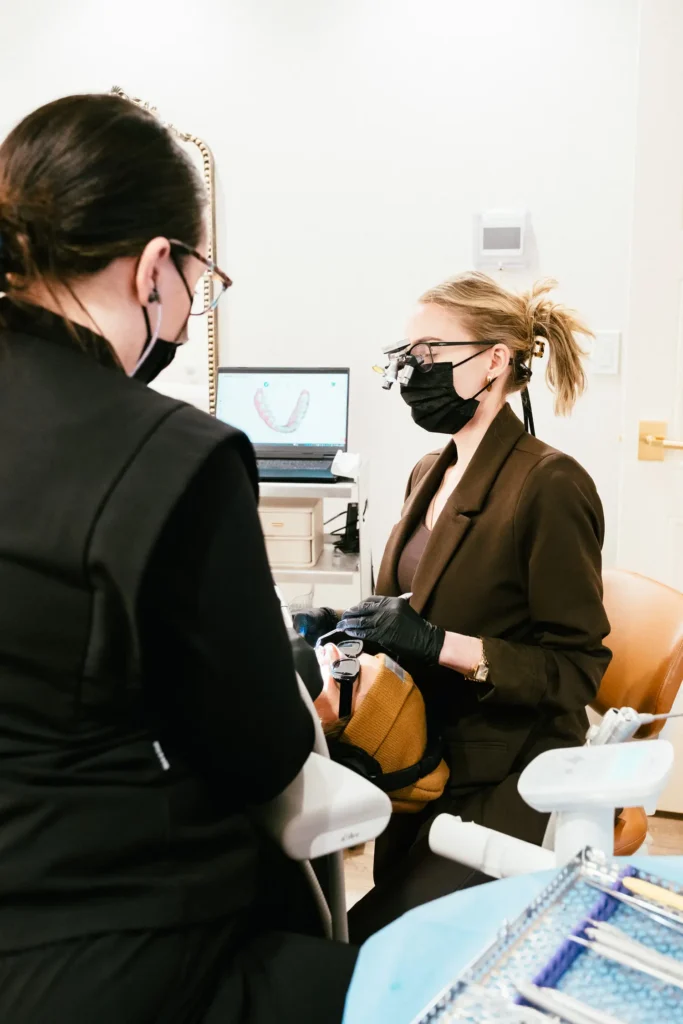
Plaque and tartar are often mentioned together, and they are closely related, but they are not the same thing. The difference matters, because one you can deal with at home and the other you cannot.
What is plaque?
Plaque is a soft, sticky film of bacteria that forms on your teeth every day. It is usually colourless or pale yellow, and you can often feel it as a fuzzy coating when you run your tongue over your teeth before brushing.
The bacteria in plaque feed on sugars and produce acids. Those acids can soften enamel and lead to cavities, and the bacteria irritate the gums, which is how gum disease starts.
The good news: plaque is soft, so brushing and cleaning between your teeth removes it.
What is tartar?
Tartar, also called calculus, is plaque that has hardened. Minerals from your saliva build up in plaque that is left on the teeth, and it can begin to harden within a day or two.
Tartar is rough and firmly attached to the tooth. It is often yellow, brown or darker, and it collects mainly along the gumline and behind the lower front teeth, near the salivary glands.
Once tartar has formed, brushing will not remove it. It needs to be cleaned off by a dental hygienist or dentist.
Plaque vs tartar at a glance
| Plaque | Tartar | |
|---|---|---|
| Texture | Soft and sticky | Hard and rough |
| Colour | Colourless to pale yellow | Yellow, brown or darker |
| Forms | Continuously, every day | When plaque is left on teeth and hardens |
| Removed by | Brushing and cleaning between teeth | Professional cleaning only |
| Main risks | Cavities, gum inflammation | Gum disease, staining, more plaque build-up |
Why tartar is a problem
- It traps more plaque. Its rough surface gives bacteria an easy place to collect.
- It irritates the gums. Tartar along and below the gumline keeps the gums inflamed, which can lead to bleeding, recession and gum disease.
- It stains. Tartar absorbs colour from coffee, tea, wine and smoking.
- It is hard to clean around. Brushing and flossing become less effective once tartar has built up.
Can I remove tartar at home?
Not safely. Scraping at tartar with sharp tools can damage your enamel and gums. “Tartar control” toothpaste helps slow new tartar forming, but it does not remove what is already there.
How to prevent plaque and tartar
- Brush twice a day for two minutes with a fluoride toothpaste and a soft brush.
- Clean between your teeth every day. Floss, interdental brushes or a water flosser reach where a brush cannot.
- Pay attention to the gumline and the backs of your lower front teeth.
- Limit frequent sugary snacks and drinks, which feed plaque bacteria.
- Drink water through the day.
- Keep up with professional cleanings to remove tartar before it causes problems.
How often should you get your teeth cleaned?
You will often hear “every six months”, and that suits many people. But the right interval depends on you. People who build tartar quickly, have a history of gum disease, have diabetes, smoke, are pregnant or have braces or implants may benefit from more frequent visits. Others with very healthy gums and low risk may do well with longer intervals.
At Vigée Dental, we set your hygiene schedule around your own gum health and risk, rather than a one-size-fits-all rule.
Regular cleaning or deep cleaning?
A regular cleaning removes plaque and tartar from the tooth surfaces above and just below the gumline. It is for healthy gums or mild inflammation.
A deep cleaning, also called scaling and root planing, reaches further below the gumline to clean tartar and bacteria from deeper pockets around the roots. It is recommended when gum disease has created those pockets. It is usually done with local anaesthetic, sometimes over more than one visit.
Book a cleaning in Calgary
Learn about our dental hygiene and teeth cleanings, read about proactive dentistry, or book your cleaning online.
Frequently asked questions
Does tartar come back after a cleaning?
It can, because plaque forms every day. Good home care slows it down, and regular cleanings remove any that builds up.
Is it bad to have tartar on your teeth?
Yes. Tartar keeps the gums inflamed and makes plaque easier to collect, which raises the risk of gum disease.
Why does tartar build up faster for some people?
Saliva chemistry, diet, home care, tooth position and some medical conditions all play a part. Some people simply form tartar faster than others.
Does a professional cleaning hurt?
Cleanings are usually comfortable. If your gums are inflamed or sensitive, tell your hygienist, who can adjust the approach or use numbing where needed.