

A judgment-free dentist is one who treats the state of your teeth as a clinical starting point, never as a verdict on you. In practice that means no lectures about the years you stayed away, a clear explanation of every step, a say in the pace of your care, and a plan that begins with what matters most. At Vigée Dental in Calgary, this is how we aim to practise. Below you will find what to look for, what to say on the phone, what a first visit after a long gap involves, and how to talk about cost without stress.
TL;DR
- Judgment-free care shows up in behaviour: you are listened to, told what will happen and why, and given a plan that starts with the most urgent needs.
- Embarrassment about your teeth and fear of feeling out of control are two of the common reasons people avoid the dentist, according to Alberta Health Services. You are far from alone.
- After years away, expect X-rays and possibly a deep cleaning, then a prioritized treatment plan.
- Comfort tools exist, from hand signals to sedation. Tell your dentist about nerves, medications and recent alcohol use before any sedation.
- Ask for an estimate before treatment. Fair, clear communication about money is part of care without judgment.
Table of Contents
- What “judgment-free” means in a dental office
- Why so many people avoid the dentist
- How to tell a dentist you are nervous
- Pain control and sedation: how they differ
- What happens at a first visit after years away
- Talking about cost without feeling judged
- Care for the whole family
- When your goal is a better smile
- Our perspective
- How to choose a dentist who will not judge you
- Book a first visit at Vigée Dental
- FAQ
- Sources
What “judgment-free” means in a dental office
The phrase gets used a lot, so it helps to make it concrete. Nobody can promise to feel nothing about your teeth. A dentist has to look closely and describe what is there. What you can expect is that the description is factual and kind, and that it leads somewhere useful.
Here is what that looks like when it is done well:
- No shaming about the gap. Whether it has been two years or fifteen, the question is what we do now, not why you waited.
- Plain explanations. You hear what the dentist sees, what it means and what the options are, without jargon.
- Your pace. You can pause, ask questions or ask us to stop. Hand signals are agreed before we begin.
- Priorities, not a wall of work. A large list is sorted into what is urgent, what is important and what can wait or is optional.
- Honest conversation about cost. You get an estimate before treatment, not a surprise afterwards.
If you searched for a non-judgmental dentist or for pain-free dental care, you are probably looking for both halves of the same thing: a person who respects you and a visit that does not hurt. They go together. People who expect to be judged tend to put things off, and people who put things off often end up with problems that are harder to treat.
Why so many people avoid the dentist
Alberta Health Services lists several common reasons for dental anxiety: a painful past experience, feeling helpless or out of control in the chair, embarrassment about the condition of your teeth, hearing about someone else’s bad experience, and fear of the unknown.
Three of those five are about control and judgment rather than pain itself. That is why a clinic’s atmosphere matters as much as its equipment. A gentle hand helps, but so does a team that never makes you feel small.
If any of these sound like you, a few points are worth knowing:
- Avoidance is common, and dentists see it every week.
- Feeling embarrassed does not mean your situation is unusual. Teeth that have been neglected for a while are a routine clinical picture.
- The longer you wait, the more a visit tends to involve, so the kindest thing you can do for yourself is book the first appointment.
How to tell a dentist you are nervous
You do not need a script, but a few simple moves make a big difference. These come from the advice Alberta Health Services gives patients with dental anxiety.
- Say you are nervous, and say why. “I had a painful experience as a kid” or “I’m embarrassed about my teeth” gives us something to work with.
- Ask what will happen and why at each step. Knowing what comes next removes much of the fear of the unknown.
- Book a time when you are not rushed. A calm slot, not one squeezed between work and pickup, lowers the pressure.
- Bring headphones and music.
- Agree on a hand signal. Raising a hand to pause gives you back control.
- Use relaxation techniques, such as slow breathing.
- Switch dentists if you feel unheard. The same guidance says this plainly, and we agree. The right fit matters.
You can say all of this when you call to book. A good front desk will note it, and the clinical team will plan the visit around it.
Pain control and sedation: how they differ
Pain-free care is a real goal, and it has several tools. The Canadian Dental Association notes there is no one-size-fits-all approach to managing dental pain. Dentists recommend what suits your needs, your overall health and the procedure being done.
In simple terms:
- Pain control keeps you from feeling the procedure, and afterwards helps with soreness. For afterwards, the CDA mentions options such as over-the-counter ibuprofen or acetaminophen, and in some cases short-term prescription medication taken as directed.
- Sedation is about your state of mind. It helps anxious patients, people with a strong gag reflex and those facing longer visits to relax or rest through treatment.
If we are planning sedation, the CDA asks patients to share every medication and supplement with their dentist, including natural supplements, edibles, marijuana, heart medication, insulin and benzodiazepines, and to mention recent alcohol use. That information keeps sedation safe, so please give it in full. There is no judgment attached to any of it.
The CDA’s position on prescribing also points to shared decision-making: your dentist should discuss risks, benefits, alternatives and the pain you can expect afterwards, and be clear that pain relief medication reduces pain but is unlikely to remove it completely. We think that honesty is a form of respect.
At Vigée Dental we offer sedation dentistry, and you can read about laughing gas, oral and IV options before you decide what you want to discuss.
What happens at a first visit after years away
This is the part most people dread, so here it is without drama. For a new patient, or someone who has not been in more than a couple of years, WebMD describes a visit that usually includes X-rays for a full look at your teeth, gums and supporting bone. It also suggests planning for a deep cleaning, because hard tartar builds up over time. The dentist then recommends a treatment plan that addresses the most needed care first.
Here is how that might unfold in our Calgary clinic:
- A conversation first. Before anyone looks in your mouth, we ask what brought you in, what worries you and what you want from the visit.
- An exam and imaging. We explain what we are doing as we go, and you can pause us at any point.
- A clear picture. We show you what we see and explain it in everyday words.
- A prioritized plan. Urgent issues like pain or infection come first. Gum health and cleaning follow. Cosmetic goals come when you are ready.
- An estimate. You know the costs before you agree to anything.
If gum health is the issue, our dental hygiene and teeth cleaning team handles deep cleaning for gum health. If something hurts right now, our emergency dentistry service is there so you do not have to wait it out.
How often should you come back?
The Canadian Dental Association says that for many people an exam every six months is the goal, in order to catch small problems early. The right schedule depends on your hygiene habits, history of cavities or gum disease, how fast tartar builds up, whether you smoke and your overall health. The same CDA FAQ advises against judging your need for care by what your dental plan covers. We tailor the interval to you rather than defaulting to a standard schedule.
Talking about cost without feeling judged
Money is another place people feel judged, so it deserves a straight conversation. The Alberta Dental Association advises that dentists give patients an estimate before proceeding with any service, and that they send a predetermination to your plan so coverage is known before treatment begins. It also encourages patients to ask about payment options if finances are tight. See its guidance for patients.
Two things from that guidance are worth using:
- Fees vary because everyone’s dental needs are different, and you can call offices to compare fees on common services such as a recall exam or X-rays.
- It is reasonable to ask what happens if you do not go ahead with a recommended treatment. Understanding expectations upfront makes a big difference.
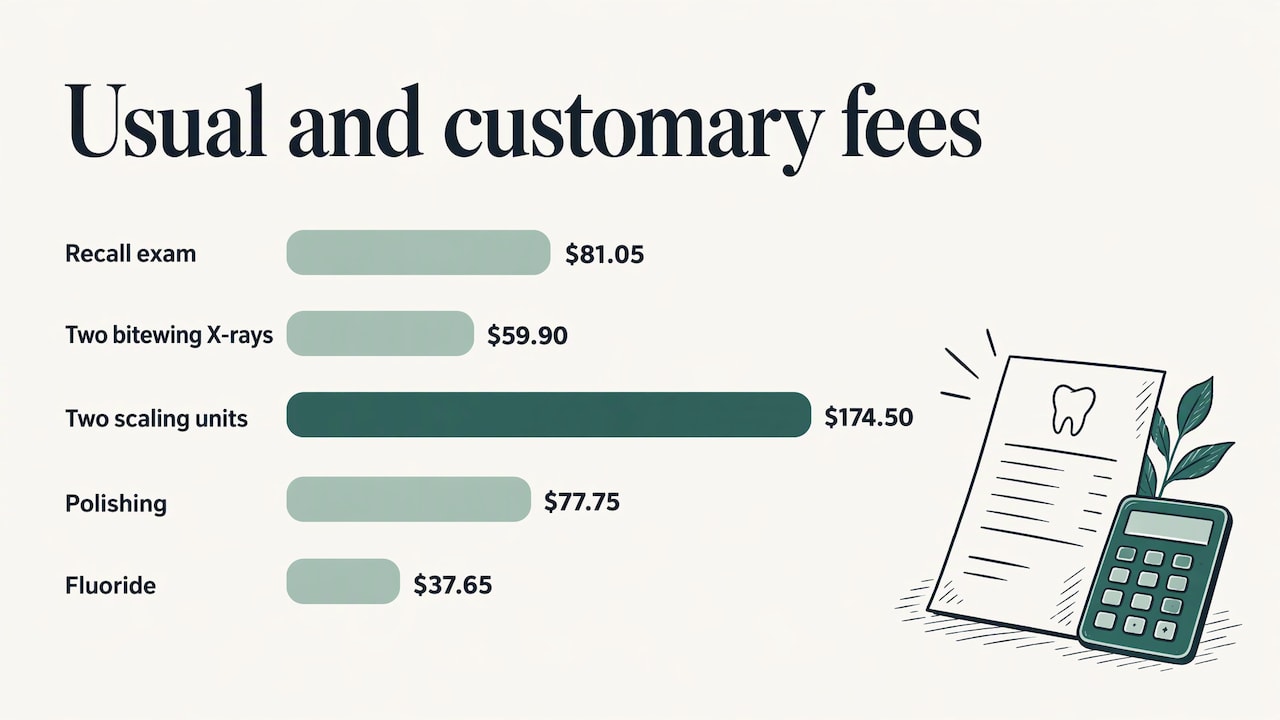
For reference, the 2026 Alberta Blue Cross usual and customary fee guide used by the City of Edmonton lists a recall exam at $81.05, two bitewing X-rays at $59.90, two units of scaling at $174.50, polishing at $77.75 and fluoride at $37.65, with a typical adult recall and cleaning visit totalling $430.85. Individual clinics set their own fees. We explain how the guide works in our Alberta dental fee guide for patients, and our page on dental cleaning cost in Calgary covers what cleanings involve.
Public programs that may help
Depending on your situation, these may help with costs. Eligibility and limits change, so confirm the details with each program.
| Program | Who it may help | Worth knowing |
|---|---|---|
| Canadian Dental Care Plan (CDCP) | Canadians without private dental insurance and with adjusted family net income under $90,000 | Not renewed automatically; dentists may charge beyond CDCP fees, so ask upfront (Alberta Dental Association) |
| Dental and Optical Assistance for Seniors | Eligible Alberta seniors | Up to $5,000 every 5 years for select services; the fee schedule may not cover full fees (Alberta.ca) |
| AHS public health dental clinics | Eligible low-income individuals or families without insurance | Fees about 20% of the Alberta Fee Guide; treatment is emergency or problem-based (Alberta Health Services) |
The CDCP is administered through Sun Life and covers services from cleanings and X-rays to restorative treatment. Alberta programs such as the Alberta Child Health Benefit, AISH and Income Supports may work alongside it, with coverage coordinated to avoid double-billing. Ask any dental office, ours included, how your coverage would apply before you book treatment.
Care for the whole family
A judgment-free approach should start early. Children who learn that the dentist is a safe, friendly place tend to carry that into adulthood, and many anxious adults can trace their fear to a childhood visit. Our pediatric dentistry covers checkups, cleanings, sealants, white fillings, habit and orthodontic guidance, sports mouthguards and gentle behaviour management. If you are choosing a dentist for a child, our guide on how to choose your child’s dentist explains what to look for. Parents who feel nervous themselves often find it easier to book when the whole family sees the same team.
When your goal is a better smile
Some people avoid the dentist because they are self-conscious about how their teeth look. Cosmetic goals are a normal reason to book, and they sit comfortably alongside health. The Canadian Dental Association describes bonding and veneers as treatments that improve the look of teeth by changing their colour, shape or spacing.
If you are curious, our cosmetic dentistry page covers veneers, no-prep veneers, teeth whitening and clear aligners. For veneers in particular, our veneer consultation guide lists what to expect and what to ask, and you can preview veneers on your smile before committing. In a good consultation you can talk about your oral health, the options, upkeep and alternatives, and you should never feel pushed. A healthy foundation comes first, which is why cosmetic planning at our clinic starts with an exam.
Our perspective
We built Vigée Dental around a simple idea: people do not avoid dental care because they do not care about their health. They avoid it because they expect to be made to feel bad.
Our approach is whole-body and evidence-based. We look for root causes rather than treating symptoms alone, and we explain what we find in plain language. For someone who has been away for years, that means we start by listening, then build a plan that fits their health, their comfort and their budget.
Comfort is part of the clinical work. Sedation options, agreed hand signals, unhurried appointments and clear explanations are not extras for us. They are how a nervous patient becomes a regular one. When people feel safe in the chair, they come back before small problems grow, and that is where proactive dentistry does its best work.
If you have been putting off a visit, you do not need to tidy up first or explain yourself. Come as you are, and we will take it from there.
Deane
How to choose a dentist who will not judge you
Whether you choose us or not, these checks help you find the right fit:
- Listen to the first phone call. Does the person ask what you need, or rush you?
- Ask about anxiety support. A clinic that is comfortable with nervous patients will have a ready answer about sedation, breaks and pacing.
- Ask how new-patient visits work. You should hear about the exam, X-rays and a plan, not a sales pitch.
- Ask about estimates. The Alberta Dental Association expects them before treatment.
- Notice how you feel after the first visit. If you felt unheard, take the advice from Alberta Health Services and switch.
Book a first visit at Vigée Dental
If you live in Calgary and have been waiting for the right moment, this is it. Our team offers new patient exams, cleanings, proactive care, emergency dentistry, restorative and cosmetic treatment and sedation options, all in a judgment-free setting. Tell us when you book that you are nervous or that it has been a long time, and we will plan your visit around you. You can see everything we offer and book on our website.

If you want to understand your options before you call, start with our pages on proactive dentistry and restorative dentistry.
FAQ
Will a dentist scold me for not coming in for years?
A good one will not. Dentists see long gaps often, and the useful response is to assess where things stand and plan from there. At our clinic the goal is a calm exam, a clear explanation and a plan that starts with the most important needs.
Can I have a pain-free visit?
Pain control is a central part of dental care, and the approach depends on your health and the procedure. Local anesthetic keeps you from feeling treatment, and sedation can help you relax. Tell us about your concerns and every medication or supplement you take, so we can choose what is safe for you.
Will I need a deep cleaning after a long gap?
Possibly. Hard tartar builds up over time, and a visit after more than a couple of years usually involves X-rays and may include a deep cleaning. Your dentist will examine your gums and tell you what you need and in what order.
Can I get help paying for dental care in Alberta?
Several programs may help, including the federal CDCP, seniors’ assistance in Alberta and reduced-fee public health clinics for eligible low-income patients. Each has its own eligibility rules and limits, and dentists may charge beyond program fees. Ask for an estimate before treatment.
What should I say when I book?
Simply say you are nervous, or that it has been a while, and why if you want to. Ask for a time when you will not be rushed and mention anything that would help, such as music or a hand signal. The team can then prepare for you.
Sources
- Dental Anxiety, Alberta Health Services (MyHealth.Alberta.ca)
- Pain management, Canadian Dental Association
- CDA position on appropriate prescribing in acute orofacial pain
- What to Expect at a Dentist Visit for an Adult, WebMD
- Dental Care FAQs, Canadian Dental Association
- Visiting the Dentist, Alberta Dental Association
- Dental Procedures, Canadian Dental Association
- 2026 Alberta Blue Cross Usual and Customary dental fees
- CDCP renewals, Alberta Dental Association
- Dental and Optical Assistance for Seniors, Alberta.ca
- Public Health Dental clinic, Alberta Health Services
Recommended
- Proactive Dentistry In Calgary
- Teeth Cleanings & Dental Hygiene In Calgary
- Family Dentist In Calgary: How To Choose The Right One
- Pediatric Dentist In Calgary: How To Choose Your Child’s Dentist
- Dentist in SE Calgary: How to Choose Care You’ll Keep Booking
- Sedation Dentistry in Calgary: Types, Safety and What to Expect