
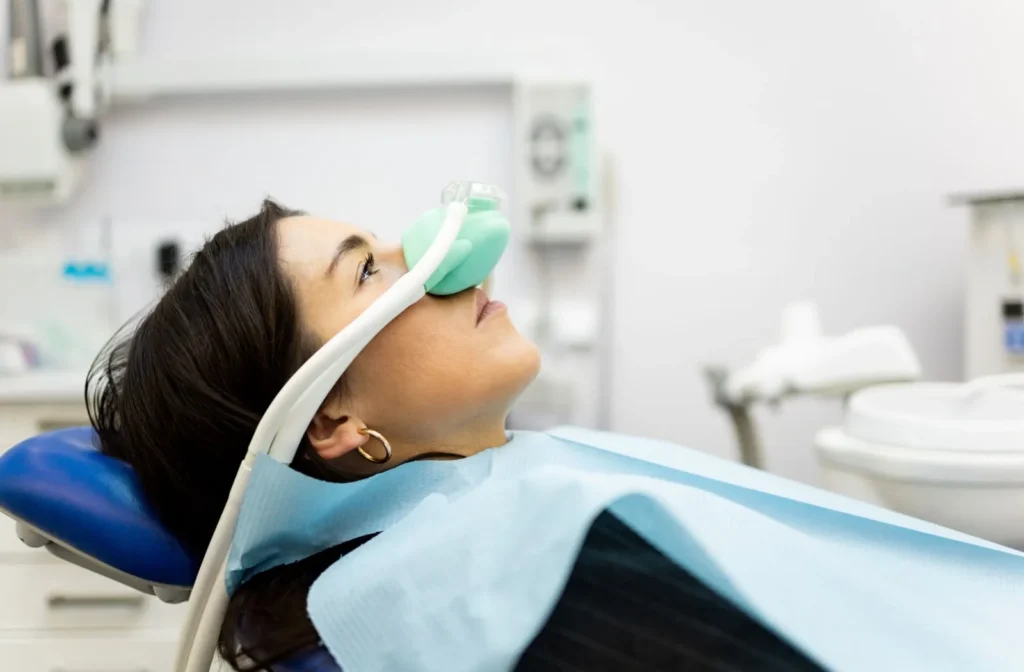
Sedation dentistry uses medication to help you feel calm and relaxed during dental treatment, and the three common options are nitrous oxide (laughing gas), oral sedation and IV sedation. They differ in how deeply they relax you, how quickly they wear off and whether you need someone to drive you home.
Who sedation dentistry is for
Dental anxiety is common, and it is a real reason people put off care until a small problem becomes a bigger one. Sedation can help if you:
- Feel anxious or fearful about dental visits
- Have a strong gag reflex
- Find needles difficult
- Have very sensitive teeth
- Find it hard to sit still or keep your mouth open for long periods
- Need a longer appointment or several treatments in one visit
Cleveland Clinic lists these same reasons, along with claustrophobia and physical, behavioural or cognitive needs that make dental care harder.
Sedation is not the same as freezing
Sedation calms you. Local anesthetic, the “freezing”, numbs the area being treated. With nitrous, oral or IV sedation, you usually still receive freezing once you are relaxed. Many people find the freezing much easier to cope with when they are already calm.
Laughing gas (nitrous oxide)
Nitrous oxide is the lightest form of dental sedation. It is mixed with oxygen and breathed in through a small mask that fits over your nose. The American Dental Association describes how it helps you relax without putting you to sleep, so you can still hear and respond to your dentist. Some people feel light-headed, tingly or pleasantly heavy in their arms and legs.
- How fast it works: within a few minutes of breathing it in.
- How it wears off: quickly, once the mask is removed and you breathe oxygen for a short time.
- After your visit: because it clears so quickly, many people can drive themselves home and carry on with their day. Your dentist will confirm this before you leave.
Because it is gentle and adjustable, nitrous oxide is often used for children and for adults with mild to moderate nerves. If you have been searching for a laughing gas dentist, it is worth asking whether it suits the treatment you need.
Oral sedation
Oral sedation dentistry uses a prescribed pill taken before your appointment, usually about an hour ahead. You stay awake and can respond, but you feel very drowsy and relaxed, and some people doze off. It is a good fit for moderate anxiety or longer visits where nitrous alone may not be enough.
- You will need a ride home from a responsible adult.
- Do not drive or operate machinery for the rest of the day. Drowsiness can last up to 24 hours.
- Follow your dentist’s instructions about eating and drinking beforehand and about any medications you take.
IV sedation
IV sedation delivers the medication through a small line in your arm or hand, straight into your bloodstream. Cleveland Clinic describes it as the deepest form of conscious sedation offered in a dental office. Many people drift off and remember little or nothing of the appointment afterwards. The level can be adjusted during treatment.
IV sedation is often used for more severe anxiety or for longer, more involved treatment, such as several root canals or a full deep cleaning in one visit. As with oral sedation, you will need someone to take you home and stay with you, and you should not drive for 24 hours.
Comparing your options
| Nitrous oxide | Oral sedation | IV sedation | |
|---|---|---|---|
| How it is given | Breathed in through a nose mask | Pill taken before the visit | Through a small line in the arm or hand |
| How relaxed you feel | Light, calm and aware | Drowsy, may doze | Deeply relaxed, may not remember |
| Wears off | Soon after the mask is removed | Over several hours, up to a day | Over several hours, up to a day |
| Driving afterwards | Usually fine, your dentist will confirm | No, arrange a ride | No, arrange a ride |
| Often used for | Mild nerves, children, shorter visits | Moderate anxiety, longer visits | Severe anxiety, longer or complex treatment |
General anesthesia is different again. You are fully asleep, and it is usually provided by an anesthesiologist in a hospital or surgical centre rather than in a regular dental office.
Is sedation safe?
Sedation is widely used in dentistry, and your health history is reviewed before any sedation is planned. Tell your dentist about medical conditions, medications, supplements, allergies, sleep apnea and whether you are or may be pregnant. Some sedatives are avoided during pregnancy, and treatment may be timed around it.
Side effects after oral or IV sedation can include drowsiness, dry mouth, headache, nausea, and bruising where the IV was placed. These usually settle within a day. Children can be irritable or a little unsettled for a day or two afterwards.
Sedation for children
Nitrous oxide is often the first option considered for children, as it is light and wears off quickly. A calm, unhurried visit, short appointments and a positive first experience also go a long way. If your child needs more than that, your dentist will talk through what is suitable for their age and health. Learn more about our approach to children’s dentistry.
At Vigée Dental, we offer sedation dentistry in Calgary, including oral sedation and IV sedation, with nitrous oxide available when appropriate for restorative treatment and children’s visits. We review your health history and talk through which option fits you and your treatment. Cost depends on your plan and is confirmed at your consultation, and our team can help you submit insurance claims. Book an appointment online.
Frequently asked questions
Will I be asleep during sedation dentistry?
With nitrous oxide and oral sedation, you stay awake but relaxed, though some people doze with oral sedation. With IV sedation, many people drift off and remember little of the visit.
Can I drive after laughing gas at the dentist?
Usually yes, because nitrous oxide wears off soon after the mask is removed. Your dentist will check that you feel normal before you leave. You cannot drive after oral or IV sedation.
Will I still need freezing?
Usually, yes. Sedation helps you relax, while local anesthetic numbs the area being treated. Many people find the freezing easier once they are calm.
Can I eat before oral sedation dentistry?
It depends on the type of sedation. You may be asked not to eat or drink for several hours beforehand. Follow the instructions your dental team gives you.
Does insurance cover dental sedation?
Some plans cover sedation for certain treatments. Check your plan, and see our guide to dental fees and insurance in Alberta.