
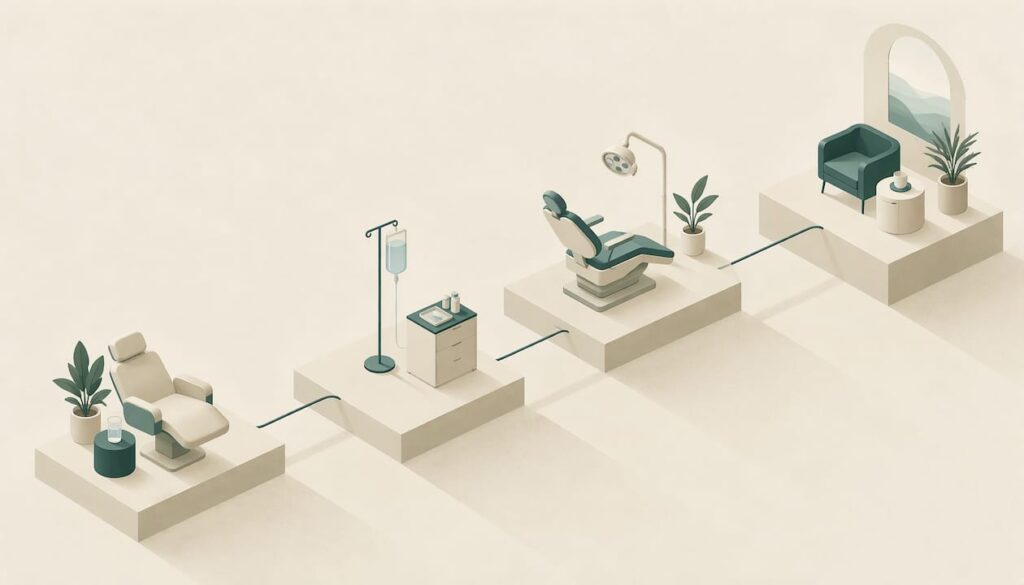
Sedation dentistry in Calgary means a dentist uses medication to keep you relaxed during treatment, and for most patients you stay awake, breathing on your own and able to respond. In Alberta the dentist must hold a permit for the technique used, and the rules cover your health history, monitoring and recovery. At Vigée Dental, comfort-focused care and sedation dentistry are part of a judgment-free approach for people who dread the chair.
TL;DR
- Most dental sedation in Alberta is minimal or moderate: you are relaxed but awake, can breathe unaided and can respond to your dentist.
- Alberta’s regulator approves specific techniques: nitrous oxide (laughing gas), oral sedatives, a combination of the two, and intravenous (IV) sedation. Deep sedation and general anesthesia are allowed only in accredited facilities.
- Expect a health history review, a consent step, continuous monitoring, written aftercare and a responsible adult to take you home if you have more than laughing gas.
- Dentists set their own fees. The 2026 Alberta fee guide suggests $106.60 for two units of nitrous oxide sedation.
- If fear has kept you away, a first conversation about your anxiety is the right place to begin.
Table of Contents
- What sedation dentistry actually is
- The four levels of sedation, from lightest to deepest
- The techniques Alberta dentists may use
- How Alberta keeps sedation safe
- Before your appointment: what to prepare
- During the visit: what monitoring looks like
- After sedation: recovery and the rules that matter
- What sedation costs in Calgary
- Is sedation right for you?
- Perspective
- Booking a calm first visit at Vigée Dental
- FAQ
- Sources
What sedation dentistry actually is
Sedation dentistry is the use of medication to ease anxiety and discomfort while your dentist works. It is not the same as being put under for surgery. The College of Dental Surgeons of Alberta (CDSA), the body that regulates Alberta dentists, describes sedation in its 2024 Annual Report as a minimally to moderately depressed level of consciousness in which you keep the ability to maintain your own airway and respond to touch and to spoken commands.
In plain terms: you feel calm, time may pass quickly, and you can still hear and answer your dentist. Many people remember little of the visit afterward, but that is a side effect of some medications, not a sign that you were unconscious.
This is also why sedation is useful beyond fear. People with a strong gag reflex, a long treatment plan, sensitive teeth or a history of bad dental experiences often find that a relaxed visit lets the dentist finish more in fewer appointments.
The four levels of sedation, from lightest to deepest
Dentists describe sedation as a spectrum. Knowing where each option sits helps you ask the right questions.
| Level | What you feel | Typical examples |
|---|---|---|
| Minimal | Relaxed, fully awake and responsive | Laughing gas (nitrous oxide) |
| Moderate | Drowsy, may slur words, responds to voice | Oral sedative pill, IV sedation |
| Deep | Hard to wake, responds only to repeated or painful stimulation | Accredited facilities only |
| General anesthesia | Unconscious, no response even to pain | Accredited facilities only |
The deep end of that table is defined by the Royal College of Dental Surgeons of Ontario as a state in which patients cannot be easily aroused, and general anesthesia as a loss of consciousness where patients are not arousable even by painful stimulation. Alberta uses the same logic: the CDSA report states that deep sedation and general anesthesia may be provided only in accredited facilities.
So to the common question, are you completely asleep? For minimal and moderate sedation, no. You are relaxed and responsive. Being fully asleep belongs to deep sedation or general anesthesia, which is a different setting with different safeguards.
The techniques Alberta dentists may use
The CDSA’s Standard of Practice, dated January 2021, lists four approved techniques for minimal and moderate sedation:
- Nitrous oxide and oxygen. You breathe the gas through a small mask over your nose. It works within minutes and wears off quickly once the mask comes off.
- A single oral dose of one benzodiazepine, with one supplemental dose if needed. A benzodiazepine is a calming medication, usually taken as a pill before or at the start of the visit.
- An oral benzodiazepine combined with nitrous oxide and oxygen, plus one supplemental dose.
- Intravenous sedation using a hand bolus technique. Medication is given into a vein in small amounts, so the dentist can adjust the depth as the visit goes on.
The CDSA’s annual report breaks these into eight modalities by patient age (under or over 12) and by drug combination. It also shows how common each is among Alberta dentists: 1,459 dentists were registered for nitrous oxide for patients 12 and over, 1,418 for single-drug oral sedation, 780 for oral plus nitrous oxide, 216 for single-drug IV sedation and 209 for IV sedation using two drugs including fentanyl, all as listed in the 2024 report. The pattern is clear: lighter methods are widely available, and the deeper you go, the fewer dentists hold the permit.
For a side-by-side look at laughing gas, pills and IV, our guide to sedation options walks through each.
Which one suits which patient
- Mild nervousness or a long appointment: laughing gas is the gentlest start. It wears off fast, which suits people who need to get back to work.
- Real fear of the chair, or a gag reflex: a calming pill taken as directed, sometimes with laughing gas, often takes the edge off before you even sit down.
- Severe anxiety or extensive treatment: IV sedation lets the dentist fine-tune your level of relaxation throughout a longer visit.
The right choice depends on your health, your medications and the treatment planned. That is a decision for you and your dentist at a consultation, not something to settle from a table.
How Alberta keeps sedation safe
Sedation is regulated because the medications carry real risk if mishandled. You do not need to memorize the rules, but knowing they exist is reassuring.
The dentist needs a permit. The CDSA report explains that the Standard applies to every dentist who administers sedation, and that permits are based on competency. A dentist must not sedate beyond their training, must register for sedation each year and must hold a current permit for moderate sedation. Permits expire on December 31 and are renewed annually.
Life-support skills must be current. The same Standard requires certification in basic life support, advanced cardiac life support, pediatric advanced life support and airway management, as applicable to the technique used. If a certification lapses, the dentist may not give any form of sedation.
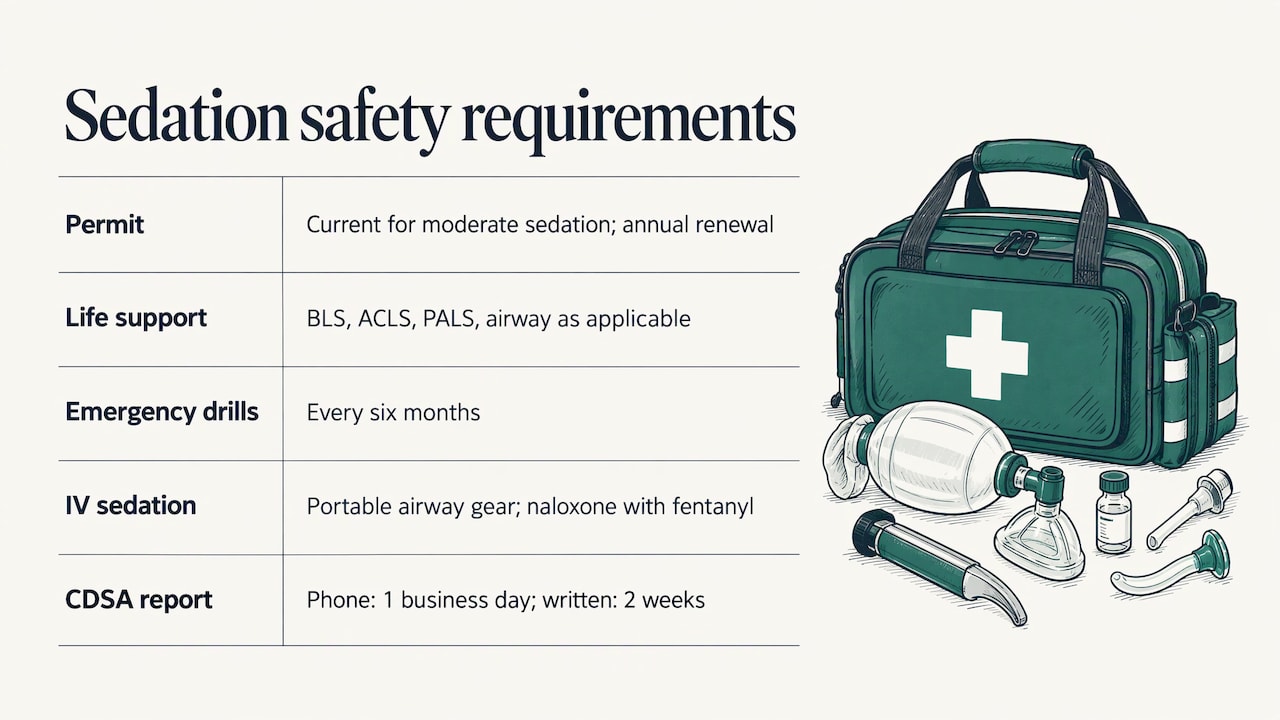
Emergency preparedness is built in. Facilities must run mock emergency drills every six months under the Standard. For IV sedation, the CDSA’s equipment requirements include dedicated portable airway equipment, and naloxone, a reversal drug for opioids, when fentanyl is used.
Adverse events are reported. If something unforeseen happens, such as sedation deeper than intended, an emergency intervention or a hospital transfer, the dentist must phone the CDSA within one business day and file a written report within two weeks.
These are requirements on the dentist and clinic, which is the point: your part is to give an honest health history and follow the instructions below.
Before your appointment: what to prepare
The CDSA Standard requires a current, clearly recorded medical history before sedation, and a pre-operative safety process that includes confirming your identity, the planned procedure and your consent. Expect to be asked about:
- Every medication you take, including over-the-counter products, supplements and cannabis
- Allergies, especially to drugs or anesthetics
- Heart, lung, sleep apnea, liver or kidney conditions, and pregnancy
- Past experiences with sedation or anesthesia
- Alcohol use
Tell the dentist everything, even if it seems unrelated. Sedatives interact with other drugs, and the safest plan is built on a complete picture. If you have a specific condition or take medication you are unsure about, your family doctor or pharmacist is the right person to confirm it with before the visit.
For anything beyond laughing gas, plan practical logistics too:
- Arrange a responsible adult to take you home and stay with you.
- Follow the dentist’s instructions on eating and drinking beforehand.
- Wear loose, comfortable clothing with short sleeves if IV sedation is planned.
- Clear the rest of the day.
Some standards allow an oral sedative to be taken before arrival in specific cases, such as to help sleep the night before or to make arrival possible when anxiety requires it, as Saskatchewan’s July 2026 standard notes. Only do this if your dentist has told you to, and exactly as directed.
During the visit: what monitoring looks like
You will not be left alone. Professional standards require a dentist or trained staff member to stay in the room and monitor you continuously. British Columbia’s regulator lists the checks as oxygenation (skin and lip colour, pulse oximetry), ventilation (chest movement and breathing) and circulation (blood pressure and heart rate), in its sedation standard. A pulse oximeter is the small clip on your finger that reads oxygen levels. That standard requires it for patients aged 12 and under and highly recommends it for everyone else.
In practice, a sedated visit feels like this: the team explains each step, you get comfortable, the medication takes effect, and numbing is placed as usual so that the treatment itself does not hurt. You can signal or speak at any point.
After sedation: recovery and the rules that matter
The Alberta Standard requires the dentist to determine and document that your level of consciousness, oxygenation, breathing and circulation are satisfactory before you leave, and to give verbal and written instructions. Saskatchewan’s standard, a good picture of the common national approach, says that patients must be instructed not to drive, operate hazardous machinery or make important decisions, and cautioned about alcohol and other sedating drugs for a minimum of 18 hours or longer if drowsiness or dizziness persists. You are discharged to a responsible adult, and the written instructions are explained to both of you.
A sensible recovery plan:
- Go straight home with your escort and rest.
- Skip driving, work decisions, signing documents and alcohol for the period your dentist gives you.
- Eat lightly once numbness fades, and avoid chewing on a numb cheek or lip.
- Keep the written instructions and the clinic’s phone number close.
- Call the clinic, or in an emergency call 911, if you have trouble breathing, persistent vomiting or unusual drowsiness.
Laughing gas is the exception on recovery speed, since its effects clear quickly after the mask comes off, but your dentist will tell you what applies to your visit.
What sedation costs in Calgary
There is no single Calgary price, and anyone quoting one is describing their own practice. Dentists in Alberta set their own fees. The Alberta Dental Association publishes a suggested guide each year, and its 2026 Abbreviated Fee Guide for General Dentists, effective January 1 to December 31, 2026, lists code 92412, conscious sedation with nitrous oxide, at a suggested $106.60 for two units of time, measured from placing the nitrous delivery device to removing it. The patient remains awake. The guide itself notes that listed procedures may not reflect your specific needs or the actual cost of your care.
What moves the price:
- The method. Gas, a pill and IV involve different drugs, monitoring and staff time.
- Length of the visit. Nitrous oxide is billed in units of time.
- What it is paired with. Sedation is usually billed alongside the treatment itself.
- Your coverage. Plans differ on whether sedation is covered, so ask your insurer, and ask the clinic for a written estimate before booking.
Our plain-language Alberta fee guide explainer shows how to read these codes and what they mean for your insurance.
Is sedation right for you?
Sedation is worth discussing if any of these sound familiar:
- You have put off a checkup for years because of fear
- You have had a bad experience and tense up as soon as you hear the drill
- You gag easily or cannot keep your mouth open comfortably for long
- You need several procedures and would rather do them in fewer visits
- Your treatment includes cosmetic work such as veneers, and you want a relaxed, unhurried visit
It may not be suitable for everyone, and your health history decides which options are open to you. That is exactly why the consult comes first.
Perspective
Fear is the most common reason people we meet have avoided the dentist, and it is almost never about the teeth. It is about feeling out of control, or feeling judged for how long it has been.
Our approach starts there. We look at the whole person, not only the problem tooth, and we work on the root cause of a dental issue rather than patching symptoms. For an anxious patient, that means a conversation before any treatment: what worries you, what has gone wrong before, what would make you feel safe.
Sedation is one tool in that plan, alongside a calm room, clear explanations and a team that does not rush you. When someone who has not been in a chair for ten years leaves with a healthy plan and no dread of the next visit, that is the result we are after.
Deane
Booking a calm first visit at Vigée Dental
Vigée Dental in Calgary, founded by Dr. Nicole Robins, offers sedation dentistry as part of a personalized, judgment-free approach built around patient comfort. Sedation sits beside our preventive and restorative care, from the new patient exam and hygiene visits to restorative dentistry and cosmetic treatment, so a nervous patient can have a whole plan in one place.

Tell us about your anxiety when you book. That one conversation shapes the rest of your care, and you can start from the Vigée Dental home page.
FAQ
Are you completely asleep during sedation dentistry?
Not with minimal or moderate sedation. You stay relaxed but able to breathe on your own and respond to your dentist. Being fully unconscious is general anesthesia, which Alberta allows only in accredited facilities.
How much does sedation dentistry cost in Calgary?
Fees vary by dentist and method. The 2026 Alberta Dental Association guide suggests $106.60 for two units of nitrous oxide sedation, and dentists set their own fees. Ask for a written estimate that includes sedation and the planned treatment.
Do I need someone to drive me home?
For oral or IV sedation, yes. Standards require you to leave with a responsible adult, and you should not drive, use hazardous machinery or make important decisions until your dentist says the effects have cleared. Your dentist will tell you what applies to laughing gas.
Is dental sedation safe?
Alberta regulates it closely. Dentists need a permit, current life-support certification, a documented health review and continuous monitoring. Share your full medical history and medications, and follow the pre- and post-visit instructions.
Can sedation help with a long cosmetic or restorative treatment?
Often, yes. A relaxed patient can usually stay comfortable through longer visits, which can reduce the number of appointments. Your dentist will advise which method fits your health and the treatment planned.
Sources
- CDSA 2024 Annual Report
- CDSA Standard of Practice, January 2021
- CDSA Standard of Practice: Minimal and Moderate Sedation
- CDSA CPR, AED and Emergency Drug/Equipment
- Alberta Dental Association 2026 Abbreviated Dental Fee Guide
- RCDSO Authorization to Administer Sedation and General Anesthesia
- Saskatchewan Dental Association Sedation and General Anesthesia Standard, July 2026
- BC College of Oral Health Professionals, Minimal and Moderate Sedation