
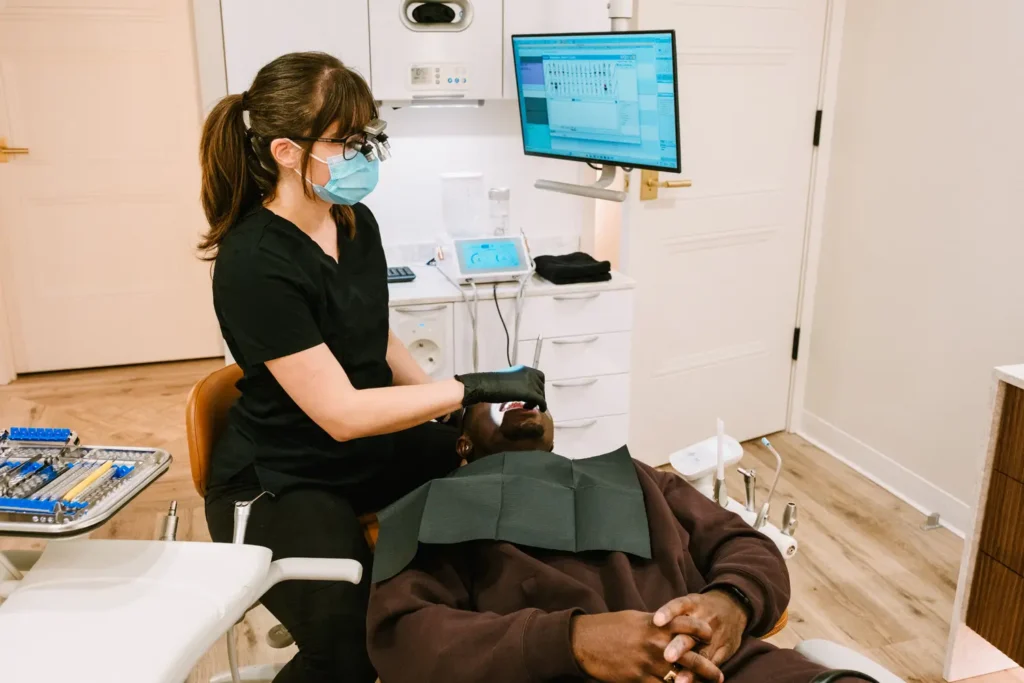
Gingivitis is the early, reversible stage of gum disease, where plaque inflames the gums but has not yet damaged the bone that holds your teeth in place. Periodontitis is the later stage, where the infection spreads below the gumline and destroys bone and supporting tissue, and that loss cannot be undone, although it can be controlled.
The difference matters because what you do about bleeding or puffy gums now decides which of the two you end up managing. Here is how to tell them apart, how each is treated and what raises your risk.
What is gum disease?
Gum disease starts with plaque, the soft, sticky film of bacteria that builds up on your teeth every day. If plaque is not cleaned away, it irritates the gums and, over time, hardens into tartar that brushing cannot remove. Our guide to plaque vs tartar explains the difference.
Your gums react to that bacteria with inflammation. At first the inflammation stays in the gum tissue. That is gingivitis. If it carries on, bacteria move below the gumline, the gum starts to separate from the tooth, and the bone and ligaments that support the tooth begin to break down. That is periodontitis.
The stages of gum disease
| Stage | What is happening | What you may notice | Can it be reversed? |
|---|---|---|---|
| Healthy gums | Gums fit snugly around the teeth | Pink, firm gums that do not bleed | Not applicable |
| Gingivitis | Plaque inflames the gum tissue; bone is not affected | Bleeding when brushing or flossing, red or puffy gums | Yes, with a professional cleaning and better home care |
| Early periodontitis | Gums pull away from the teeth, forming pockets; bone loss begins | Bleeding, bad breath, gums starting to recede | No, but it can be stopped from getting worse |
| Moderate to advanced periodontitis | Deeper pockets and more bone loss around the teeth | Receding gums, loose or shifting teeth, changes in your bite | No; treatment aims to control it and keep the teeth |
Dentists also stage periodontitis from 1 to 4 based on how much tissue has been lost around the teeth, which helps decide the right treatment.
Signs of gingivitis
Gingivitis is easy to miss because it often does not hurt. Look out for:
- Gums that bleed when you brush, floss or eat something hard
- Red, swollen or puffy gums, especially along the edges of the teeth
- Gums that feel tender
- Bad breath or a bad taste that keeps coming back
Signs of periodontitis
Periodontitis can include all the signs of gingivitis, plus signs that the support around the teeth is breaking down:
- Gums pulling back, making teeth look longer
- Bad breath that does not go away with brushing
- Pus between the teeth and gums
- Teeth that feel loose or have started to shift
- A change in the way your teeth fit together when you bite
Early periodontitis may not cause any of these, which is why regular exams matter. During a checkup, your dentist or hygienist measures the space between each tooth and the gum with a small probe, and dental x-rays can show whether bone around the teeth has been affected.
Is gum disease reversible?
Gingivitis is. According to Cleveland Clinic, gingivitis is reversible with proper care and maintenance, but it can come back, so home care between visits matters.
Periodontitis is not reversible. The bone and tissue lost around the teeth do not grow back on their own. With treatment and steady maintenance, though, periodontitis can be controlled, and the aim becomes keeping your teeth and gums stable for the long term.
How gingivitis and periodontitis are treated
Gingivitis is usually treated with a professional cleaning to remove plaque and tartar, followed by better daily care at home: brushing twice a day, cleaning between your teeth every day and keeping your regular cleanings.
Periodontitis needs a deeper approach:
- Scaling and root planing. A deep cleaning removes bacteria and tartar from below the gumline and smooths the root surfaces so the gums can heal.
- Periodontal maintenance. After a deep cleaning, regular maintenance visits on a schedule set around your risk keep bacteria from building back up below the gums.
- A specialist referral when needed. Advanced periodontitis may need care from a periodontist, a dentist who focuses on gum disease, for treatments such as gum surgery.
Who is at higher risk?
Anyone can develop gum disease, but some things raise the risk:
- Smoking and other tobacco use. The National Institute of Dental and Craniofacial Research calls smoking the most significant risk factor for gum disease. Tobacco also slows healing and can make treatment less successful.
- Diabetes. Diabetes and gum disease are closely linked, and keeping blood sugar steady supports gum health.
- Pregnancy and hormone changes. Hormone shifts during pregnancy can make gums more prone to inflammation and bleeding. Keep up with dental checkups and cleanings while you are pregnant.
- Family history. Some people are more prone to gum disease because of their genes.
- Older age, stress and some medications can also play a part.
How to keep gingivitis from turning into periodontitis
- Brush twice a day with a fluoride toothpaste, angling the brush toward the gumline.
- Clean between your teeth every day with floss or interdental brushes.
- Do not ignore bleeding. Gums that bleed are inflamed, and that is the stage you can still reverse.
- Keep your cleanings, since tartar can only be removed professionally.
- If you smoke, quitting helps your gums heal and respond to treatment.
At Vigée Dental, cleanings are booked every 3 to 6 months depending on your risk, using ultrasonic and hand scaling and air polishing to remove biofilm. When gum disease is present, we treat it with scaling and root planing and then set a periodontal maintenance schedule, with a specialist referral for advanced cases. Learn more about dental hygiene and cleanings or book a cleaning online.
Frequently asked questions
What is the difference between gingivitis and periodontitis?
Gingivitis is inflammation of the gums only, and it can be reversed. Periodontitis is a later stage where the infection damages the bone and tissue that hold the teeth, and that damage is permanent.
Can gingivitis go away on its own?
Not without a change. Gingivitis clears up when the plaque causing it is removed, usually with a professional cleaning and better brushing and flossing at home.
Is periodontitis curable?
Periodontitis cannot be reversed, but it can be controlled with scaling and root planing and regular periodontal maintenance, so it does not keep getting worse.
How quickly does gingivitis turn into periodontitis?
There is no set timeline. It depends on your home care, your cleanings and risk factors such as smoking and diabetes, which is why bleeding gums are worth checking early.
Can you have gum disease without pain?
Yes. Gingivitis and early periodontitis often do not hurt, so bleeding gums and regular exams are often the first clues.