
Dental bonding is a tooth-coloured resin that your dentist shapes directly onto a tooth to repair a chip, close a small gap or even out a worn edge, usually in one visit. If you are looking for dental bonding in Calgary, the useful question is not only “who does it” but “is bonding the right repair for my tooth?” For a small, contained flaw it often is. For several teeth, or for a smile you want to change as a whole, another option may serve you better. At Vigée Dental we look at the tooth, your bite and your goals together before recommending either, and we can pair bonding with sedation if the chair is what worries you.
TL;DR
- Bonding repairs small cosmetic problems such as chips, small gaps, uneven shapes and stains, typically in one appointment, according to the Canadian Dental Association.
- It suits smaller repairs. Veneers cover the whole front surface of a tooth and are the usual step up for bigger changes.
- Bonding resin can stain and wear, so your habits and your hygiene visits decide how long it looks good.
- Prices vary by clinic and by how much tooth is involved. Ask for a written estimate for the specific teeth.
- If dental anxiety has kept you away, tell us at booking. We offer sedation dentistry and a judgment-free visit.
Table of Contents
- What dental bonding is
- How the appointment works
- Is bonding right for your tooth? Bonding versus veneers
- How long bonding lasts and what affects it
- Caring for bonded teeth
- What bonding costs in Calgary
- Bonding as part of a bigger plan
- Our point of view
- Book a bonding assessment in Calgary
- FAQ
- Sources
What dental bonding is
Bonding uses a composite resin, a putty-like material the same colour as your teeth, that your dentist builds onto the tooth in thin layers. The CDA describes it as a way to make small cosmetic repairs with tooth-coloured resin, typically in a single visit.
The same page lists the problems it can address:
- chips and cracks
- small gaps between teeth
- worn or unevenly shaped teeth
- stains or discolouration
In plain terms, bonding adds material to the tooth rather than taking much away. That is why many people choose it as a first, modest step toward a nicer smile. If you want the detail on what it fixes and how long it lasts, our page on composite bonding goes through it.
How the appointment works
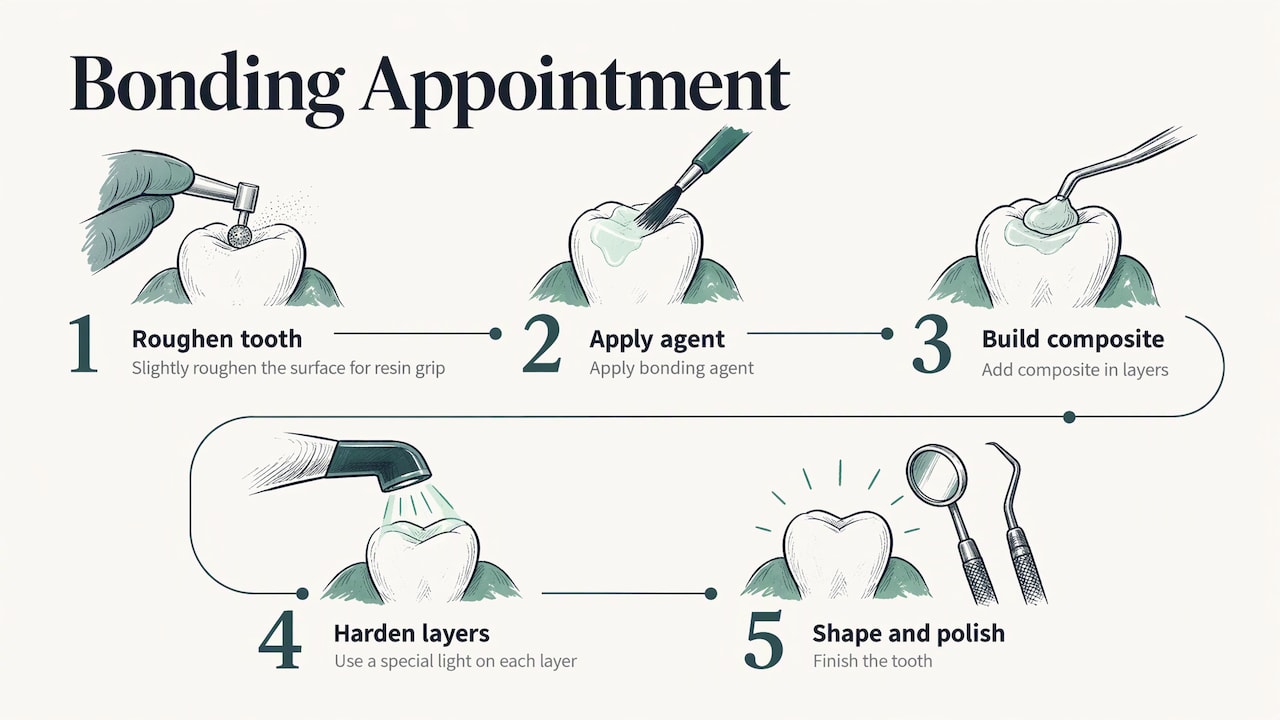
The CDA outlines the sequence. First the tooth surface is roughened slightly so the resin can grip. Your dentist applies a bonding agent, then builds up the composite in layers. Each layer is hardened with a special light, and the finished tooth is shaped and polished. Here is what that means for you in practice.
Before the visit
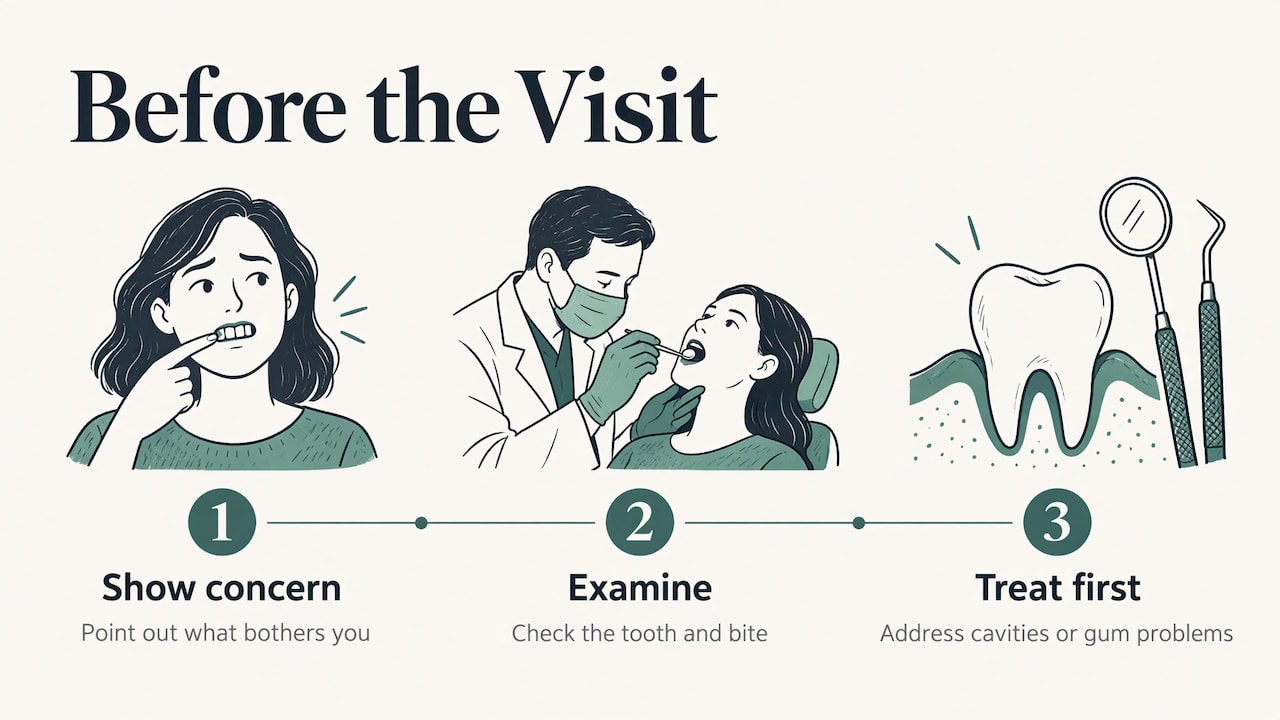
You show us what bothers you: a corner that chipped on a fork, a gap you have always disliked, a tooth that looks shorter than its neighbours. We examine the tooth and the bite, because a repair that sits where you chew hard needs different planning from one on a tooth that barely touches its partner. Cavities or gum problems are better dealt with first, which is one reason a new patient exam makes sense before cosmetic work.
In the chair
Bonding is a conservative treatment, and many people find it comfortable. If you are anxious about dental work of any kind, say so when you book. Our approach is built around comfort, and sedation dentistry is part of what we offer, so you do not have to white-knuckle your way through.
Matching and finishing
The colour of the resin is chosen to blend with the neighbouring teeth. If you are thinking of whitening, do it before bonding, not after. Whitening lightens natural enamel but not resin, so a bonded tooth cannot be lightened to match. Our teeth whitening page explains how that works, and it helps to settle your shade first so the bonding is matched to the final colour.
Is bonding right for your tooth? Bonding versus veneers
The CDA separates the two: bonding is generally for smaller repairs, while veneers cover the entire front surface of a tooth. Veneers can improve stained, chipped or misshapen teeth and can cover gaps or slightly crooked teeth.
A practical way to decide:
| Your situation | Usually points to |
|---|---|
| One chipped corner or edge | Bonding |
| A small gap between two front teeth | Bonding |
| A single tooth slightly shorter or uneven | Bonding |
| Several teeth stained, uneven or chipped at once | Veneers |
| You want one uniform, redesigned smile | Veneers |
| Slightly crooked teeth you want to mask | Veneers |
If your answer sits in the lower half of that table, our veneers in Calgary page and the guide on how long veneers last will help you compare. We also offer no-prep veneers with minimal drilling, and First Look lets you preview veneers on your own smile before you decide.
If you are unsure which side of the line you are on, a consultation is the quickest way to find out. Our page on the veneer consultation explains what to expect and what to ask.
How long bonding lasts and what affects it
Bonding is not a once-and-forget repair. Composite is a resin, and resin behaves differently from enamel or porcelain. It can pick up stain over time, and a thin edge on a front tooth takes a lot of bite force. Several things shape how long a bonded tooth looks and works well:
- Where it is. A bonded gap between two front teeth carries less load than a rebuilt biting edge.
- How much was added. Small repairs generally hold up better than large ones.
- Your habits. Nail-biting, chewing ice, opening packaging with your teeth and clenching or grinding all put stress on the resin.
- What you drink. Coffee, tea and red wine can discolour resin over the years.
- Your hygiene visits. Regular checkups let us polish the surface and check the edges of each repair.
A realistic expectation is years rather than a lifetime, with touch-ups or a replacement down the road. A repaired chip can often be added to or re-polished, which is part of what makes bonding forgiving. If you grind your teeth at night, mention it, because a custom plan protects both your natural teeth and your repair.
Caring for bonded teeth
Care is the same as for natural teeth, with a few extras:
- Brush twice a day and clean between teeth daily. Resin edges can trap plaque, and decay can start along the margin of a repair.
- Rinse with water after coffee, tea or red wine.
- Do not bite hard objects such as pen caps, ice or fingernails.
- Wear a night guard if you grind. Tell us about morning jaw soreness.
- Keep your dental hygiene and cleaning appointments so the surface is polished and the edges are checked.
If a bonded tooth chips or breaks, call us promptly. We handle emergency dentistry in Calgary, and a quick visit protects the tooth underneath.
What bonding costs in Calgary
Prices differ from clinic to clinic, and they depend on how many teeth are involved, how much resin is needed and how complex the shaping is. Dentists in Alberta set their own fees, and the Alberta Dental Association publishes a suggested fee guide each year as a reference. We do not publish a bonding price on our site, so we will not quote you a figure here. A number found in an online listing is not an estimate for your tooth.
What to ask for with any quote, from us or anyone else:
- A written estimate for the specific teeth, not a per-tooth average.
- Whether the quote covers shaping, polishing and any follow-up adjustment.
- Whether your benefits plan covers any of it. Many plans treat purely cosmetic work differently from repairs of a broken tooth, so ask your insurer before you book.
- What a repair or replacement would involve later.
When bonding is part of fixing damage rather than only improving looks, it falls under restorative dentistry, and your estimate will reflect that.
Bonding as part of a bigger plan
Sometimes a bonded tooth is the start of something larger. A patient with worn teeth, several chips and a bite that has shifted may be better served by a complete plan than by patching one tooth at a time. Our full-mouth rehabilitation service combines restorative and cosmetic treatment for those cases. For broader context on what a modern cosmetic practice can offer, see our complete guide to cosmetic dentistry in Calgary.
Our point of view
We rarely see a smile problem as only a smile problem. A chip often points to a bite that is heavier on one side, a worn edge can mean grinding, and stained resin can mean a hygiene routine that needs a small tweak.
That is why we start with the cause. Our approach is whole-body and evidence-based, and it is designed to address why something happened, not only how it looks today. For a small chip, that can mean a quick, conservative bonding repair. For a smile that needs more, it means telling you so plainly and showing you the options, including veneers.
Comfort comes first for us. Many people postpone a simple repair for years because the dental chair makes them uneasy. We offer sedation dentistry and a judgment-free visit, so the first step is just a conversation about what you want to change.
Deane
Book a bonding assessment in Calgary
If you have a chip, a gap or a worn edge you want looked at, start with an exam at Vigée Dental. We will tell you whether bonding is the right fit, or whether another option from our cosmetic dentistry range suits you better. Founded by Dr. Nicole Robins, our Calgary clinic builds each plan around your goals and your comfort.

You can see our services and book through vigeedental.ca.
FAQ
Does dental bonding hurt?
Bonding is generally a conservative treatment, because little or no tooth is removed. Comfort depends on the tooth and on you. If you feel anxious or have sensitive teeth, tell us when you book, and we can plan the visit around that, including sedation dentistry.
Can bonding fix a gap between my front teeth?
Yes. The CDA lists small gaps among the problems bonding can address. Wider gaps, or gaps across several teeth, are often better handled with veneers or aligners, which we can walk you through.
Can bonded teeth be whitened?
Whitening lightens natural enamel, not resin. If you plan to whiten, do it first, then have the bonding matched to your new shade. That way the repair blends in.
Is bonding or a veneer better for one chipped tooth?
For a single, small chip, bonding is usually the simpler repair. Veneers cover the entire front surface of a tooth, so they suit larger changes or several teeth at once. An exam shows which fits your tooth and your bite.
Sources
Recommended
- Composite Bonding: What It Fixes And How Long It Lasts
- Cosmetic Dentistry In Calgary: Your Complete Guide
- Teeth Whitening In Calgary: Cost, Process & What To Expect
- Dental Veneers Calgary | Porcelain & No-Prep
- Chipped Tooth Repair in Calgary: Options, Costs and Next Steps
- Smile Makeover in Calgary: Options, Steps and Timeline
- Yellow Teeth: Why Teeth Turn Yellow and What Whitening Can Fix