
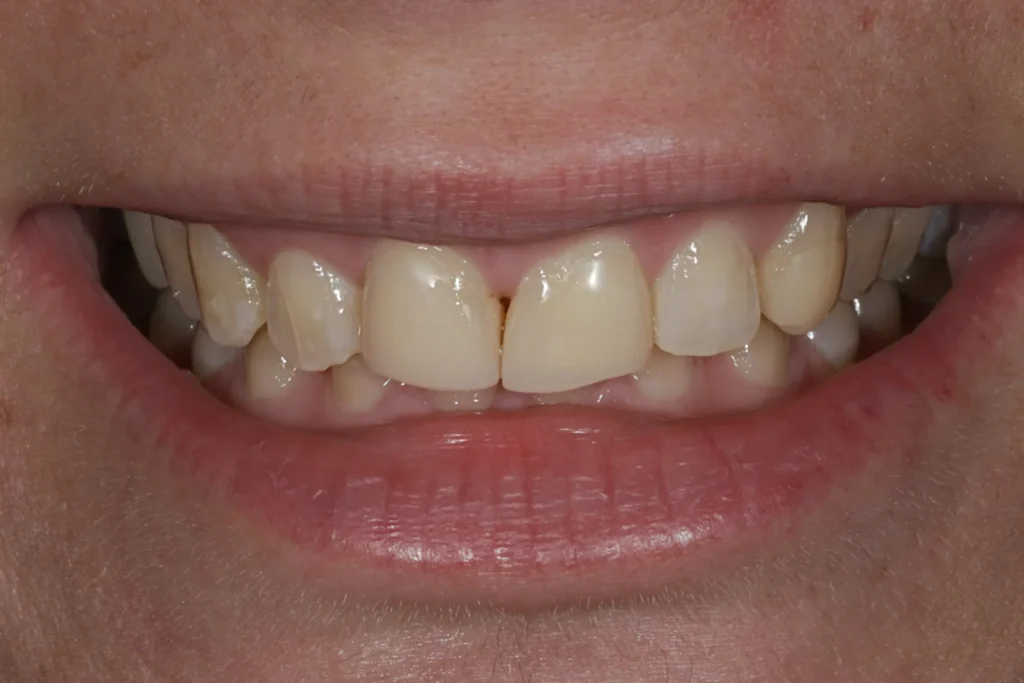
Teeth usually look yellow for one of two reasons: surface stains from things like coffee, tea, red wine and smoking, or changes inside the tooth, such as enamel thinning with age so the yellowish layer underneath shows through. Surface stains often respond well to a professional cleaning and whitening, while deeper discolouration may need bonding or veneers.
Knowing which type you have saves time and money, because it tells you whether a whitening kit is likely to help or whether a different approach makes more sense.
Why are my teeth yellow?
Dentists sort tooth discolouration into two broad groups. Cleveland Clinic describes them this way:
- Extrinsic stains sit on the outer surface of the enamel. Food, drinks, tobacco and plaque are the usual causes.
- Intrinsic discolouration starts inside the tooth and affects the dentin, the layer under the enamel. Age, injury, some medications and how teeth formed in childhood can all play a part.
Many people have a mix of both. A dentist or hygienist can usually tell which is which during an exam.
Coffee, tea and other surface stains
Coffee stains teeth because it is rich in strongly coloured compounds that cling to the thin protein film and plaque on your enamel. Tea, red wine, cola, berries, curry and soy sauce do the same. Smoking and other tobacco use add yellow to brown stain that can be stubborn.
Plaque makes all of this worse, because stain sticks to it. That is why teeth often look brighter right after a cleaning.
To keep surface stain down day to day:
- Rinse with water after coffee, tea or wine
- Use a straw for iced coffee and dark drinks
- Brush twice a day and clean between your teeth daily, so plaque does not build up
- Keep up with regular cleanings, which remove stain your brush cannot
Enamel thinning, age and yellow dentin
Enamel is slightly translucent, and the dentin underneath is naturally yellowish. As you get older, enamel gradually thins, so more of that yellow shows through. This is one reason teeth tend to look more yellow with age, even with good care.
Enamel can also thin faster from acid erosion (frequent sipping of soda, sparkling water, sports drinks, citrus or acid reflux) and from brushing too hard. Thin enamel often comes with sensitivity, so if your teeth look more yellow and also zing with cold, mention both to your dentist.
Medications, injury and other causes
Some discolouration comes from inside the tooth and has nothing to do with what you eat or drink:
- Childhood antibiotics. Adults who took tetracycline or doxycycline as children can have grey or brown banding in their teeth.
- Injury. A tooth that darkens after a knock may have an injured nerve and should be checked, even if it does not hurt.
- Too much fluoride while teeth were forming, which usually shows as white or brown flecks rather than overall yellow. Our guide to white spots on teeth covers these.
- Old fillings and dental work, which can stain or show through the tooth.
- Some medical conditions and treatments, including head and neck radiation and chemotherapy.
What whitening can and cannot fix
Whitening gels use peroxide to break down the coloured molecules in and on the tooth. Professional whitening works well on surface stains, and it can also lighten some deeper yellowing from age. Results on intrinsic stains, such as tetracycline banding, are harder to predict.
One thing whitening never changes is dental work. Health Canada notes that whitening products work only on natural teeth, not caps, crowns, veneers, fillings or dentures. If you have a visible crown or filling on a front tooth, it will stay its current shade while the teeth around it lighten, so it may need to be replaced afterwards to match. Planning this before you whiten avoids surprises.
Results also fade over time with coffee, tea and wine. Our guide on how long teeth whitening lasts covers touch-ups and how to keep a brighter shade.
Teeth whitening at home vs at the dentist
| Option | How it works | Good to know |
|---|---|---|
| Whitening toothpaste | Mild polishing agents remove some surface stain | Helps maintain a shade but does not change the colour of the tooth itself |
| Store kits (strips, paint-on gels, generic trays) | Lower-strength peroxide, used over about 10 to 14 days | One-size trays and strips can miss areas or let gel touch the gums |
| Custom take-home trays from a dentist | Professional gel in trays made to fit your teeth | Even contact with the teeth, and useful for touch-ups later |
| In-office whitening | Higher-strength gel applied by the dental team, with the gums protected | Visible change in one visit, with sensitivity managed along the way |
Before any whitening, it is worth having a check-up. Whitening over a cavity, a leaking filling or inflamed gums can be uncomfortable, and it does nothing for those problems.
Is teeth whitening safe?
Used as directed, whitening is generally considered safe. Health Canada says home whitening products are generally safe when the directions are carefully followed, and that tooth sensitivity and gum irritation can happen in some people. It also advises talking to an oral health professional first if you are pregnant, have gum disease or have unfilled cavities, and before using whitening products for a long time.
To lower the chance of sensitivity:
- Follow the wear time on the product, and do not leave gel on longer to speed things up
- Use a toothpaste for sensitive teeth if you are prone to sensitivity
- Take a break if your teeth become sore, and talk to your dentist
- Avoid deep-coloured food and drinks for 48 hours after professional whitening
Sensitivity from whitening usually settles within a few days of stopping.
When yellow teeth need more than whitening
If whitening cannot reach the shade you want, or one tooth is darker than the rest, there are other options. Bonding uses tooth-coloured composite to cover a stained area. Veneers cover the front of the tooth and can mask deep discolouration. They are a bigger step, and our guide to veneers cost in Calgary explains what goes into the total. Many people whiten first and then match any bonding or veneers to the new shade.
If cost is the main question, see teeth whitening cost in Calgary. At Vigée Dental, the cost depends on your plan and is confirmed at a consultation with a written estimate.
At Vigée Dental, teeth whitening is available in the office with Opalescence Pro, a chemically activated gel with no light needed, applied in two to three 20-minute rounds over about an hour, or with custom take-home trays. A hygiene visit can include air polishing to lift biofilm and surface stains, which is often a good first step. Book an appointment online.
Frequently asked questions
Can yellow teeth become white again?
Often, yes. Surface stains usually lift with a cleaning and whitening. Yellowing from thin enamel or medications may lighten only partly, and bonding or veneers can cover what whitening cannot.
Why are my teeth yellow even though I brush every day?
Brushing removes plaque and some surface stain, but it cannot change the colour of the tooth itself. Thinning enamel, genetics, age and staining drinks can all make teeth look yellow despite good brushing.
Do coffee stains on teeth come off?
Usually. Coffee stain sits mainly on the surface, so a professional cleaning removes much of it and whitening lightens what remains. Rinsing with water after coffee helps slow it from coming back.
Will whitening change the colour of my fillings or crowns?
No. Fillings, crowns and veneers keep their shade. If they are on front teeth, they may need to be replaced after whitening so they match.
Is teeth whitening at home safe?
Home kits are generally safe when the directions are followed. Temporary sensitivity and gum irritation are the common side effects. Check with your dentist first if you have cavities, gum disease or are pregnant.