
Black triangles are small dark gaps between two teeth, just above where they touch, where the gum no longer fills the space. Dentists call them open gingival embrasures. They are common, and the right fix depends on one question: is the cause the gum and bone, or the shape of the teeth? Once that is answered, a dentist can often close the gap with composite bonding, veneers, orthodontics or gum-focused care. At Vigée Dental in Calgary, we start with a gum health check before we talk about cosmetic closure.
TL;DR
- A black triangle is the space left when the gum between two teeth (the papilla) shrinks or never fills the gap beneath the contact point.
- Common causes are gum disease, aggressive brushing or flossing, orthodontic treatment, age, and tooth shape.
- New black triangles can be an early sign of gum disease, so have them checked before you treat them cosmetically.
- Options include bonding, veneers, aligners, gum-tissue approaches and better hygiene habits. The cause decides which one.
- We can assess the gums first and then plan the cosmetic side, with sedation available if dental visits make you anxious.
Table of Contents
- What black triangles are
- What causes black triangles
- When to have them checked
- How black triangles are closed
- Why a team approach helps
- Our perspective
- Booking an assessment in Calgary
- FAQ
- Sources
What black triangles are
The small pointed piece of gum that sits between two teeth is the interdental papilla. When it loses height, a triangle of space opens beneath the point where the teeth touch. A 2025 academic review describes these gaps as the result of lost papilla height, shaped by the distance from bone to the contact point, the width of the space, gum thickness, tooth shape and the tilt of the roots.
They are not rare. The same review cites research finding these gaps in 67% of people aged 20 and over, against 18% of those under 20. Another chapter on open embrasures says they occur in more than one-third of adults.
Why they matter beyond looks
A Thieme review ranks black triangles as the third most noticed esthetic problem, after cavities and exposed crown margins. They can also trap food and let air pass through when you speak. A 2024 Scientific Reports study adds that they can make plaque harder to control, and that triangles between the two front teeth rank among the worst factors for smile esthetics.
What causes black triangles
There is rarely one cause. A 2026 review lists gum disease, orthodontic tooth movement, traumatic restorative work and over-contoured restorations as the main contributors.
| Cause | What happens |
|---|---|
| Gum disease | Inflammation and bone loss lower the gum height between teeth |
| Rough brushing or flossing | Repeated trauma can injure the papilla |
| Orthodontic treatment | Straightening crowded teeth can open space where crowding hid it |
| Age | The gum between teeth tends to shrink over time |
| Tooth shape | Triangular crowns touch near the biting edge, leaving a larger space below |
| Missing teeth, spacing, root tilt | The gum has less support or more distance to fill |
On orthodontics, one review reports these gaps in about 42% of adolescents after treatment for crowded upper front teeth, and about 38% of adults after orthodontic therapy (2025 PMC review). This does not mean straightening is a poor choice. It means the gum and spacing should be discussed before you begin.
Hygiene habits
A 2025 Frontiers in Dental Medicine review notes that traumatic flossing or aggressive brushing may contribute. If the papilla has been injured this way, it suggests pausing the habit that caused the trauma so the tissue can heal, then changing technique. The Thieme review adds that in some cases the missing tissue is reversible, for example after traumatic toothbrushing is corrected. A hygienist can show you a gentler technique at a cleaning.
When to have them checked
If the triangles are new, do not assume they are cosmetic. Mayo Clinic lists new spaces that look like black triangles among the symptoms of periodontitis, along with receding gums, bleeding gums, pus between teeth and gums, and loose teeth. It advises booking a dental appointment promptly if you notice these.
See a dentist soon if your triangles appeared recently, if your gums bleed, or if a tooth feels loose. Treating the gum disease comes first. Learn more about gum recession causes and signs, or ask about scaling and root planing, the deep cleaning used for gum health.
How black triangles are closed
The 2025 review groups treatment into four routes: periodontal regeneration, soft-tissue augmentation, orthodontics, and restorative or prosthetic work. The best route depends on whether the issue is soft tissue, bone or tooth form.
Composite bonding
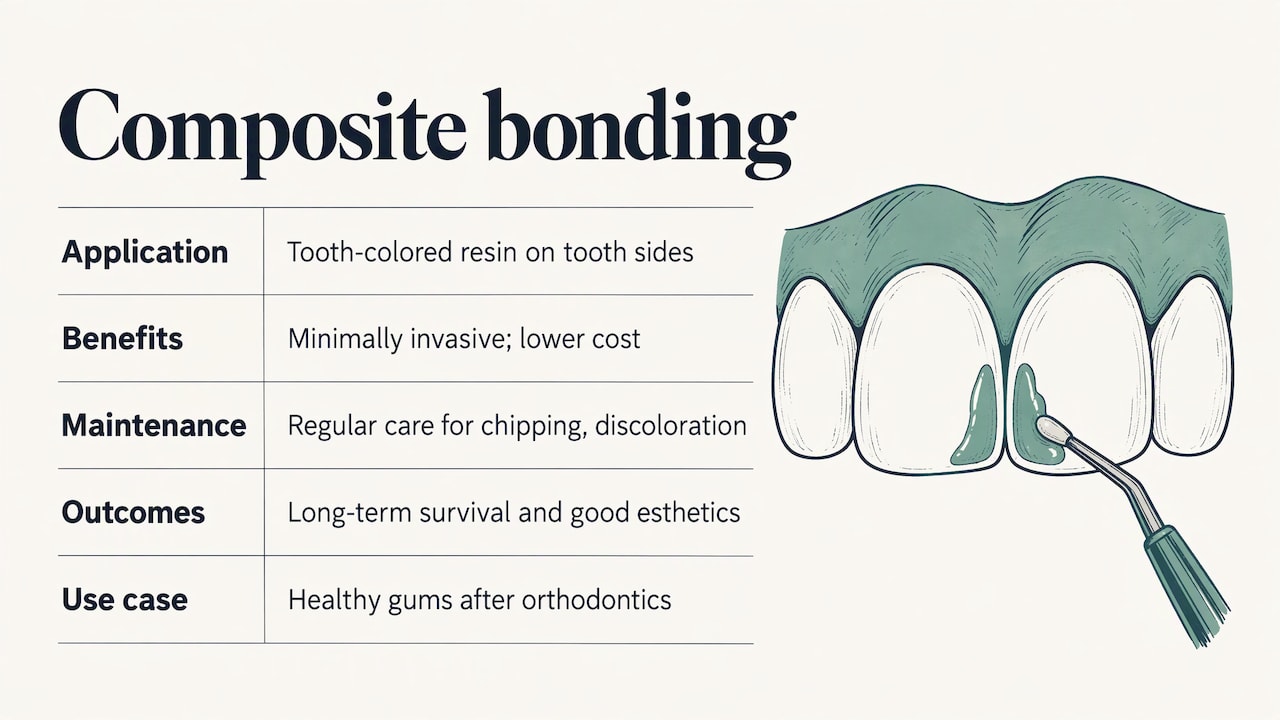
Bonding adds tooth-colored resin to the sides of the teeth so they touch lower, closer to the gum. The Thieme review calls composite buildups minimally invasive and less costly than fixed options, with long-term survival and good esthetics. It also notes they need regular maintenance, mostly because of chipping and discoloration. It describes a direct composite laminate veneer as the treatment of choice in a case with healthy gums after orthodontics. Our page on composite bonding explains what it fixes and how long it lasts.
Veneers
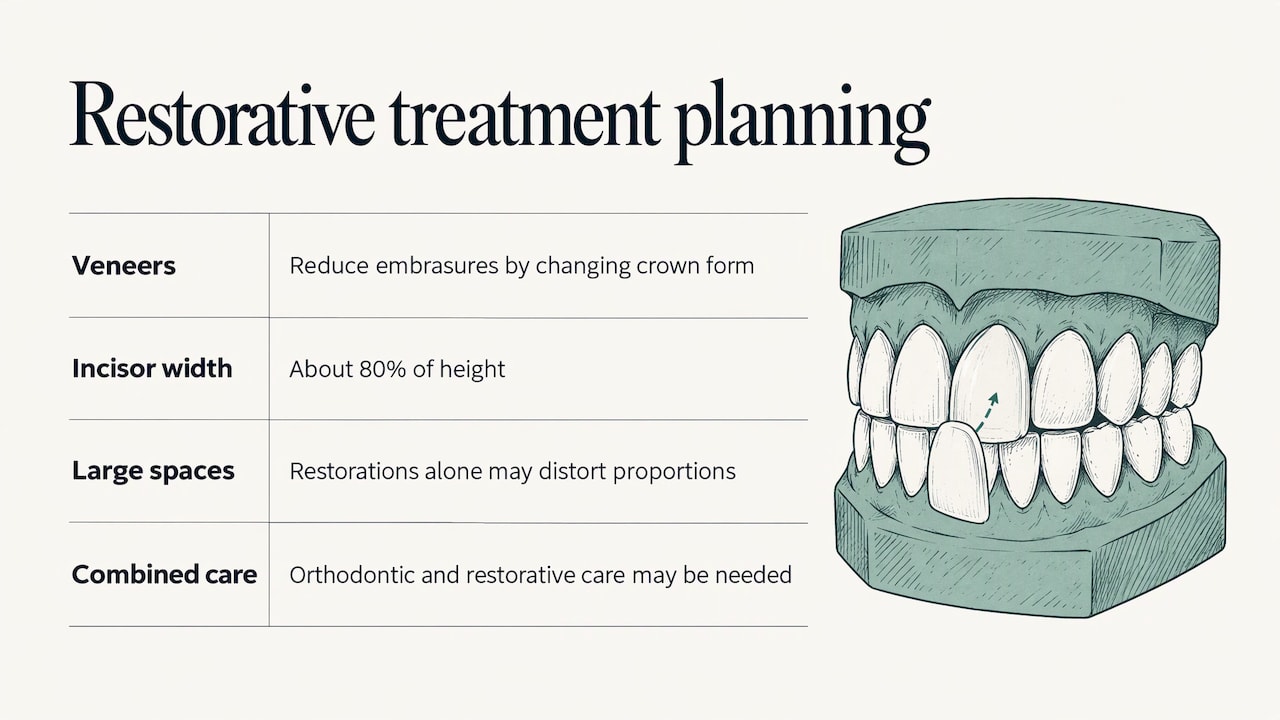
A review by a Calgary-based dentist, Sharma, states that mesiocervical restorations or veneers reduce the appearance of open embrasures by changing crown form. The same review warns that closing a large space with restorations alone can push the front teeth away from the ideal proportion, where a central incisor’s width is about 80% of its height. In that case, combining orthodontic and restorative care may be needed. That is why planning matters. Our veneers in Calgary page covers porcelain options, and you can read about no-prep veneers and how long veneers last.
Orthodontics
When the cause is root tilt or tooth position, moving the teeth can bring the contact points and roots closer together so there is less space to fill. Clear aligners are one way to do this. Discuss the risk of papilla changes at the start, as the Marquette University publication by Tanaka and colleagues says factors and treatment alternatives should be discussed before orthodontic treatment begins.
Hyaluronic acid injections
A 2026 review of 19 human studies found hyaluronic acid injections effective and safe for correcting black triangles, with high patient satisfaction. It reports the strongest results for milder papilla loss (Nordland and Tarnow classes I and II) and recommends careful case selection and realistic expectations. A 2022 SAGE review describes a typical protocol of about 0.2 mL injected into the papilla, repeated at 21 and 42 days. If you are interested in this route, ask your dentist whether your case suits it.
Why bone matters
The same SAGE review explains that the gum’s shape follows the bone beneath it. If the recession comes from bone loss, soft-tissue techniques cannot fully restore it. When the bone has gone, reshaping the teeth is often the more realistic way to close the gap visually.
Why a team approach helps
The research agrees on one point: these gaps come from several causes. A clinician should work out whether soft or hard tissue is involved and tailor the plan. The Calgary review concludes that a team of general dentist, orthodontist, periodontist and prosthodontist is critical for restoration. A good consultation should cover:
- Is the cause gum disease, trauma, tooth shape or tooth position?
- Is the gum healthy now, and does it need treatment first?
- How much of the gap can bonding or veneers close without making the teeth look too long or square?
- Will orthodontics help, and what might it do to the papilla?
- What maintenance will the result need?
Our perspective
We see black triangles as a signal worth reading before they are a cosmetic problem to cover. Our approach is whole-body and evidence-based: we look for the root cause, not just the visible gap.
That is why we begin with the health of your gums. If the cause is inflammation or a habit like rough flossing, closing the space without addressing it would not last. Once the tissue is healthy, we can plan bonding, veneers or a combination around your smile.
Many of our patients feel nervous about the dentist, especially when they are worried about their gums. We offer a judgment-free environment and sedation options, so you can talk through what you see in the mirror without feeling rushed.
Deane
Booking an assessment in Calgary
If you want black triangles looked at, we offer a new patient exam, proactive dentistry and cosmetic planning, including a preview of veneers on your smile. We can check the gums, explain what is causing the gap and talk through options in line with the cosmetic services we offer. If a dental visit makes you tense, sedation dentistry is available. Book a visit at Vigée Dental to start.

FAQ
Can black triangles go away on their own?
Sometimes, if the cause is reversible. The Thieme review notes that missing tissue can be reversible in some cases, such as after traumatic toothbrushing is corrected. If bone loss is behind the gap, the tissue is unlikely to refill by itself.
Are black triangles a sign of gum disease?
They can be. Mayo Clinic lists new black-triangle spaces among periodontitis symptoms, so a recent change is worth a prompt dental visit. Triangles that have been stable for years are often linked to age, tooth shape or past orthodontics.
What is the fastest way to close a black triangle?
Bonding is usually the most direct restorative route when the gums are healthy, because resin is added to the tooth in a single appointment-style procedure. Whether it suits you depends on the size of the gap and your tooth proportions, which we would assess in person.
Do braces or aligners cause black triangles?
Straightening can reveal them, because crowded teeth overlap and hide the space. Research reports higher rates after orthodontic treatment, which is why we talk through the gums and tooth shape before starting.
Sources
- Interdisciplinary Management of Open Interproximal Embrasures (PMC, 2025)
- Clinical Considerations of Open Gingival Embrasures (IntechOpen)
- Restorative Treatment Considerations for Black Triangles (Thieme, 2023)
- The knowledge regarding the impacts and management of black triangles (Scientific Reports, 2024)
- Non-Surgical Cosmetic Treatment Modalities for Interdental Papilla (PMC, 2026)
- Interdental papilla recession and reconstruction (Frontiers in Dental Medicine, 2025)
- Periodontitis: Symptoms and causes (Mayo Clinic)
- Black Triangle and Vitiated Esthetic Vis-à-Vis Management (SAGE, 2022)
- Esthetic Considerations in Interdental Papilla (Sharma, 2010)
- The Dilemma of the Open Gingival Embrasure (Marquette University, 2008)