
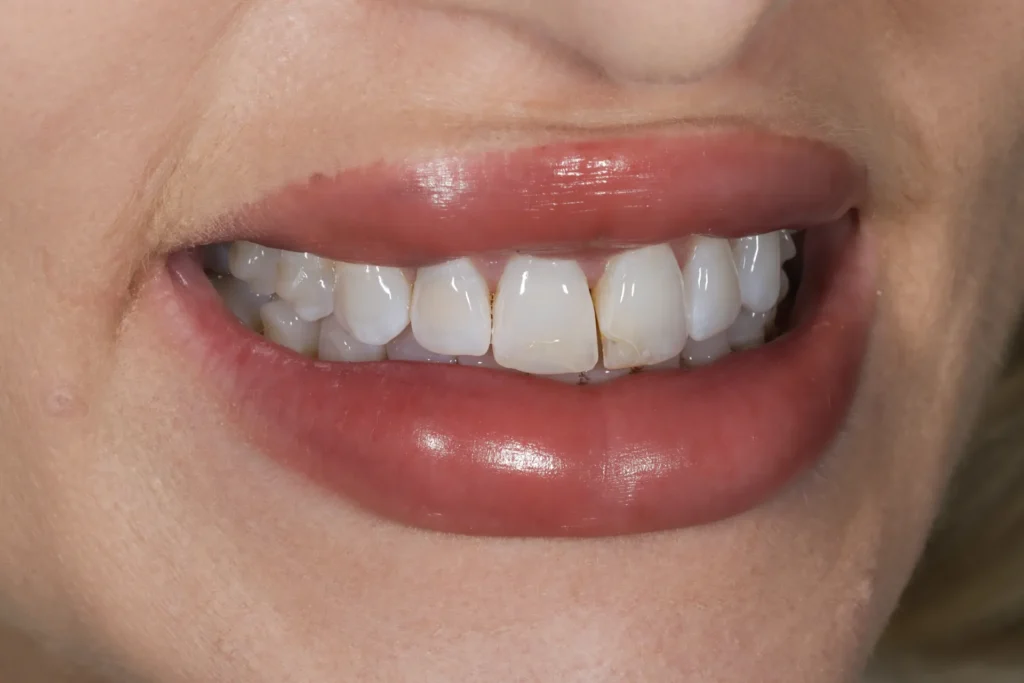
A gap in your front teeth, called a diastema, is usually a harmless difference in tooth size, jaw size or the tissue under your lip, and many people choose to keep it. If you would like it closed, the main options are bonding, veneers or clear aligners, and the right one depends on why the gap is there and how wide it is.
What is a diastema?
Diastema is the clinical name for a space between two teeth. It can appear anywhere in the mouth, but it is most noticeable between the two upper front teeth, where it is called a midline diastema. Cleveland Clinic notes that a diastema in a healthy mouth is usually a cosmetic concern rather than a health problem.
Gaps are also common in children. Spaces between baby teeth leave room for larger adult teeth, and a gap between new upper front teeth often narrows as the other adult teeth come in.
What causes a gap in front teeth?
- Tooth size and jaw size. Teeth that are small for the jaw leave extra room, so spaces form. This often runs in families.
- A large or low frenum. The frenum is the band of tissue that joins the inside of your upper lip to the gum above your front teeth. When it is thick or attaches low, it can sit between the teeth and keep them apart.
- Tongue thrust. If your tongue pushes forward against the front teeth when you swallow, rather than resting on the roof of your mouth, that steady pressure can open a gap over time. Our article on tongue posture and tongue thrust explains where the tongue should sit.
- Gum disease. Advanced gum disease can damage the bone that holds teeth in place. Teeth can then loosen and drift, and gaps appear that were not there before.
- Missing teeth. When a tooth is missing or has been removed, the neighbouring teeth can tip or shift into the space, opening gaps further along.
- Childhood habits. Long-term thumb sucking can push the upper front teeth forward and apart.
When is a gap a sign of a health problem?
A gap you have had since your teens that has not changed is usually just part of your smile. A gap that is new or widening in adulthood can mean the teeth are moving, and gum disease is one of the common reasons. Cleveland Clinic advises calling your dentist if a gap is widening.
Book a check if you notice any of these along with a gap:
- A gap that has appeared or widened over the past months or years
- Front teeth that feel loose or look like they are fanning forward
- Gums that bleed when you brush, look puffy or seem to be pulling back
- A dark triangle near the gumline between teeth
That last one is worth separating from a true diastema. A dark space close to the gums, where the teeth still touch further down, is usually a black triangle caused by gum or bone loss rather than a gap between the teeth themselves. It is treated differently, and our guide to black triangles between teeth covers the causes and options.
How to close a gap in front teeth
Any gum disease is treated first. After that, the choice depends on the size of the gap, how the other teeth are aligned, and whether you also want to change tooth shape or colour.
| Option | Suits | What it involves | Things to know |
|---|---|---|---|
| Composite bonding | Small gaps between teeth that are otherwise well shaped and aligned | Tooth-coloured resin is added to the sides of the teeth and shaped by hand, usually in one visit with little or no enamel removed | Can stain or chip over time and may need touch-ups. Wider gaps can make teeth look too broad |
| Composite veneers | Small to moderate gaps when you also want to change tooth shape or colour | Resin covers the whole front of the tooth, sculpted directly in the chair | Less stain resistant than porcelain and needs polishing and repairs over the years |
| Porcelain or no-prep veneers | Gaps combined with chips, wear, uneven shape or colour you want to change | Thin lab-made shells bonded to the front of the teeth, usually over two to four visits for porcelain | Last about 10 years with good care. Do not treat gum disease or bite problems, which are treated first |
| Spark clear aligners | Mild to moderate spacing, or gaps spread across several teeth | A series of removable trays moves the teeth together, with progress checks every 6 to 10 weeks | Closes the gap with your own teeth. A retainer is needed afterwards to stop the space reopening |
| Combined plan | Larger gaps, or gaps with crowding elsewhere | Aligners first to move teeth closer, then bonding or veneers to fine-tune shape | Often gives a more natural tooth width than covering a large gap with material alone |
Bonding for small gaps. For a small space between otherwise healthy, well-shaped front teeth, composite bonding is often the simplest route. The dentist adds tooth-coloured material to the sides of one or both teeth until they meet. Because material is added rather than removed, it is a conservative choice.
Veneers when shape or colour matters too. If you are also unhappy with chipped edges, uneven lengths or colour, veneers can close a gap and change those things at the same time. Composite veneers are made directly in the chair. Porcelain and no-prep veneers are made in a lab. If you are weighing it up, our article on how much veneers cost explains what changes the total.
Aligners to move the teeth together. When the teeth themselves are a good size and shape, moving them is often the cleaner answer. Spark aligners suit mild to moderate spacing, and they close the gap without adding material to your teeth. A retainer afterwards matters, because teeth tend to drift back, especially when a frenum or tongue habit caused the gap.
What happens if the frenum is the cause?
If a thick frenum is holding the teeth apart, closing the gap with aligners or bonding alone may not hold. A minor procedure called a frenectomy releases or reshapes the tissue. At Vigée Dental, we assess the frenum during your exam and arrange a specialist referral when one is needed, then plan the gap closure around it.
If tongue thrust is part of the picture, retraining the tongue can help the result stay put. Vigée Dental has an in-office myofunctional therapist who works on tongue resting position and swallowing patterns.
At Vigée Dental, Dr. Nicole Robins looks at why a gap is there before suggesting how to close it, checking your gums, bite and tooth shape first. Explore our cosmetic dentistry options and clear aligners, or book a consultation online. Cost depends on the plan, and you receive a written estimate before treatment starts.
Frequently asked questions
Is a gap in front teeth bad for you?
Usually not. A gap you have had for years in a healthy mouth is mostly a matter of appearance. A new or widening gap should be checked, because it can be a sign of gum disease or shifting teeth.
Will my child’s gap close on its own?
Often it does. Gaps between baby teeth are normal, and a gap between the new upper front teeth often narrows as the other adult teeth come in. If a gap remains once all the adult front teeth are in, ask about it at your child’s checkup.
What is the quickest way to close a small gap?
For a small gap between well-shaped teeth, composite bonding can often be done in a single visit. Whether it suits you depends on the gap’s width, as too much material can make teeth look wide.
Can a gap come back after it is closed?
Yes. After aligners, teeth can drift back without a retainer. If a frenum or tongue thrust caused the gap, it may also reopen unless that cause is addressed.
Is a black triangle the same as a gap?
Not quite. A black triangle is a dark space near the gumline between teeth that still touch lower down, usually from gum or bone loss. A diastema is a space between the teeth themselves.