

The right dentist for your child is one who treats children every day, explains each step in words a child understands and is easy to get to on a school week. In Calgary you have two routes: a pediatric dental specialist, or a general dental clinic with a dedicated children’s program. Either can give your child excellent care when the visits are regular and your child feels safe. This guide explains what a pediatric dentist does, when to book the first appointment, what to expect in the chair and how to pay for it. We are Vigée Dental, a Calgary clinic that offers pediatric dentistry, so we also say what our own children’s visits include.
TL;DR
- Book your child’s first dental visit within 6 months of the first tooth appearing, and no later than the first birthday.
- A pediatric dentist is a specialist who has completed two to three extra years of training after dental school and treats only children. A family dentist can also care for kids, and regular visits matter most.
- Routine care for children usually means exams, cleanings, X-rays when needed, sealants, fluoride and fillings, with comfort techniques for nervous kids.
- Alberta has programs that help low-income families pay for children’s dental care, so ask before assuming cost is a barrier.
- Our Calgary clinic offers checkups, cleanings, sealants, white fillings, habit and orthodontic guidance, sports mouthguards and gentle behaviour management for children.
Table of Contents
- What a pediatric dentist does
- Pediatric specialist or family dentist: which is right for your child?
- When to book the first visit
- What happens at a child’s first appointment
- Common children’s dental treatments
- Helping an anxious child feel safe
- What children’s dental care costs in Calgary
- Cavity prevention at home
- When it is an emergency
- Perspective
- Book your child’s visit with us
- FAQ
- Sources
What a pediatric dentist does
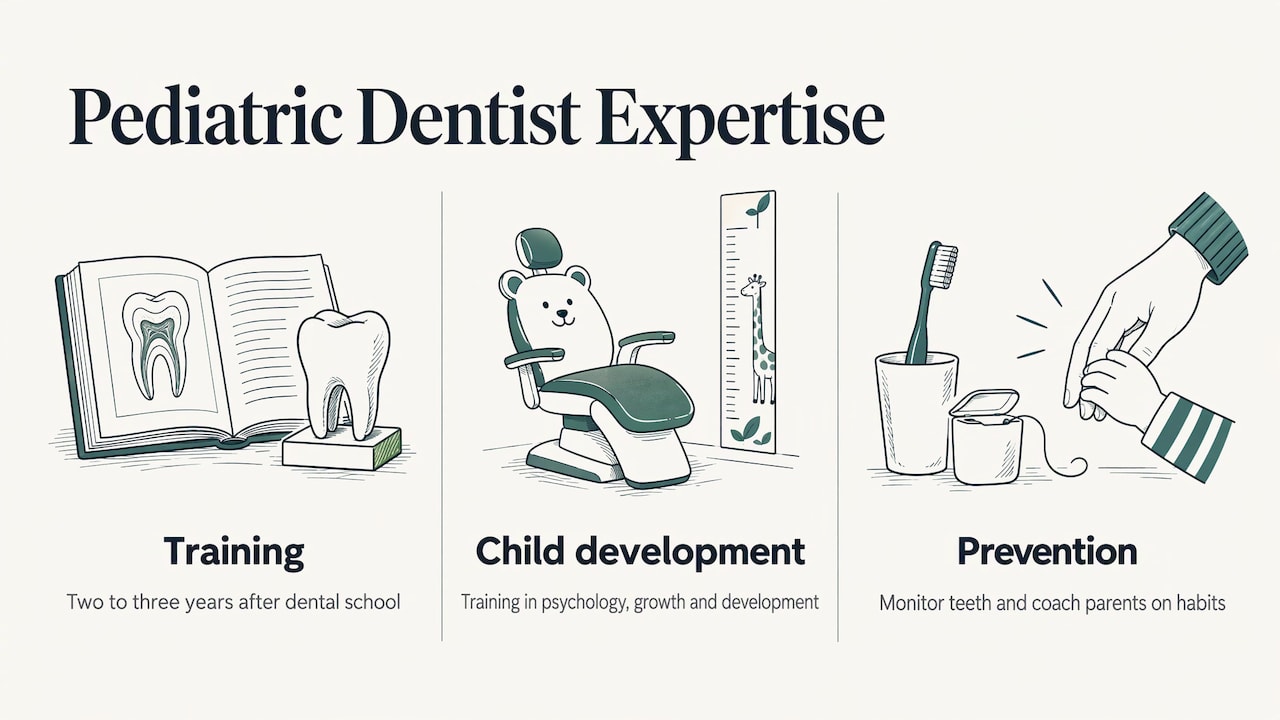
The American Academy of Pediatric Dentistry explains that a pediatric dentist has two to three years of specialty training after dental school and limits their practice to children. That covers infants through adolescence, including children with special health needs.
The American Dental Association adds that the specialty includes training in child psychology, growth and development, and care for anxious children. In practice, that means a dentist who knows how a baby’s jaw develops, why a six-year-old will not open wide for a stranger and how to explain a cleaning without frightening anyone.
Children’s dental care is mostly prevention. Teeth are monitored as they come in, cavities are caught while they are small, and parents get practical coaching on brushing, flossing, diet, thumb sucking and pacifiers. Good prevention means fewer, shorter and simpler treatments later.
Pediatric specialist or family dentist: which is right for your child?
This is the question most Calgary parents ask first, and the honest answer is that both work. The ADA says there is no wrong answer as long as your child sees the dentist regularly. It also notes that a general dentist may refer a child to a specialist when the child would benefit from more specialized care, for health or behavioral reasons, or would be more comfortable in an office designed for children.
Here is a simple way to think about it:
| Your situation | What to look for |
|---|---|
| Healthy child, routine checkups and cleanings | A dentist who welcomes children, keeps visits short and relaxed, and can see the whole family |
| Several family members need appointments | A clinic where everyone can be booked together, which saves trips across the city |
| Child is very anxious or has had a bad experience | A team trained in gentle behaviour guidance, with calm pacing and clear communication |
| Complex medical or developmental needs | Ask your physician or dentist whether a pediatric specialist is the best fit |
| Dental trauma or sudden pain | Fast access to an emergency appointment |
What matters most is a place where your child will keep coming back. A child who attends every six months with a team they trust will usually have an easier time than one who sees a perfect specialist once and then avoids the dentist for years.
Questions to ask before you book
Whatever kind of office you choose, a few questions tell you a lot:
- Do you see children of my child’s age, including toddlers?
- How do you help a nervous child settle in, and can we visit the office before the exam?
- Which preventive treatments do you offer, such as sealants and fluoride?
- What happens if my child has a dental emergency outside regular checkups?
- How do you explain treatment and costs before anything is done?
- Do you direct bill insurance, and can you help with provincial benefit forms?
A good office answers these without hurrying you.
When to book the first visit
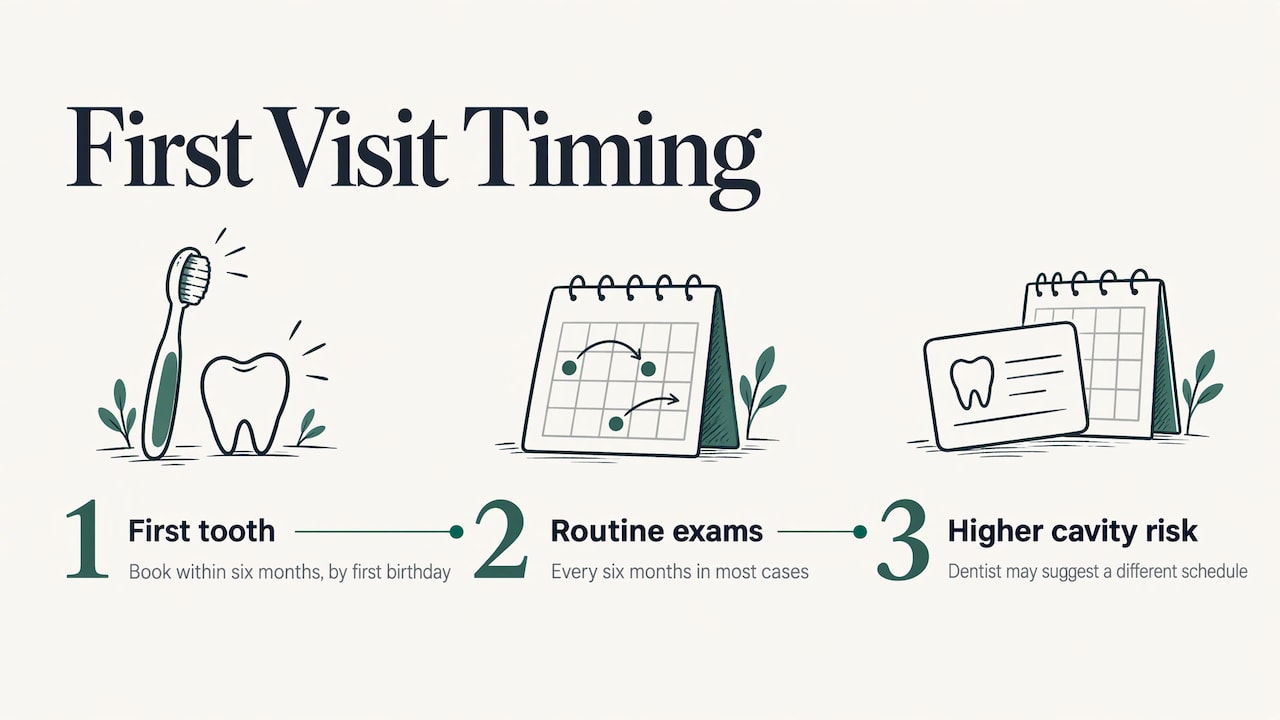
The Canadian Dental Association recommends that a dentist assess infants within 6 months of the first tooth erupting or by one year of age. Alberta Health Services gives the same guidance: within 6 months of the first tooth, no later than the first birthday. The AAPD agrees, recommending a visit when the first tooth appears or by the first birthday.
That can feel early for a baby with a few tiny teeth. The first visit is mostly about looking, talking and setting up good habits, not about treatment. Parents learn how to clean an infant’s teeth, how feeding and sleep routines affect cavities and what to expect as the mouth changes.
After that, the CDA says that in most cases a dental exam every six months lets the dentist catch small problems early. Your dentist may suggest a different schedule if your child has a higher risk of cavities.
What happens at a child’s first appointment
Expect a short, low-pressure visit. Most first appointments include:
- A conversation about your child’s health, feeding habits, sleep, pacifier or thumb use and any concerns you have
- A gentle look at the teeth, gums, tongue, bite and jaw
- A light cleaning, depending on age and cooperation
- Advice on brushing, flossing, fluoride toothpaste and snacks
- A plan for the next visit
Alberta Health Services suggests several ways to make the first visit more positive: choose the dentist carefully, talk to your child about what will happen, and read books designed to prepare young children. It also notes that some dentists let a child come in once or twice before the exam to get used to the staff and the office.
How to prepare your child
- Use neutral, simple words. Say the dentist will count and clean teeth, and skip words like pain, needle or hurt.
- Do not promise that nothing will be uncomfortable. Promise that the team will go slowly and explain.
- Schedule the visit for a time when your child is rested and fed, often mid-morning for younger children.
- Stay calm yourself. Children read a parent’s nerves quickly.
- Bring a favourite stuffed animal. Many children like to show it the chair first.
Common children’s dental treatments
Cleveland Clinic lists the preventive and restorative work pediatric dentists do: exams, cleanings, X-rays, fluoride, sealants, fillings, crowns, extractions and emergency treatment. Here is what each is for, in plain terms.
Exams, cleanings and fluoride
A checkup looks at the teeth, gums, bite and growth. Cleaning removes plaque and tartar that brushing misses. Fluoride varnish strengthens enamel and is a routine part of cavity prevention for many children. Our dental hygiene and cleaning appointments are built around this kind of regular maintenance.
Sealants
Sealants are thin coatings that cover the chewing surfaces of back molars, where food and bacteria collect in deep grooves. According to one dental resource, they can protect newly erupted permanent teeth for up to 10 years. Alberta Health Services advises parents of children aged 6 to 16 to talk with the dentist about sealants on molars once permanent teeth begin to appear. Placing a sealant is quick and typically does not require drilling.
Fillings
When a cavity does form, a filling removes the decay and restores the tooth. Tooth-colored composite resin is a common choice for children, as Cleveland Clinic notes. We offer white fillings for kids as part of our children’s dental care.
Crowns and larger repairs
When a baby molar is badly decayed or damaged, a crown may protect it until the permanent tooth is ready. Stainless steel crowns are metal caps that restore decayed, damaged or fractured baby molars. Baby teeth hold space for permanent ones, so keeping them healthy matters even though they will eventually fall out. For larger repairs on any age, see our restorative dentistry page.
Habits and early orthodontic guidance
Thumb sucking, long pacifier use and mouth breathing can affect how a child’s bite develops. Alberta Health Services notes that a children’s dentist is specially trained to help with finger, thumb or pacifier sucking problems. Early guidance is usually gentle: positive reinforcement, simple habit tools and watching how the jaw grows. We offer habit and orthodontic guidance at our clinic.
Sports mouthguards
If your child plays hockey, soccer, basketball or any contact sport, a properly fitted mouthguard protects teeth, lips and gums. Ask us about sports mouthguards at a checkup, since a child’s mouth changes quickly and a guard that fit last year may not fit now.
Helping an anxious child feel safe
Many children are nervous at the dentist, and many adults who dread appointments say it began in childhood. The ADA says pediatric dentists use a wide range of approaches to help a child complete treatment. The choice of method depends on the child’s health history, special needs, the type of treatment, emotional and intellectual development and parents’ preferences.
For most children, comfort comes from simple things:
- Telling the child what will happen before it happens
- Showing instruments and letting the child touch them
- Short appointments and breaks
- Praise for effort, never pressure
- A parent nearby
For procedures, Kaiser Permanente says dentists may use numbing medicine, nitrous oxide gas, anti-anxiety medicines or general anesthesia to help a child stay calm. Which option is appropriate depends on your child’s age, health and the treatment. Discuss it with your dentist and your child’s physician before the appointment. If you want to learn how options work in our clinic, read about our sedation dentistry.
What children’s dental care costs in Calgary
We do not publish fixed prices for children’s visits, because the cost depends on your child’s age, what is needed and your coverage. We give you a clear explanation before treatment starts. Here are the public supports worth knowing about.
Alberta Child Health Benefit
The Alberta Child Health Benefit covers basic and preventive dental care, including fillings, X-rays, exams and cleanings, for children up to 18 in low-income households. For 2026-2027 the income guidelines are $26,023 for one adult with one child and $31,237 for a couple with one child. Many dentists accept this benefit, so ask when you book.
Alberta Blue Cross publishes the fees it pays under the program. Its schedule effective February 1, 2026 lists, for example, fluoride treatments at $25.74 for children aged 4 to 17, once a year, and a first-tooth sealant at $25.74.
Public and community options
Alberta Health Services has described Public Health dental clinics in Calgary that provide emergency and basic care at a reduced fee of about 20% for eligible low-income families without dental insurance. That document dates from 2018, so check with AHS for current eligibility and fees.
The Alberta Dental Association also lists the Alex Dental Health Program, which serves children and youth aged three to 24 at no cost. Its Dental Health Bus visits high-need elementary schools and community sites in Calgary for sealants, cleanings and fluoride. The same page gathers the provincial low-income dental programs in one place.
Private insurance and fee guides
If you have a workplace plan, ask your insurer which children’s services are covered and how often. Alberta’s dentists follow a fee guide that the Alberta Dental Association and College publishes and reviews every year; when the current guide first came out in 2018, recommended fees for common procedures were 8.5% lower than in 2016. Your dental office can explain how its fees compare and give you an estimate before treatment.
Cavity prevention at home
Visits help, but daily habits do most of the work.
- Brush twice a day with fluoride toothpaste and help your child until they can do it properly.
- For children aged 6 to 16, Alberta Health Services advises supervising brushing until the child spits toothpaste out instead of swallowing it, which may not be until age 8 or older.
- Start flossing as soon as teeth touch each other.
- Keep sugary drinks and sticky snacks to mealtimes instead of sipping and grazing all day.
- Do not let a baby fall asleep with a bottle of anything but water.
If your family follows a proactive routine, regular checkups find problems before a child feels any pain. Our proactive dentistry approach is built on this idea: find the cause, not only the symptom.
When it is an emergency
Children fall, collide and chew on things they should not. A knocked-out tooth, a broken tooth, a swollen face or pain that keeps a child awake needs prompt attention. Read our guide on what to do in the first minutes of a pediatric dental emergency, and keep our emergency dentistry page handy. Call the clinic as soon as you can, and for severe facial swelling or trouble breathing, go to an emergency department.
Perspective
Parents often tell us that their own worst dental memories began in childhood, and that is why we care so much about the first visits. We believe a child’s dental care should feel safe, unhurried and free of judgment.
Our whole-body, evidence-based approach looks at why problems happen: diet, habits, breathing, grinding, home care. We would rather help a family prevent a cavity than fill one. When a child does need treatment, we explain it in plain language, move at the child’s pace and bring in comfort options as appropriate.
We also like seeing families in one place. A parent who feels welcome tends to bring a child who feels welcome, and that is how good habits last into the teenage years and beyond.
Deane
Book your child’s visit with us
Vigée Dental was founded in Calgary by Dr. Nicole Robins around personalized, comfort-focused care. Our children’s services include checkups, cleanings, sealants, white fillings, habit and orthodontic guidance, sports mouthguards and gentle behaviour management.

If you are ready to book a first visit, a checkup or an exam for your whole family, start with our pediatric dentistry page or visit vigeedental.ca to request an appointment.
FAQ
At what age should my child first see a dentist?
Within 6 months of the first tooth appearing, and no later than the first birthday, according to the Canadian Dental Association. The first visit is short and focuses on getting comfortable and learning how to care for early teeth.
Does my child need a pediatric specialist, or can a family dentist treat them?
Both can care for children. The ADA says either is fine when your child sees the dentist regularly, and a general dentist can refer you to a specialist if your child needs more specialized care. Choose the office where your child feels relaxed and where you can book consistently.
How often should my child have a checkup and cleaning?
For most children, every six months. That interval lets the dentist spot small problems early. If your child is prone to cavities, your dentist may recommend a closer schedule.
What if my child is afraid of the dentist?
Tell the office before the appointment. A gentle approach often includes a pre-visit tour, explaining each step, short appointments and praise. For longer treatments, your dentist can discuss comfort options with you, including those described on our sedation dentistry page.
Can I get help paying for my child’s dental care in Alberta?
Possibly. Low-income families may qualify for the Alberta Child Health Benefit, and community programs like the Alex Dental Health Program provide care for children at no cost. Ask your dental office to help you check what applies to your family.
Sources
- AAPD: Frequently asked questions for parents
- American Dental Association MouthHealthy: Pediatric dentistry
- Canadian Dental Association: Your child’s first visit
- Alberta Health Services: Basic dental care from birth to 16 years
- Cleveland Clinic: Pediatric dentist
- Kaiser Permanente: Dental procedures in children
- NewMouth: Common pediatric treatment options
- Alberta.ca: Alberta Child Health Benefit
- Alberta Blue Cross: Schedule A dental fees, 2026
- Alberta Health Services: How can I get dental treatment for my child?
- Alberta Dental Association: Dental support programs for Albertans
- Alberta.ca: Dental fees in Alberta