

A family dentist in Calgary looks after the teeth and gums of every age in your household, from a toddler’s first checkup to an adult’s cleanings, fillings and cosmetic work, so you build one long-term relationship instead of juggling offices. The best fit is a practice that is taking new patients, is easy to reach, explains fees before treatment and makes visits comfortable for the most nervous person in your family. Below is how to judge each of those, what a visit schedule should look like, and how Alberta fees and coverage work.
TL;DR
- A family dentist is trained to care for patients from childhood through adulthood and keeps detailed records for the whole family, according to dental education resources.
- The right checkup interval is personal. Many people go every six months, but your risk level, gum health and history decide it.
- In Alberta, dentists set their own fees, so ask for a written estimate and confirm how your insurance or the Canadian Dental Care Plan (CDCP) applies before treatment.
- If anyone in your family is anxious, ask about sedation and how the team handles fear before you book.
- At Vigée Dental in Calgary, we offer general, preventive, pediatric, emergency, sedation and cosmetic care under one roof.
Table of Contents
- What a family dentist actually does
- How often should your family go?
- What to check before choosing a family dentist in Calgary
- Children, teens and parents under one roof
- Comfort and sedation for anxious patients
- Fees, insurance and the Canadian Dental Care Plan
- Beyond checkups: cosmetic options for adults
- Perspective
- Book a first visit with Vigée Dental
- FAQ
- Sources
What a family dentist actually does
A family dentist is a general dentist who sees patients of all ages. The practical benefit is continuity: the same office knows your child’s growth, your own history of cavities or gum problems, and your partner’s sensitivity to certain treatments. Adults are welcome too. Family practices manage the oral health needs of all family members throughout their lives, so you do not need children to qualify.
In day-to-day terms, a good family practice covers four areas:
- Prevention: exams, professional cleanings, oral cancer screening, and advice on home care. See our preventive and proactive care approach.
- Restorative care: fillings, root canal therapy, crowns and, where needed, full-mouth rehabilitation. Details are on our restorative dentistry page.
- Urgent care: a broken tooth, severe toothache or a knocked-out tooth. Our emergency dentistry page explains what to do first.
- Cosmetic care: whitening, clear aligners, bonding and veneers, for adults who want to change how their smile looks.
The range matters because it keeps you from being referred around for routine needs. When one practice offers all of this, your records, X-rays and treatment plan stay in one place.
How often should your family go?
Many people are told to come every six months, and that is common. But the Canadian Dental Association says the right interval depends on your oral health needs: how well you clean at home, problems that need monitoring, tartar buildup, diet, smoking, history of cavities or gum disease, and your general health. It also says dental plan coverage should not decide how often you go.
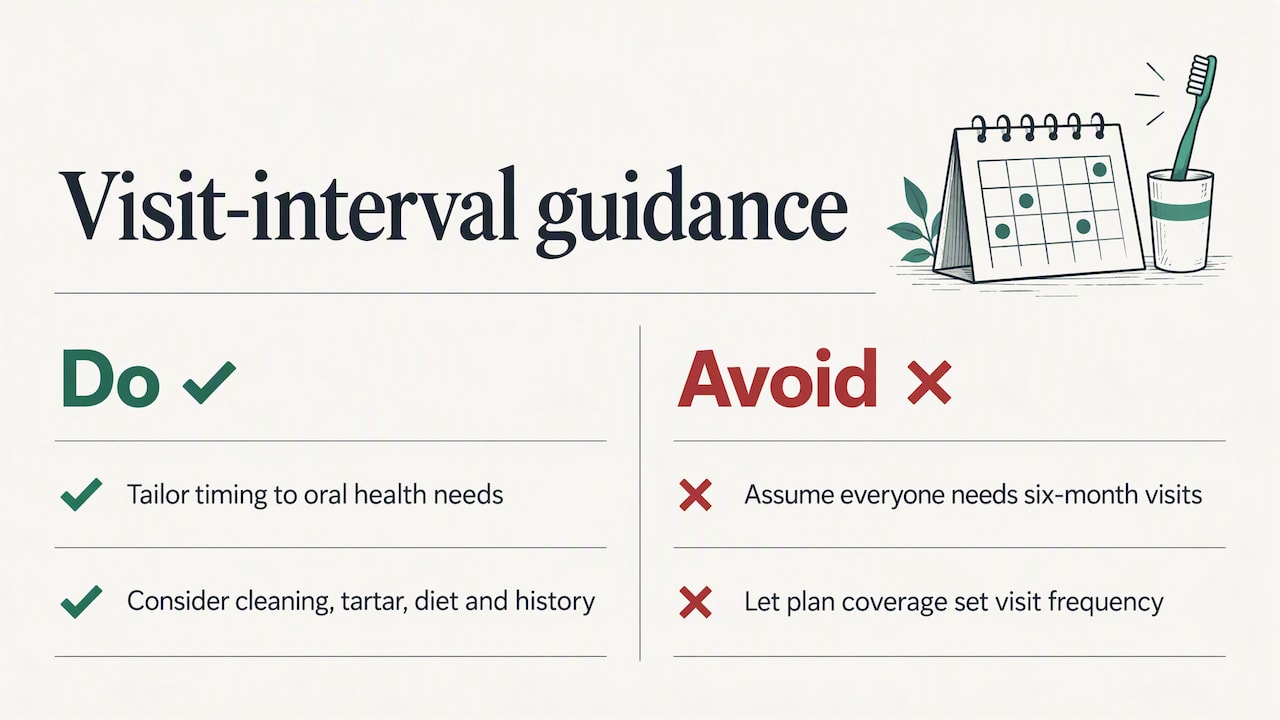
HealthLink BC’s guidance, last reviewed in 2022, says many people should have a routine checkup once or twice a year. At those visits the dentist checks for decay, gingivitis and other problems, and the hygienist removes tartar, flosses and polishes.
The research agrees that one number does not fit everyone. A 2023 peer-reviewed scoping review found weak evidence for a fixed adult visit interval and concluded that dental professionals should give individually tailored, risk-based recommendations rather than automatically prescribing six-month visits.
What this means for a household
Within one family, intervals can differ. A parent with a history of gum disease may need cleanings more often, while a teenager with no cavities and good habits may be fine on a longer schedule. Ask your dentist to tell you your risk level and the reason for the interval they propose. A practice that explains it in plain words is one that treats you as a person, not a recall list.
Home care carries the rest. The Public Health Agency of Canada advises adults to brush for about two minutes at least twice a day, floss daily and use fluoride products, check their mouth regularly and see an oral health professional when problems arise. Bleeding when you brush is one of those signs; our guide to bleeding gums explains common causes and next steps.
What to check before choosing a family dentist in Calgary
The CDA suggests weighing location, hours, languages spoken, and whether you want a generalist or a specialist. It also suggests asking whether the practice is accepting new patients, and looking at the office environment. When you discuss treatment, ask about cost, how long it takes, alternatives, and whether it may need to be redone. Ask how infection control is carried out too.
Turn that into a checklist you can use on the phone or at a first visit:
| What to check | Why it matters for a family | What to ask |
|---|---|---|
| New patient availability | Booking everyone at the same office saves time | Can you see parents and children in the same visit block? |
| Location and hours | School runs and work shifts shape what you can keep | What days and times do you offer? |
| Range of services | Fewer referrals and one set of records | Do you handle fillings, root canals, emergencies and cosmetic work? |
| Fees and billing | Fees vary between offices | Can I get a written estimate and do you bill my insurer directly? |
| Comfort practices | Fear is a main reason people skip care | What do you offer for anxious patients, including sedation? |
| Communication | You should understand the plan before agreeing | Will you explain the alternatives and what happens if I wait? |
A first visit is also the time to judge the feel of the place. Are you rushed? Are questions welcome? Does anyone make you feel judged about your last dental visit? That last point is one we take seriously at Vigée Dental, where our approach is built on a judgment-free environment.
Children, teens and parents under one roof
Family care works best when children start early. Our pediatric dentistry service covers checkups, cleanings, sealants, white fillings, habit and orthodontic guidance, sports mouthguards and gentle behaviour management. The aim is for a child’s first experiences to be calm, so dental visits do not become something they dread as adults.
A few practical tips for parents:
- Book your own appointment and your child’s close together so the child sees what a normal visit looks like.
- Tell the team about any fears or past bad experiences before the visit, not at the chair.
- Ask about mouthguards if your child plays hockey, soccer or any contact sport.
- Mention thumb sucking, nail biting or mouth breathing, as these habits can affect how teeth and jaws develop.
Comfort and sedation for anxious patients
Dental anxiety is common among adults, and it often passes to children. If it keeps you from booking, choose a practice that treats comfort as part of the care. Before booking, ask:
- What sedation options do you offer, and who is a good candidate?
- Can we start with a short, low-pressure visit?
- Will you tell me what you are about to do before you do it?
- Can I signal you to pause?
For context on cost, the 2025 Abbreviated Alberta Dental Fee Guide lists conscious sedation with nitrous oxide at a suggested fee of $102.01 for two units of time. That is a suggested guide figure, not what any one office charges, so ask your dentist for their own fee. We offer sedation dentistry for patients who want a calmer experience; talk to our team about which option fits your situation and health history.
Fees, insurance and the Canadian Dental Care Plan
Cost is where many families hesitate. In Alberta, dentists set their own fees, and those may differ from the Alberta Dental Association’s recommended guide. The Association publishes an Abbreviated Dental Fee Guide for General Dentists so Albertans can see typical fees for common procedures. Our own explainer, the Alberta dental fee guide for patients, walks through how to read it.
Working with your insurer
The Canadian Dental Association’s FAQ notes that patients are responsible for paying for treatment. Dentists may help by coordinating with your benefit carrier, but reimbursement is between you and your plan. The practical step: ask for a written treatment estimate before major work, and submit it to your insurer for a pre-determination if your plan allows.
The CDCP
The CDCP provides a dental-care subsidy for Canadian residents without a dental plan whose adjusted household income is less than $90,000, and co-payments may apply. If you are enrolled, the Alberta Dental Association advises you to confirm that your coverage is active before booking. Also confirm with the office whether it accepts the CDCP and bills Sun Life directly, and ask about any amounts charged above CDCP-established fees.
If cost is a barrier
Calgary’s Sheldon M. Chumir Health Centre offers reduced-fee emergency and problem-based dental services for eligible low-income people without insurance. It does not provide elective or cosmetic services such as veneers. Ask your family dentist about payment questions up front; a clear conversation beats postponing care until it becomes urgent.
Beyond checkups: cosmetic options for adults
Many parents come in for the kids and then ask about their own smile. A family practice with a cosmetic side can handle that without a referral. Our cosmetic dentistry services include teeth whitening, clear aligners, bonding and veneers. See our pages on teeth whitening and clear aligners for what each involves.
Veneers: what to know first
The CDA explains that veneers can improve the colour, shape, angle or spacing of teeth. They are thin shells attached to the front of teeth, typically made of porcelain or composite resin. With porcelain, a thin layer of enamel is removed, so the treatment is irreversible. Care for veneered teeth by brushing and flossing daily. Grinding, clenching or biting hard foods can chip them, and an underlying cavity means redoing the veneer or placing a crown.
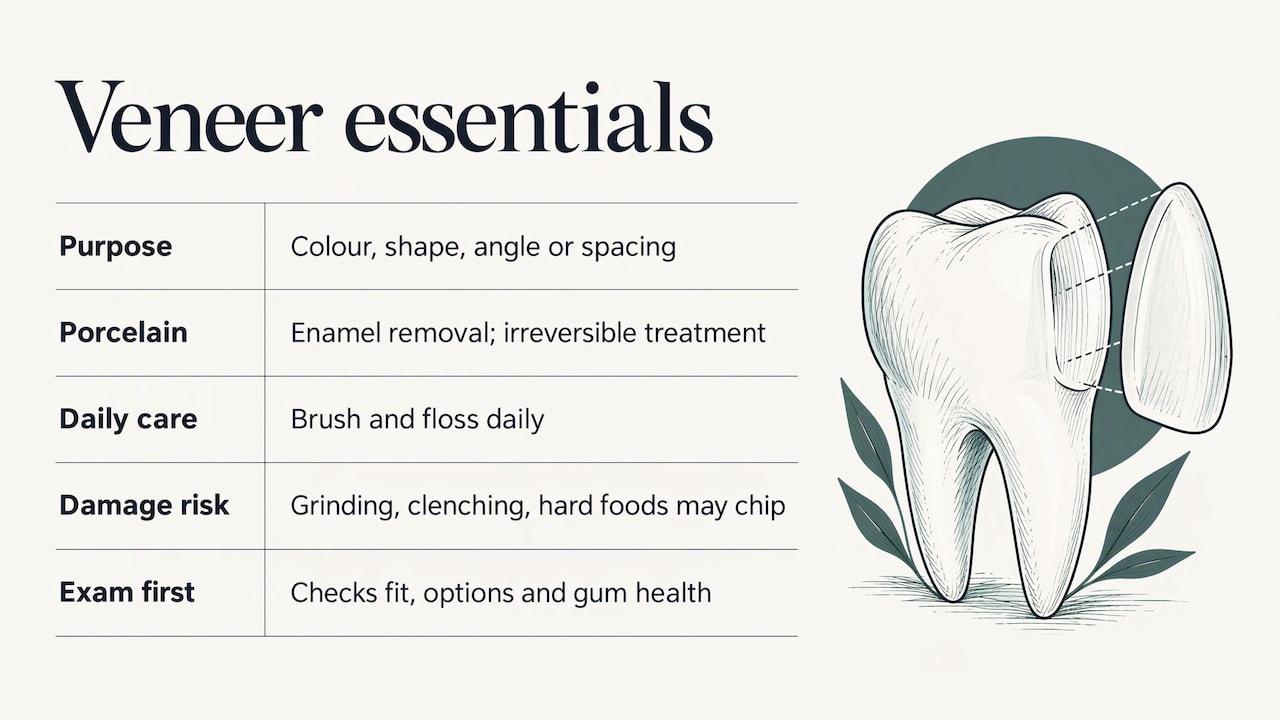
That is why a thorough exam comes first. A dentist who knows your whole mouth can tell you whether veneers suit you, whether a less invasive option such as composite bonding would do, or whether gum health needs attention beforehand. If you want to go ahead, read about how long veneers last, or see our veneers in Calgary and no-prep veneers pages.
Perspective
We think the most useful thing a family dentist can do is look for the cause, not just fix the symptom. A cavity that keeps coming back, sore jaw muscles, worn teeth and bleeding gums often share roots in diet, grinding, breathing habits or inflammation elsewhere in the body. That is why our approach is whole-body and evidence-based, and why we build plans around your risk rather than a generic calendar.
We also believe comfort is part of clinical quality. People who feel judged avoid care, and avoided care becomes expensive, urgent care. Our job is to make the first step easy: a calm conversation, clear options, and sedation when it helps.
For families, that means one team that knows everyone’s history, from a child’s first sealant to a parent’s smile rehabilitation. Preventive work through our proactive dentistry program is where we start, because the best treatment is the one you never need.
Deane
Book a first visit with Vigée Dental
If you are choosing a family dentist in Calgary, our new patient exam is a straightforward place to start. It gives us a picture of your oral health and gives you a clear plan, with your questions answered and nothing hurried. We welcome adults, children and anxious patients, and our services range from teeth cleanings and dental hygiene to emergency, restorative and cosmetic care.

To see everything we offer or to request an appointment, visit Vigée Dental in Calgary. For prices, ask our team for a written estimate for your situation.
FAQ
Can adults see a family dentist?
Yes. Family dentists are trained to care for patients from childhood through adulthood. Many adults prefer them because their records, X-rays and treatment history stay with one team. That includes preventive care, fillings and cosmetic treatment.
How often should my family get a dental checkup?
Many people go once or twice a year, but the right interval depends on each person’s risk, including gum health, cavity history, diet and smoking. Ask your dentist to set a schedule for each family member and to explain why. Do not let insurance coverage alone decide it.
Does a family dentist handle emergencies?
Many do, but ask before you need it. A broken tooth, severe pain or swelling should be seen quickly, so find out in advance how your dentist handles urgent visits. Our emergency dentistry page explains what we do.
How much does a family dentist cost in Calgary?
It depends on the treatment and the office. Alberta dentists set their own fees, which may differ from the Alberta Dental Association’s suggested guide. Ask for a written estimate, and check your insurance or CDCP eligibility before treatment.
What if I am afraid of the dentist?
Tell the office when you book. Ask about sedation options, short first visits and a way to pause during treatment. A good practice will plan around your comfort rather than push you through.
Sources
- What is Family Dentistry? (New Mouth)
- How to Find a Family Dental Practice (Colgate)
- Regular dental checkups (Canadian Dental Association)
- Dental Checkups for Children and Adults (HealthLink BC)
- Oral health for adults (Canada.ca)
- Effect of Different Frequencies of Dental Visits (PMC)
- Bonding and veneers (Canadian Dental Association)
- Abbreviated Alberta Dental Fee Guide 2025
- Dental fees in Alberta (Alberta.ca)
- Dental Care FAQs (Canadian Dental Association)
- The Canadian Dental Care Plan (Alberta Dental Association)
- CDCP renewals 2026-2027 (Alberta Dental Association)
- Sheldon M. Chumir Health Centre Public Health Dental (Alberta Health Services)
Recommended
- Proactive Dentistry In Calgary
- Teeth Cleanings & Dental Hygiene In Calgary
- Emergency Dentist In Calgary
- Restorative Dentistry In Calgary
- Dentist in SE Calgary: How to Choose Care You’ll Keep Booking
- Oral Health and Overall Health: How Your Mouth and Body Are Connected
- Sedation Dentistry in Calgary: Types, Safety and What to Expect