
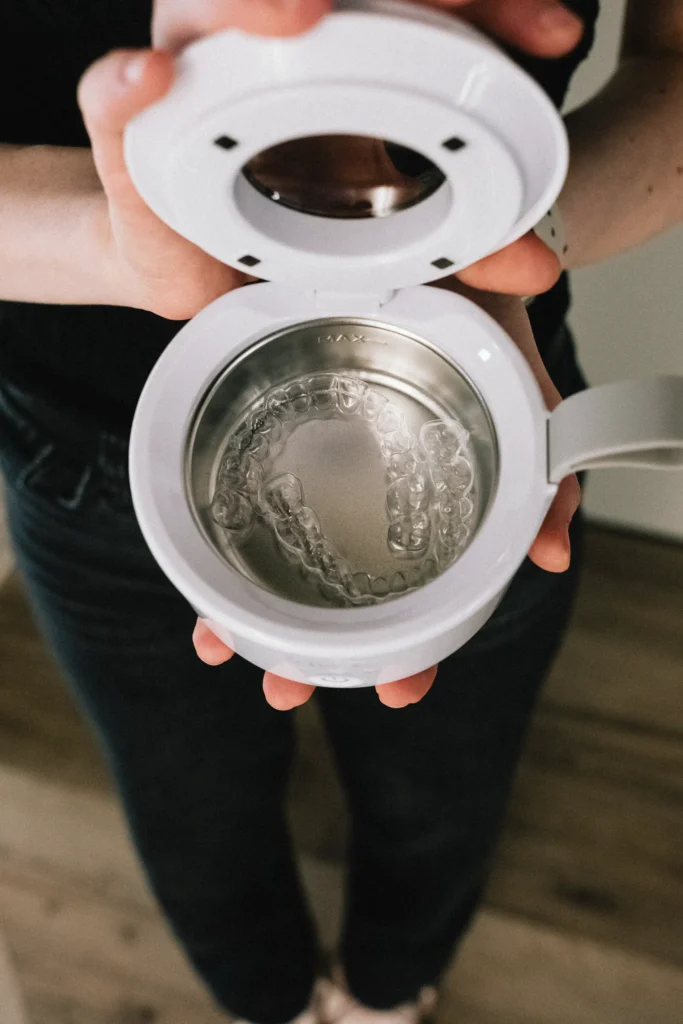
A night guard for teeth grinding is a thin, custom-fitted cover worn over your upper or lower teeth while you sleep, so your teeth press against the guard instead of each other. It does not stop the grinding itself, but it protects your teeth and dental work from wear, chips and cracks, and it can reduce strain on your jaw muscles.
What is teeth grinding?
Teeth grinding, or bruxism, means clenching, grinding or gnashing your teeth, usually without realizing it. Cleveland Clinic describes two types:
- Awake bruxism: clenching during the day, often when you are stressed, anxious or concentrating. Many people can manage this by noticing the habit and easing stress.
- Sleep bruxism: clenching and grinding while you sleep. It can do more damage because you do not know it is happening, and it often needs treatment.
Clenching your teeth puts steady pressure on your teeth and jaw even without the grinding motion, so it can cause many of the same problems.
Signs you grind or clench your teeth
Since sleep bruxism happens without you knowing, the clues usually show up in the morning or at a dental visit:
- A partner hears grinding at night
- Headaches, facial pain or a sore, tired jaw when you wake up
- Earache or ringing in the ears
- Difficulty opening your mouth fully, or pain when chewing
- Teeth that look flat, worn, chipped or shorter than they used to
- Teeth that have become sensitive to cold
- Fillings or crowns that crack or come loose
- Disturbed sleep
Jaw pain, clicking and headaches can also be signs of a jaw joint problem. Our guide to TMJ symptoms explains what to look for.
What causes teeth grinding?
There is no single cause, but some things make grinding and clenching more likely. The NHS notes that teeth grinding is often related to stress or anxiety. Other factors include:
- Sleep problems, such as snoring or sleep apnea
- Certain medicines, including some used for sleep, depression or anxiety
- Smoking, alcohol and caffeine. Cleveland Clinic reports that people who smoke, drink alcohol or have more than six cups of coffee a day are about twice as likely to grind their teeth.
Why clenching teeth matters
Grinding can wear through enamel, flatten biting edges and cause cracks, which is a common reason people end up with a chipped or cracked tooth. Fillings and crowns take the same force. Over time, clenching can also lead to loose teeth, jaw pain and temporomandibular disorder (TMD), as well as headaches and poor sleep.
Enamel does not grow back, so it is worth protecting your teeth before the wear goes too far.
How a night guard helps
A night guard is a firm, smooth cover that fits over one arch of teeth. When you clench or grind, your teeth meet the guard rather than each other, so the guard takes the wear. A custom guard can also hold your jaw in a position that reduces strain on the jaw muscles.
The NHS notes that treatment is not always needed. When it is, a dentist may fit a custom mouth guard or splint for your upper or lower teeth, worn at night to protect them from damage. A guard protects your teeth, but it does not cure the habit, which is why it is often paired with steps that reduce clenching.
Custom night guard vs store-bought
You can buy guards at a pharmacy, but Cleveland Clinic notes that store-bought guards are less effective for grinding than ones made by a dentist.
| Custom night guard | Store-bought guard | |
|---|---|---|
| Fit | Made to fit your teeth and bite | One size, or softened and shaped at home |
| Comfort | Generally more comfortable to sleep in | Often bulkier |
| Protection for grinding | Designed for grinding and clenching | Less effective for grinding |
| How long it lasts | Several years with proper care | May need replacing a few times a year |
| Bite check | Your dentist checks the fit and your bite | None |
Caring for your night guard
- Brush and floss before you put it in, since the guard can trap bacteria against your teeth.
- Rinse it in cool water in the morning, brush it gently with mild soap, and let it air dry.
- Keep it away from hot water, dishwashers and hot cars, which can warp it.
- Store it in a sturdy, vented case, and out of reach of pets.
- Bring it to your dental checkups so it can be checked for cracks, wear and fit.
Other ways to manage teeth grinding
- Ease stress with regular exercise, breathing exercises or whatever helps you unwind.
- Build a calm bedtime routine and keep your bedroom dark and quiet.
- Cut back on caffeine and alcohol, especially in the evening, and stop smoking.
- Notice daytime clenching. At rest, your lips can be closed with your teeth slightly apart.
- Ask about snoring. If you snore or wake unrefreshed, talk to your physician about a sleep assessment.
- Relax the jaw muscles. For people with strong, tense jaw muscles, TMJ Botox can relax the masseter muscles. Our article on Botox for teeth grinding explains how it works.
- Retrain muscle habits. Myofunctional therapy works on tongue, lip and jaw habits and is sometimes part of the plan for grinding and jaw pain.
Teeth grinding in children
Grinding is common in childhood, and many children grow out of it by their teens. Mention it at your child’s dental visit, especially if their teeth look worn or they complain of jaw pain or headaches. Our children’s dentistry team can check for wear as their teeth develop.
At Vigée Dental in Calgary, we recommend nightguards for clenching and grinding to protect your teeth from wear. When tense jaw muscles are part of the problem, TMJ Botox with Dr. Nicole Robins relaxes the jaw muscles, with an effect that typically lasts 3 to 4 months. Cost depends on your treatment plan and is confirmed at your visit. Book an appointment online.
Frequently asked questions
Does a night guard stop teeth grinding?
No. A night guard protects your teeth from the grinding, but it does not stop the habit. Reducing stress, caffeine and alcohol, and treating sleep problems can help with the grinding itself.
How do I know if I grind my teeth at night?
Common clues are a sore jaw or headache in the morning, worn or chipped teeth, new sensitivity, or a partner hearing you grind. A dentist can often spot the wear at a checkup.
Is a custom night guard better than a store-bought one?
For grinding, a custom guard is generally more comfortable, fits your bite and lasts longer. Store-bought guards are less effective for grinding and can feel bulky.
How long does a night guard last?
A custom night guard can last several years with proper care, depending on how hard you grind. Bring it to checkups so it can be inspected for wear.
Is a night guard covered by insurance?
It depends on your plan. Vigée Dental is fee for service, and the team helps patients submit insurance claims. You can also see our financing options.