
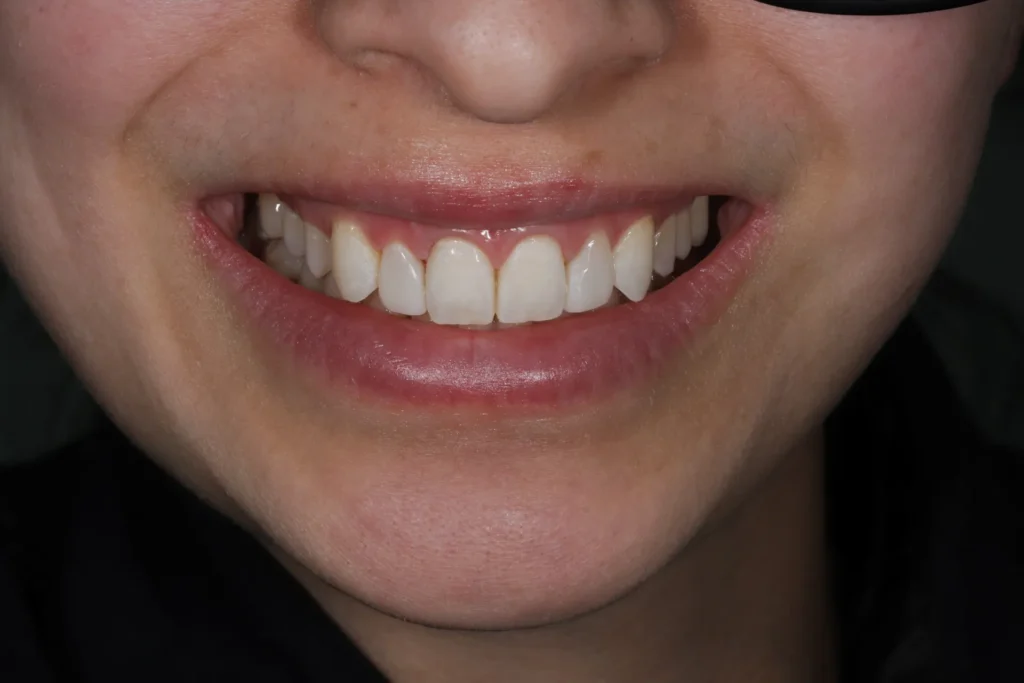
Composite bonding is a treatment where a dentist adds tooth-coloured resin to a tooth and shapes it by hand to repair chips, close small gaps, cover stains or rebuild worn edges. It is usually done in one visit with little or no drilling, and it typically lasts three to ten years before it needs a touch-up or replacement.
What is composite bonding?
Composite bonding, also called tooth bonding or dental bonding, uses a putty-like resin that is matched to the shade of your teeth. The dentist bonds it to the tooth surface, sculpts it into shape, hardens it with a special light and polishes it so it blends in.
Because the resin is added onto the tooth, usually with little or no enamel removed, bonding is a conservative option. Cleveland Clinic describes it as reversible, unlike porcelain veneers, and it can usually be repaired or redone later without starting from scratch.
What tooth bonding can fix
- Small chips and cracks, especially on front teeth. If you have just damaged a tooth, our guide to a chipped, cracked or broken tooth covers what to do first.
- Gaps between teeth, such as a small space between the front teeth.
- Stains and discolouration that whitening does not lift.
- Uneven or short teeth, including edges that have been worn down by grinding.
- Worn enamel, where the surface has thinned from wear or erosion.
- Exposed root surfaces from gum recession. Covering the root can protect it and often helps when a tooth is sensitive to cold.
Bonding suits small and moderate changes. For bigger changes in shape or colour across several teeth, or for a tooth that has lost a lot of structure, veneers or a crown may be a stronger long-term choice.
How the bonding procedure works
- Planning the shade. Your dentist picks a resin shade that matches your teeth. If you want whiter teeth, teeth whitening comes first, because resin does not change colour with whitening. The bonding is then matched to your new shade.
- Preparing the tooth. The surface is lightly roughened and a conditioning liquid is applied so the resin can grip.
- Shaping. The resin is placed in layers and sculpted to the shape you have planned together.
- Hardening. A curing light sets each layer in seconds.
- Polishing. The dentist refines the shape, checks your bite and polishes the surface to a natural shine.
According to Cleveland Clinic, bonding takes about 30 to 60 minutes per tooth and is usually done in a single visit. Freezing is often not needed for small cosmetic changes, but your dentist will let you know if it is.
How long does composite bonding last?
Bonding typically lasts three to ten years before it needs a touch-up or replacement. Where it sits makes a difference: a small repair on a front tooth faces less force than a large build-up on a tooth you bite hard with.
Over time, resin can pick up surface stains and the edges can chip. The good news is that bonding can often be polished or repaired in the chair without replacing all of it.
To help your bonding last:
- Brush twice a day with a soft brush and fluoride toothpaste, and floss daily.
- Limit coffee, tea and red wine, or rinse with water after them. Resin stains more easily than natural enamel or porcelain.
- Do not bite nails, chew pens or use your teeth to open packages.
- If you clench or grind, ask about a night guard for teeth grinding to protect your bonding while you sleep.
- Keep up with regular cleanings, where your hygienist can polish the surface.
Composite bonding vs veneers
Bonding, composite veneers and porcelain veneers can all change how your front teeth look. The difference is how much of the tooth they cover and what they are made of.
| Composite bonding | Porcelain veneers | |
|---|---|---|
| What it is | Resin added to part of a tooth and shaped by hand | Thin ceramic shells made to cover the front of the tooth |
| Enamel removed | Usually little or none | Usually some, though no-prep veneers need little or none |
| Visits | Usually one | Usually more than one |
| Stain resistance | Stains more easily | Resists staining well |
| Repairs | Can often be repaired in the chair | A chipped veneer usually needs replacing |
| Typical lifespan | About three to ten years | About 10 years with good care |
Composite veneers sit between the two. They use the same resin as bonding, but cover the whole front surface of the tooth, which suits people who want a bigger change in shape or colour without porcelain. For a closer comparison, read how long veneers last, porcelain vs composite, or see our veneers page.
What affects the cost of tooth bonding
The cost of bonding depends on how many teeth are involved, how much resin each tooth needs, and whether the bonding repairs damage or is purely cosmetic. Insurance plans may treat bonding that repairs a chip or covers an exposed root differently from bonding done only for appearance, so check your own plan.
Vigée Dental is fee for service, and the team helps patients submit insurance claims. If you would like to spread out the cost, see our financing options. Your exact cost is confirmed once your plan is set at a consultation.
At Vigée Dental in Calgary, we use bonding to cover exposed root surfaces and rebuild worn enamel, and we offer composite veneers for larger cosmetic changes. Explore our cosmetic dentistry options or book a consultation online to talk about what bonding could do for your smile.
Frequently asked questions
How long does composite bonding last?
Bonding typically lasts three to ten years. Your habits, where the bonding is, and how much of the tooth it covers all affect how long it lasts.
Does tooth bonding hurt?
Bonding usually involves little or no drilling, and many small cosmetic repairs are done without freezing. If the tooth needs more preparation, your dentist can numb the area first.
Can bonded teeth be whitened?
No. Whitening does not change the colour of resin. If you want whiter teeth, whiten first and then have the bonding matched to your new shade.
Is composite bonding bad for your teeth?
Bonding usually removes little or no enamel, so it is one of the more conservative cosmetic options. The main trade-off is that resin can stain and chip over time and may need touch-ups.
Can bonding fix crooked teeth?
Bonding can disguise mild unevenness by reshaping the edges of teeth, but it does not move them. To straighten teeth, clear aligners are an option, sometimes followed by bonding to fine-tune the shape.