
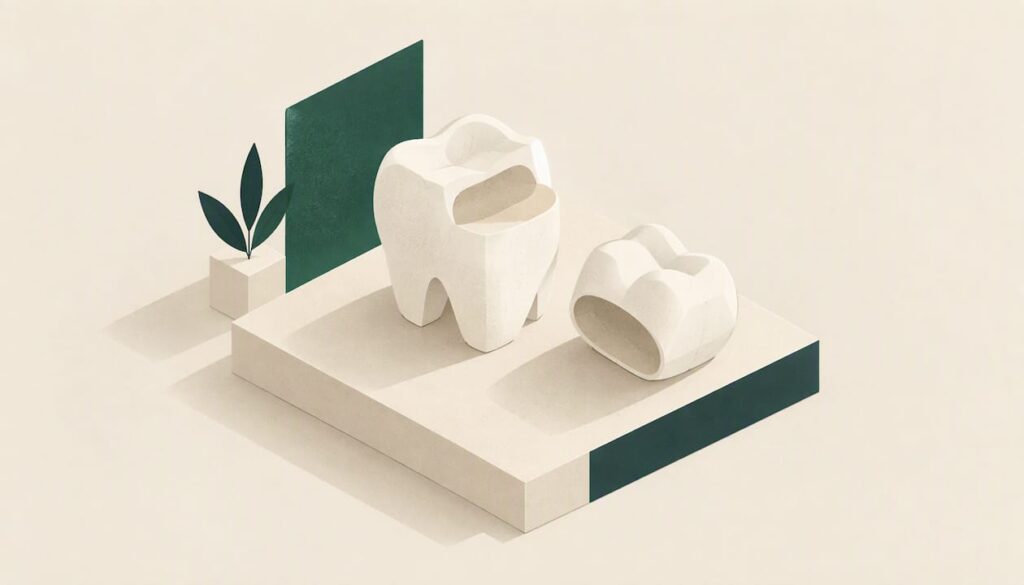
If your dental crown fell out, save it, keep the exposed tooth clean, eat soft foods away from that side, and call a dentist the same day. The tooth underneath is now unprotected. It can be sensitive, it can crack, and it can decay quickly. Most lost crowns can be fixed in a single visit when you are seen promptly, and sometimes the same crown can be put back.
This guide walks through what to do in the first hour, how to manage sensitivity until your appointment, which symptoms mean you should not wait, and what a dentist will actually do.
TL;DR
- Pick up the crown, rinse it gently, and keep it somewhere safe and dry to bring with you. Do not glue it back with household glue.
- Call your dentist the same day. A crown that has come off is a reason to be seen soon, not a reason to wait for a routine visit.
- Eat soft foods, chew on the other side, and avoid very hot or cold drinks near the exposed tooth.
- Go to urgent care or call a nurse line if you have swelling, pus, fever, or pain that keeps getting worse.
- Many crowns can be re-cemented. If the tooth underneath has changed, you may need repair or a new crown.
Table of Contents
- What to do in the first hour
- Protecting the exposed tooth at home
- When a lost crown is urgent
- Temporary crown versus permanent crown
- Why crowns come off
- What the dentist will do
- Paying for crown repair in Canada
- How to keep a crown in place
- Our perspective
- Book a visit at Vigée Dental
- FAQ
- Sources
What to do in the first hour
Stay calm. A crown coming off is common, and it is usually fixable. Work through these steps in order.
- Find the crown and any broken pieces. Check your mouth, your pillow, the sink and your plate. If you may have swallowed or inhaled something, mention it to the dentist. HealthLink BC advises taking any pieces of tooth or dental appliance with you, because the dentist will check whether anything is left in a wound or has been swallowed or inhaled.
- Rinse the crown gently. Use lukewarm water. Do not scrub it with a brush or use harsh cleaners. Put it in a small clean container or a zip bag.
- Rinse your mouth. Plain water is fine. The Ontario Dental Association suggests rinsing with water if there is bleeding or pain after a chipped or broken tooth, and applying a cold compress to the cheek to reduce swelling.
- Call your dentist. Say that a crown has come off and describe any pain. Ask for the earliest appointment. The ODA’s guidance is to contact a dentist immediately after a dental emergency, since prompt care can improve the chance of saving the tooth and preventing further damage.
- Protect the tooth until you are seen. The next section covers how.
If you have a regular dentist, call them first. If you cannot reach one, or it is after hours, an emergency dental clinic is the right next call. In Calgary, you can reach our emergency dentistry team to ask about the earliest available time.
Protecting the exposed tooth at home
Without its crown, the tooth underneath is often rough, thin or sensitive. A few simple habits keep it comfortable and safe for a day or two.
Keep the area clean
Brush gently around the tooth and rinse with water after eating. Do not skip cleaning. Food and bacteria can get into the gap where the crown used to sit, and that is how decay starts.
Choose what you eat and drink carefully
MyHealth Alberta advises avoiding very hot or cold items near a broken tooth if the nerve may be exposed, eating soft foods, and skipping salty, spicy, citrus and tomato foods that may sting. In practice that means:
- Yogurt, soup that has cooled to warm, eggs, mashed potatoes, oatmeal and pasta.
- Chewing on the opposite side of your mouth.
- Skipping ice, nuts, hard bread, caramel, gum and anything sticky.
Cover the tooth if it hurts
The same MyHealth Alberta page says that if the tooth pulp is exposed, you can protect the broken area with temporary filling material, used as directed on the label. Drugstores in Canada carry temporary dental cement kits for this. Ask the pharmacist which one suits you. It is a short-term cover, not a repair.
Manage pain safely
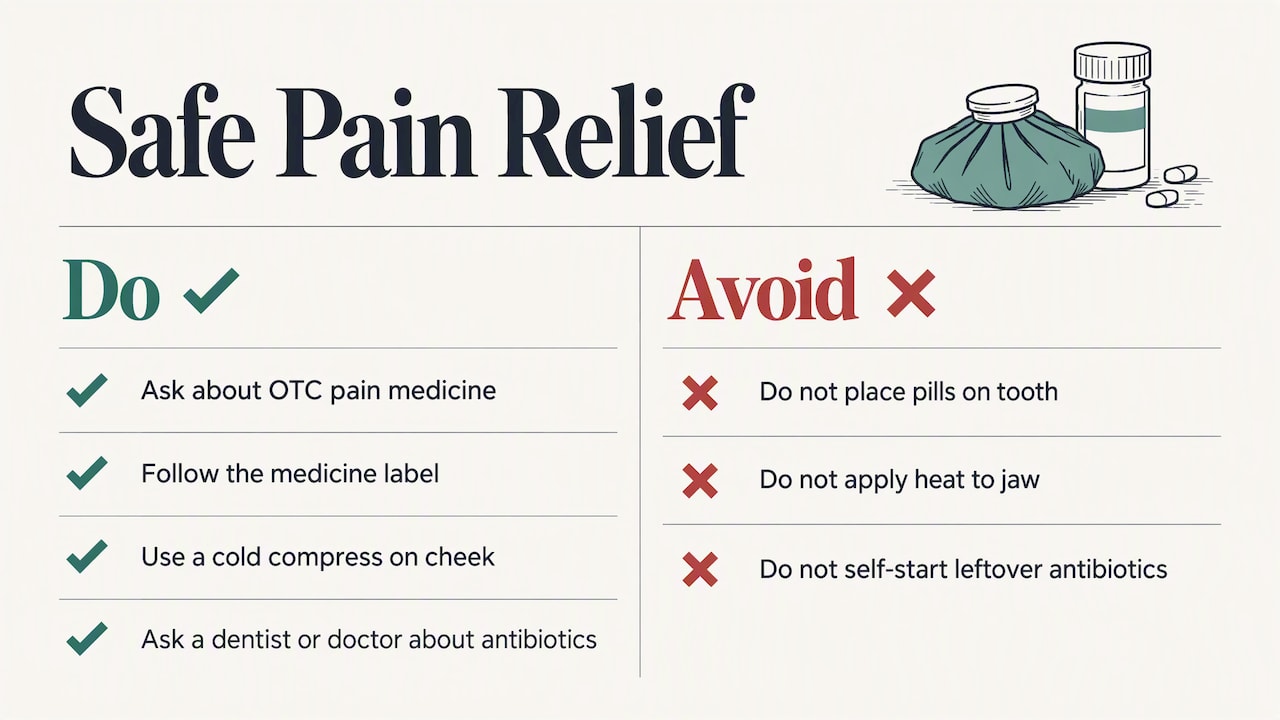
MyHealth Alberta suggests asking your doctor or pharmacist about over-the-counter pain medicine and following the label. The ODA adds two cautions worth remembering: do not place pain pills directly on the tooth, and do not apply heat to the jaw. A cold compress on the outside of the cheek is the better choice.
The ODA also notes that antibiotics should only be taken if there is fever or swelling on the outside of the face. So do not start leftover antibiotics on your own. Speak to a dentist or doctor.
Skip the household glue
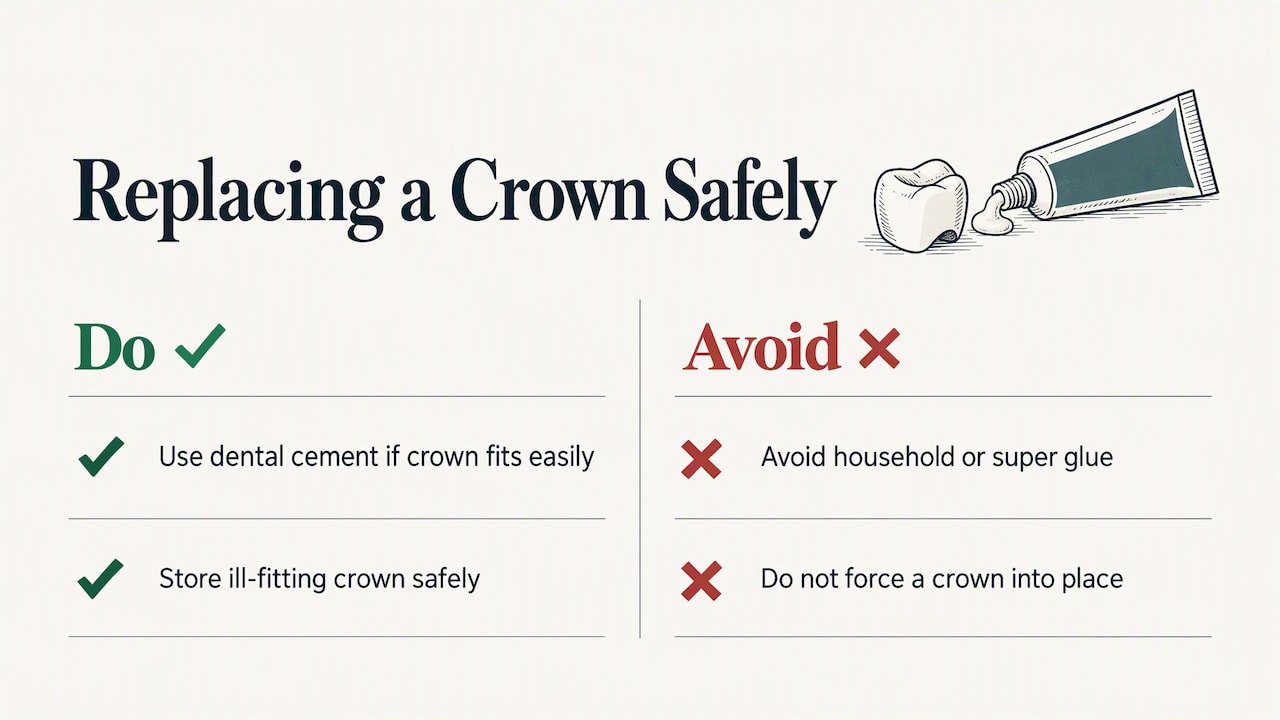
It is tempting to put the crown back with whatever is in the drawer. Do not use household or super glue. It is not made for the mouth, it can irritate your gums, and it can stop the dentist from seating the crown properly. If you want to place the crown back temporarily, a pharmacy dental cement made for that purpose is the only home option, and only if the crown fits easily without force. If it does not slip on comfortably, leave it out and keep it safe.
When a lost crown is urgent
A crown that has simply come off, with only mild sensitivity, calls for a same-day or next-day dental appointment. Certain signs mean you should not wait.
Call a dentist immediately if:
- You have constant or severe pain. The ODA says this warrants an immediate call.
- The tooth is also chipped, cracked or broken underneath, or there is bleeding that does not stop.
- You cannot bite or close your jaw normally.
Get medical advice right away if you notice infection signs. MyHealth Alberta lists increasing pain, swelling, warmth or redness, pus, red streaks and fever as warning signs that need immediate medical or nurse-line advice. In Alberta, that can mean calling Health Link at 811. Swelling in the face or neck, or trouble swallowing or breathing, is an emergency room visit.
Moderate to severe sensitivity matters too. HealthLink BC notes that it can point to a cracked tooth, cavity or lost filling, and that treatment can prevent the tooth from dying. If cold air or a sip of cold water sends a jolt through the tooth, read our guide on why teeth turn sensitive to cold. Lingering, throbbing pain may point to a nerve problem, and our article on the signs you need a root canal explains what to look for.
Temporary crown versus permanent crown
Which kind came off changes how worried you should be.
A temporary crown
A temporary crown sits on the tooth while your permanent one is made. MyHealth Alberta explains that a crown may be temporary at first, which requires another dental visit. These are held on with weaker cement on purpose, so they do come off more easily, often with sticky food. The exposed tooth is still prepared and vulnerable, and it can shift slightly, which can stop the final crown from fitting. Call your dentist and let them know. Usually it is a short visit to re-seat the temporary.
A permanent crown
A permanent crown that comes off usually means something has changed: the cement has washed out, decay has started underneath, or the tooth has broken. That is why the dentist needs to look at the tooth, not only at the crown.
A broken or cracked crown
If the crown is chipped, cracked or only partly detached, treat it the same way. Keep the pieces, avoid chewing on it, and call. Our guide to a chipped, cracked or broken tooth covers what comes next in more detail. Note that HealthLink BC’s tip of applying gauze soaked in hydrogen peroxide to a broken tooth to reduce bleeding applies to a broken tooth, not to a crown that has simply come off, so only use it if the tooth itself is bleeding.
Why crowns come off
Knowing the cause helps decide the fix and keeps it from happening again. Common reasons include:
- Worn or weakened cement. Over years, the bond between crown and tooth can fail.
- Decay underneath. MyHealth Alberta says teeth with crowns can decay at the gum line, come loose or wear out over time, so a crown may need to be cemented again or replaced.
- A fit that was never ideal. If the crown does not match the contours of the prepared tooth, it can loosen sooner.
- Biting force. Grinding or clenching at night puts steady stress on a crown. Ice, hard candy and sticky foods can break the seal in a single bite. The ODA recommends avoiding ice, hard foods, sticky or difficult foods, and using teeth as tools.
- Injury. A fall or a sports knock can dislodge a crown. The ODA recommends mouthguards for sports to reduce the chance of dental injury.
If you wake up with sore jaw muscles or notice flat, worn teeth, tell your dentist about grinding. A night guard can protect new work.
What the dentist will do
Expect a visit that is more thorough than just pressing the crown back on.
- Examine the tooth and the crown. The dentist checks for decay, cracks, gum irritation and how much healthy tooth remains.
- Take X-rays if needed. These show decay under the crown edge or problems near the root.
- Clean the tooth and the inside of the crown. Old cement and debris have to come out so a new bond can hold.
- Decide whether the crown can be reused. If it is intact and the tooth has not changed, it can often be re-cemented with fresh cement. If the crown is cracked, worn, or no longer fits, a new one is made.
- Treat anything underneath. Decay may need a filling or a build-up first. If the nerve is infected, root canal therapy may come before a new crown.
The length of the process varies. A simple re-cementation can take one visit. A new crown generally takes a design stage, a temporary, and a follow-up. Your dentist can give you a timeline once they have seen the tooth.
Can the same crown go back on?
Often yes, if it is undamaged and the tooth underneath is healthy. That is why bringing it with you matters. Re-cementing is typically quicker and simpler than making a new crown. How long a re-cemented crown lasts depends on why it came off. If the cause was weak cement alone, it can last a long time. If the cause was decay or a poor fit, the dentist will likely recommend a new crown or other restorative work instead.
Paying for crown repair in Canada
Costs depend on the clinic and the work needed, so ask for an estimate before treatment. Insurance and public programs often treat re-cementation and repair differently from new crowns.
- The Canadian Dental Care Plan coverage page lists repairs to crowns and re-bonding of crowns and posts among its restorative services, while crowns and cores require preauthorization. If you are enrolled, ask your dental office to check what applies to you before the visit.
- The federal Non-Insured Health Benefits dental guide lists crown repair and crown recementation as recognized procedures, each with a frequency guideline of once in 36 months per tooth in that program. It is a 2015 document, so confirm current rules with the program.
- Private plans vary. Many cover a portion of crown work, with limits on replacement frequency. Call your insurer or ask the clinic to submit a predetermination.
Emergency visits are often handled differently from planned work, so mention your coverage when you call.
How to keep a crown in place
- Avoid chewing ice, hard candy and tough, sticky foods on a crowned tooth.
- Do not use your teeth to open packages or hold things.
- Wear a night guard if you grind, and a sports mouthguard when you play contact sports.
- Brush twice daily and floss around the crown, paying attention to the gum line where decay can start.
- Keep regular checkups and cleanings. Small cement leaks or early decay are easier to catch before a crown loosens. Our preventive and proactive care page explains how we approach this.
If a crown keeps coming off, do not just re-cement it again and again. Ask your dentist to look at why. The answer may be a new crown, a build-up, bite adjustment, or a wider plan such as restorative dentistry to rebuild worn teeth.
Our perspective
A lost crown is rarely just a lost crown. In our experience, the useful question is not only how to get it back on, but why it came off. Cement can fail, but so can the tooth underneath, and a quick fix that skips that question tends to bring the same patient back.
That is why we take an evidence-based, root-cause approach. We look at the tooth, the bite, the gums and the habits around it, such as grinding or a dry mouth, so that the repair we choose is the one that is designed to last.
We also know that a broken or missing crown is stressful, and that many people put off calling because they feel embarrassed or anxious about the dentist. Our clinic is built to be judgment-free. If nerves are what keep you away, we offer sedation options to help you feel comfortable. Call us early, and we will help you decide what needs to happen first.
Deane
Book a visit at Vigée Dental
If your crown has come off and you live in or near Calgary, we can see you for an exam, check the tooth and crown, and talk through your options, from re-cementing to replacement and wider restorative care. Our team also offers sedation dentistry for patients who feel anxious about treatment.

To book an appointment, visit Vigée Dental and tell us a crown has come off so we can help find the earliest time.
FAQ
Is a crown that fell out a dental emergency?
It is urgent, though not always an emergency room matter. Call a dentist the same day, since the exposed tooth can crack or decay. Go for urgent care if you have severe pain, swelling, pus or fever.
Can I put the crown back myself?
Only as a very short-term measure, and only with pharmacy dental cement made for the mouth, if the crown seats easily. Never use household glue. Even if it goes back on, you still need the dentist to check the tooth and fix the crown properly.
Can a tooth still decay under a crown?
Yes. Teeth with crowns can decay at the gum line, and that is one reason a crown may come loose. Good brushing, flossing and regular checkups help catch problems early.
What happens if I leave it for a few weeks?
The tooth stays exposed to bacteria, temperature changes and chewing force. It can decay, crack, or shift, and a repair that was simple can turn into a bigger one such as a build-up, root canal or new crown. Book as soon as you can.
What if the crown fell out at night or on a weekend?
Keep the crown safe, rinse your mouth, eat soft foods and manage discomfort as described above, then call a dentist as soon as the office opens. If you have severe pain, swelling or fever, seek urgent care instead of waiting.
Sources
- Broken Tooth or Dental Appliance: First Aid, HealthLink BC
- Toothache and Gum Problems, HealthLink BC
- Dental Emergencies, Ontario Dental Association
- Broken Tooth: Care Instructions, MyHealth Alberta
- Dental Crowns, MyHealth Alberta
- Canadian Dental Care Plan: What is covered, Canada.ca
- Dental Benefits Guide, Non-Insured Health Benefits, Government of Canada
Recommended
- Chipped, Cracked Or Broken Tooth: What To Do Next
- Composite Bonding: What It Fixes And How Long It Lasts
- Dental Bridge Vs Implant: Which Is Right For You?
- Restorative Dentistry In Calgary
- Chipped Tooth Repair in Calgary: Options, Costs and Next Steps
- Tooth Sensitivity Treatment: What Works and When to See a Dentist
- Pain After a Filling: What’s Normal and When to Call