
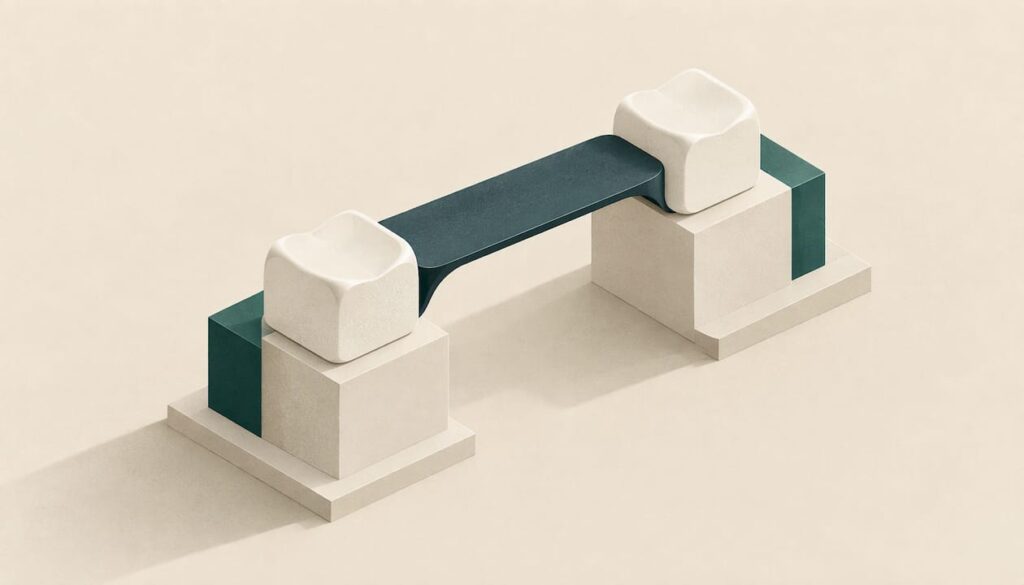
A dental bridge replaces one or more missing teeth by anchoring an artificial tooth to the teeth, or implants, on either side of the gap. In Calgary, a typical three-unit bridge is priced from the Alberta fee guide at $2,915.60 plus lab fees for 2026, and the Canadian Dental Care Plan does not cover it. The right choice depends on the teeth beside your gap, your gums, your bite and your budget, so the best first step is an exam that looks at all of them. At Vigée Dental, a new patient exam is where we start that conversation, in a judgment-free room, with sedation available if the dentist’s chair is what has kept you away.
TL;DR
- A bridge is a fixed restoration: an artificial tooth joined to crowns that sit on the neighbouring teeth or on implants. It cannot be taken out at home.
- The four types are traditional, implant-supported, resin-bonded (Maryland) and cantilever. Which one fits depends on the teeth around the gap.
- The 2026 Alberta Blue Cross fee guide lists a three-unit bridge at $2,915.60 plus lab fees. Clinics set their own fees, so quotes can differ.
- The Canadian Dental Care Plan excludes bridges. Private insurance may cover part of the cost, so get a written estimate first.
- With good daily care, a bridge generally lasts about 10 years, sometimes longer.
Table of Contents
- What a dental bridge actually is
- The four types of bridges
- Is a bridge right for you?
- What happens at the appointments
- What a bridge costs in Calgary
- Insurance, the CDCP and payment
- How long a bridge lasts and how to care for it
- Questions to ask before you commit
- Our perspective
- Start with an exam at Vigée Dental
- FAQ
- Sources
What a dental bridge actually is
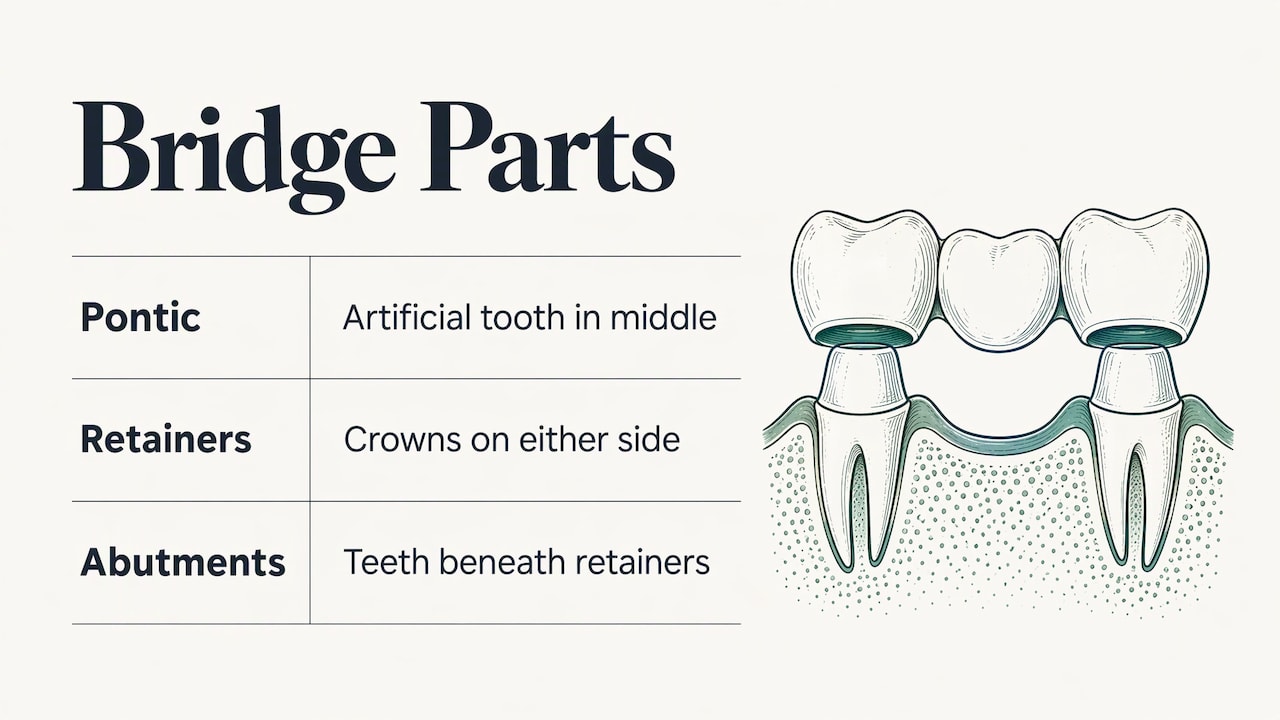
The Canadian Dental Association (CDA) describes a bridge as a restoration that replaces one or more missing teeth. Most often it is an artificial tooth fused between two crowns. A crown is a cap that covers a tooth completely. The crowns hold the bridge in place on your own teeth or on implants.
The artificial tooth in the middle is called a pontic. The crowns on either side are called retainers, or abutments when we talk about the teeth underneath them. You will hear those words in your quote, so they are worth knowing. A bridge is permanent: unlike a removable denture, you do not take it out to clean it.
Why fill the gap at all? A missing tooth is more than a cosmetic matter. It changes how you chew and how your bite comes together, and it leaves a space that affects the look of your smile. A bridge is one way to close that space and restore a natural-looking smile.
The four types of bridges
The CDA names four types. Here they are in plain terms.
| Type | How it is held | Typically suits |
|---|---|---|
| Traditional bridge | Crowns on the natural teeth on both sides of the gap | A gap with healthy teeth on each side |
| Implant-supported bridge | Anchored to dental implants | No healthy teeth to support a bridge, not enough teeth, or several or all teeth missing |
| Resin-bonded (Maryland) bridge | Metal bands cemented to the backs of the neighbouring teeth | Front teeth |
| Cantilever bridge | Crowns on healthy teeth on one side only | A gap with a healthy tooth on just one side |
The traditional bridge is the most familiar. The two teeth beside the gap are reshaped to take crowns, and the pontic spans the space between them. A Maryland bridge is more conservative for the neighbouring teeth because it bonds to their backs, but the CDA describes it for front teeth. A cantilever bridge is what is used when only one side has a healthy tooth to lean on.
An implant-supported bridge is the route when there are not enough healthy natural teeth to carry the load. If you are weighing a bridge against a single implant, our guide on dental bridge vs implant sets the two side by side.
Is a bridge right for you?
The CDA says a traditional bridge suits people with healthy teeth on each side of a missing tooth. That phrase carries weight. A bridge borrows strength from its neighbours, so the dentist checks four things before recommending one:
- The teeth beside the gap. They need to be sound enough to be shaped and crowned.
- The gums and bone. A bridge sits on a healthy foundation. Gum disease is treated first.
- Your bite. How the upper and lower teeth meet decides how much force the bridge will take.
- The size of the space. One missing tooth is a very different job from several in a row.
If the checks point away from a bridge, there are other ways to replace a tooth. Implants are one, and removable dentures are another. A dentist can explain which fits your mouth, and the comparison depends on those four checks rather than on a rule of thumb. Where several teeth need work together, full-mouth rehabilitation plans the restorative and cosmetic treatment as one picture rather than tooth by tooth.
What happens at the appointments
A traditional bridge usually takes two visits, according to the CDA’s description of the process.
- First visit: preparation. The dentist files down the two healthy teeth that will carry the bridge. They take impressions, which are moulds of your teeth, from which the artificial tooth and the two crowns are custom-made as one piece.
- Temporary bridge. Because the prepared teeth are exposed, a temporary bridge protects them and the gums while the lab makes the final piece.
- Second visit: fitting. The dentist removes the temporary bridge and places the final one. The crowns are cemented to the healthy teeth, or attached to the implants if the bridge is implant-supported.
The wait between visits is the lab stage, and the lab fee on your quote pays for it. If you are nervous about the filing, the injection or the sound of the drill, say so when you book. Dental anxiety is common, and it is the reason we offer sedation dentistry, including laughing gas, oral and IV options. You can read how each works in our guide to sedation options.
What a bridge costs in Calgary
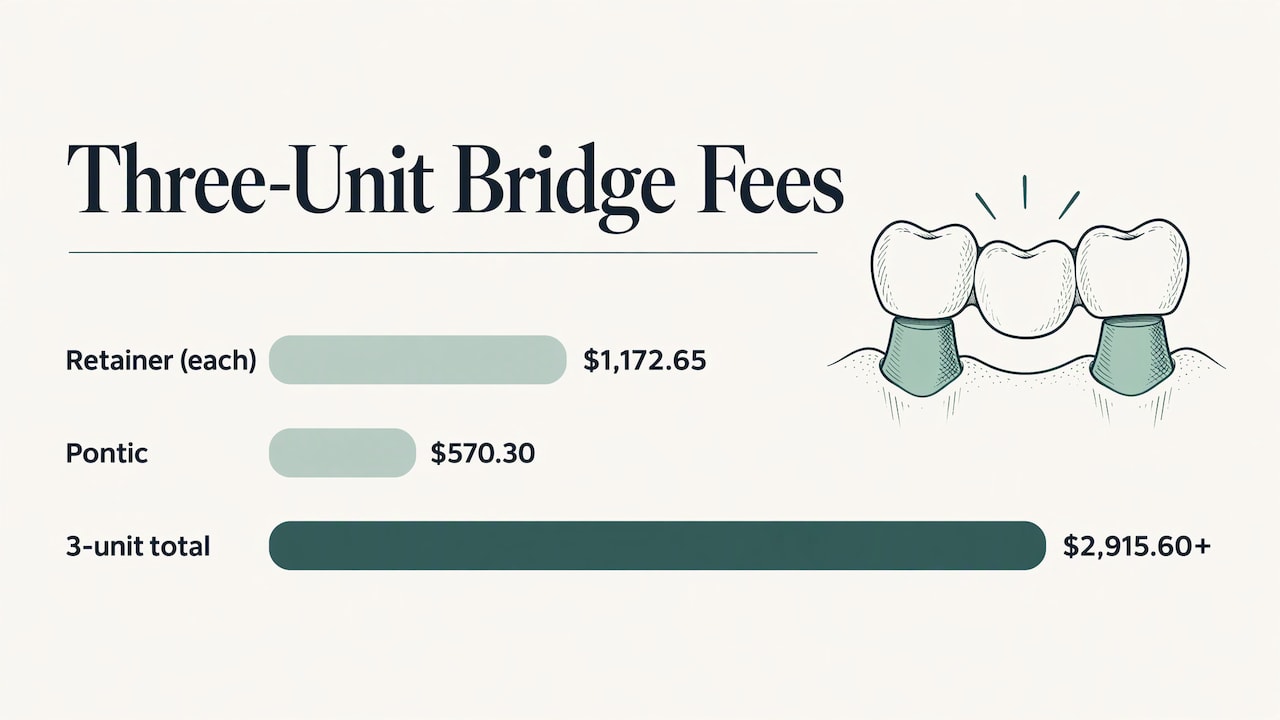
Prices for the same bridge vary from clinic to clinic, because the fee guide is a baseline rather than a fixed price. The most useful published reference is the Alberta fee guide used by insurers. Alberta Blue Cross’s 2026 usual and customary dental fees, which align with the Alberta Dental Association fee guide, list a three-unit bridge (two retainer crowns and one pontic) like this:
| Part of the bridge | 2026 fee guide amount |
|---|---|
| Retainer crown (each of two) | $1,172.65 |
| Pontic (one) | $570.30 |
| Three-unit bridge total | $2,915.60 plus lab fees |
The lab fee is added on top, and it depends on the materials and how complex the case is. The fee guide is voluntary, so a clinic may charge above or below it. That is why the number on your own written estimate matters more than any average.
The price also moves with:
- the number of units, since each missing tooth adds a pontic and a longer span may need extra support
- the material of the crowns and pontic
- whether implants are involved, which changes the whole structure of the treatment
- any prep work, such as treating decay or gum disease first
For more on how the guide turns into your invoice, see our explainers on the Alberta dental fee guide for 2026 and on fees and insurance in Alberta.
A small example: a standard three-unit bridge on the fee guide comes to $2,915.60 before lab fees. If your clinic’s lab charges, say, a few hundred dollars more, the total goes up by that amount. The figure is an illustration of how the pieces add up, not a quote.
Insurance, the CDCP and payment
This is the question most people ask next, and the answer is plain. The Canadian Dental Care Plan (CDCP) does not cover bridges. Public Health Ontario’s CDCP guide (October 2025) lists fixed prosthodontics, meaning bridges and related procedures, among the excluded services. The Government of Canada’s coverage page confirms that bridges are not covered, while removable dentures are. That page also says you can still go ahead with an uncovered service by paying the provider directly.
Two more points are worth knowing:
- The CDCP is meant for people without access to private dental insurance, so many working adults with a workplace plan are not eligible for it anyway.
- Some CDCP services, including crowns and partial dentures, need preauthorization, which means approval before treatment.
Private insurance is different. Plans vary in what they pay toward a bridge, and some pay a share of a crown and pontic schedule. For example, Alberta Blue Cross’s ABCDS plan schedule sets a lower maximum of $2,414.11 plus lab fees for a three-unit bridge as the basis of payment for that plan’s members. If your plan pays on a lower schedule than the clinic charges, you pay the difference.
MyHealthAlberta advises that restorative dentistry can cost a lot, that insurance may or may not cover some of it, and that you should know the cost and how you will pay before treatment starts. It also notes dentists may offer payment plans. That is sound advice: ask for a written treatment plan with the fees broken down, and ask your insurer what it will pay before you book.
How long a bridge lasts and how to care for it
The CDA says that with good care a bridge should generally last about 10 years, or perhaps longer. A peer-reviewed article in the Journal of the Canadian Dental Association estimates traditional fixed partial dentures last 8.3 to 10.3 years. Those figures are averages. Your own result depends mostly on what happens at home and what happens in the hygiene chair.
Here is the routine that protects a bridge:
- Brush twice a day and clean along the gumline where the crowns meet the gum.
- Floss every day. The CDA says to treat a bridge like natural teeth, and your dentist will show you how to use a floss threader under and around the artificial tooth. Without it, plaque collects under the pontic.
- Keep your cleanings regular. The teeth holding the bridge are the ones that must stay healthy. Professional dental hygiene and teeth cleanings remove the buildup that brushing misses.
- Watch for changes. Gum soreness, a loose feeling or a change in your bite deserve a prompt visit.
This is where preventive care earns its place. The bridge itself cannot decay, but the teeth underneath its crowns can, and that is the usual reason a bridge fails early. Our proactive dentistry approach is built around catching those problems while they are small.
Questions to ask before you commit
Bring this list to your consultation:
- Which type of bridge are you recommending for my gap, and why that one?
- What will be done to the neighbouring teeth, and what condition are they in now?
- What is the full fee, including lab fees, in writing?
- What will my insurance pay, and has a pre-treatment estimate been submitted?
- How long should this restoration last in my mouth, and how should I clean it?
- If a bridge is not the best fit, what else do you suggest and why?
A clear answer to each is what a good treatment plan looks like.
Our perspective
A missing tooth is rarely just a missing tooth. It is a bite that has shifted, a gum that is working harder, and often a person who has quietly stopped smiling in photos. We start there, with the whole mouth and the whole person, rather than with a product.
Our approach is built on finding the root cause. Why was the tooth lost? Is the gum healthy? Are the neighbouring teeth strong enough to carry load? A bridge that ignores those questions may look fine for a while. A plan that answers them has the best chance of lasting.
We also know that for many people the hardest part is walking in. Nobody here will judge how long it has been or how the gap came to be. If anxiety is the barrier, sedation is part of how we care for patients, and we plan your visit around your comfort. You deserve to understand every number on your estimate before you agree to anything.
That is what we mean by personalized care: an exam that looks at everything, a plan in plain language, and a team that stays with you after the final tooth is placed.
Deane
Start with an exam at Vigée Dental
If you are in Calgary and have a gap you want to close, our new patient exam is the place to start. We look at the teeth, gums and bite, talk through your options in plain language, and plan treatment around your comfort. Our restorative dentistry service covers rebuilding and replacing damaged or missing tooth structure, and sedation is available for patients who need it.

If the gap is part of a bigger smile concern, you can also ask about our cosmetic dentistry options in the same visit.
FAQ
How much does a dental bridge cost in Calgary?
The 2026 Alberta Blue Cross fee guide lists a three-unit bridge at $2,915.60 plus lab fees. Clinics set their own fees, so your estimate may be higher or lower. Ask for a written breakdown before treatment.
Will the Canadian Dental Care Plan cover a bridge?
No. The Government of Canada’s coverage page and the CDCP guide both exclude bridges, while removable dentures are covered. If you have private insurance, ask your insurer what share of a bridge it pays before you book.
How long does a dental bridge last?
The CDA says a bridge should generally last about 10 years with good care, and perhaps longer. Daily brushing and flossing, including with a floss threader under the artificial tooth, plus regular cleanings, give it the best chance.
Do I need a bridge or an implant?
It depends on the teeth around your gap, your gums and your bite. A traditional bridge needs healthy teeth on each side, while implants are used where there are not enough healthy teeth to support a bridge. An exam is the way to find out which suits you.
Sources
- Canadian Dental Association: Bridges
- Alberta Blue Cross: 2026 usual and customary dental fees
- Alberta Blue Cross: 2026 ABCDS plan member dental schedule
- Public Health Ontario: Canadian Dental Care Guide, October 2025
- Government of Canada: Canadian Dental Care Plan, what is covered
- MyHealthAlberta: Learning About Restorative Dentistry