

Gum disease is treated in steps, and the earlier you start, the simpler the treatment. Gingivitis, the mild stage, can be reversed with a professional cleaning and better daily care. Periodontitis, the advanced stage, can’t be cured, but it can be controlled with deep cleaning below the gumline and regular maintenance visits. At Vigée Dental in Calgary, a new patient exam is where this starts: we look at your gums, find out which stage you are in and build a plan around your comfort, including sedation if the dentist’s chair worries you.
TL;DR
- Gingivitis (red, puffy, bleeding gums) is curable when caught early. Periodontitis can’t be cured but can be managed with ongoing professional care.
- The first treatment for most gum disease is a professional cleaning. For periodontitis it goes deeper: scaling and root planing, which cleans below the gumline.
- Treatment usually involves little or no discomfort, because the gums can be numbed. Sedation is available at our clinic for anxious patients.
- After treatment, follow-up visits (often every 3 to 4 months at first) are what keep the disease from coming back.
- Bleeding gums, bad breath that won’t go away or a slightly loose tooth are all reasons to book an exam now.
Table of Contents
- What gum disease actually is
- Signs that mean it’s time to book an assessment
- How gum disease is treated, stage by stage
- A quick map of the options
- What the appointment feels like
- Home care between visits
- Keeping gum disease under control
- When gums have already receded
- Booking gum care at Vigée Dental
- Our perspective
- FAQ
- Sources
What gum disease actually is
Your gums are the tissue that holds your teeth in place. Gum disease starts with plaque, the sticky film of bacteria that builds up at and below the gum edge. The Canadian Dental Association explains that plaque not removed daily hardens into tartar, also called calculus, which feeds a bacterial infection. Tartar can’t be brushed or flossed off. Only a dental professional can remove it.
There are two main stages:
- Gingivitis. The gums are inflamed, but the bone and tissue that anchor your teeth are intact. Gums look red and swollen and bleed easily when brushed, and it usually doesn’t hurt, which is why many people put off an appointment.
- Periodontitis. The infection reaches the bone and supporting tissue. Over time the gums pull away from the teeth, pockets form, and in late stages teeth can loosen and fall out or need to be removed.
Periodontitis typically begins as gingivitis. That’s the strongest argument for acting on early signs: the same problem is far easier to treat at the first stage than the second.
Signs that mean it’s time to book an assessment
Because gum disease is often painless, you have to watch for the quieter signals. Alberta Health Services lists the symptoms: gums that bleed during brushing or flossing, persistent bad breath, pus from the gums, gums pulling away from teeth, a change in how your teeth fit together when you bite, and loose teeth.
The Canadian Dental Association adds that gums that bleed almost every time you brush or floss and a tooth that feels a little loose both call for a dental visit. A loose tooth can be a sign of gum disease and is a serious problem.
HealthLink BC suggests making a dental appointment within 1 to 2 weeks for gum problems, and calling sooner if symptoms get worse. Pus, a spreading swelling or a tooth that is moving should not wait.
Who should be extra careful
- Smokers and vapers. Tobacco raises gum disease risk. HealthLink BC notes that smokers may not even show bleeding or swelling, because tobacco dampens the normal immune response. Healthy-looking gums don’t rule out a problem.
- People with diabetes, heart or respiratory disease, and pregnant patients. The Government of Saskatchewan advises these groups to talk to a dental or other health care provider about an oral health care plan and to see a dental professional regularly. If you have diabetes, keep your blood glucose well controlled, which matters before and during periodontal therapy. Tell your dentist about any of these conditions at your first visit.
How gum disease is treated, stage by stage
Gingivitis: a professional cleaning and better home care
In the early stage, the Canadian Dental Association says the best treatment is cleaning by a dentist or dental hygienist to remove built-up tartar, plus brushing twice a day and flossing once a day. Getting the plaque and tartar out gives your gums a chance to heal. Many people notice the bleeding settle within a couple of weeks of consistent care.
This is the stage where a regular hygiene visit does the most good. Our dental hygiene and teeth cleaning appointments are designed to remove the tartar you can’t reach at home and to show you what your own routine is missing.
Periodontitis: scaling and root planing
Once infection has settled in pockets below the gumline, a standard cleaning isn’t enough. The first phase of treatment for all forms of periodontitis is thorough scaling and root planing, which removes plaque and calculus from the teeth and roots.
The Alberta Academy of Periodontics describes the difference this way: home hygiene can only clean above the gumline (scaling), while a professional cleaning also reaches below it (root planing), smoothing the root surfaces so the gums can reattach and bacteria are less likely to stick. You can read the step-by-step on our page about scaling and root planing.

After the cleaning, the picture is checked again. The Merck Manual describes a reevaluation after 3 weeks: if pockets are no deeper than 4 mm, regular cleanings are all that is needed. Where deeper pockets remain, medication may be added.
Medication in the pockets
For stubborn pockets, treatment can include a medicine placed directly in the area. The Alberta Academy of Periodontics notes that a medicine might be administered into the area during scaling and root planing. The Merck Manual lists options such as a doxycycline gel or minocycline microspheres placed in isolated pockets, and, if deeper pockets persist, a course of antibiotics. Alberta Health Services also mentions antibiotics and antibacterial toothpaste as part of treatment. Your dentist decides whether any of this fits you, based on your health history and allergies.
Advanced disease: referral to a periodontist
A periodontist is a gum specialist with at least three years of extra university training. The Canadian Dental Association says that when gum disease is more serious, a dentist may refer the patient to a periodontist. Surgery is considered when other treatments don’t control the infection or damage is severe. The CDHA also lists referral for severe periodontitis, and the FDI guide recommends it when residual pockets stay above 5 mm despite good hygiene. Caught earlier, most people never need to go this far.
A quick map of the options
| Stage | What you notice | Usual first treatment | Outlook |
|---|---|---|---|
| Gingivitis | Red, puffy gums that bleed when brushing, often no pain | Professional cleaning, daily brushing and flossing | Reversible when caught early |
| Early to moderate periodontitis | Gums pulling back, bad breath, bleeding | Scaling and root planing, sometimes pocket medication | Manageable with ongoing care |
| Advanced periodontitis | Pus, loose or shifting teeth, bite changes | Specialist care, possibly surgery | Manageable, but needs close follow-up |
What the appointment feels like
The worry we hear most from anxious patients is pain. For root planing and scaling, Alberta Health Services says the dentist may numb the gums and roots with a local anesthetic. Lips and gums can stay numb for a few hours, and the procedure usually causes little or no discomfort. That means you can plan for a normal meal afterward, once the numbness has gone, and avoid biting your cheek.
If you have dental anxiety, comfort is part of the plan, not an extra. Our clinic offers sedation dentistry and a judgment-free approach, so you can tell us how nervous you are without apologizing for it. In Alberta, dentists who use sedation follow a standard from the College of Dental Surgeons of Alberta. For example, after oral sedation patients must wait at least 60 minutes before discharge and meet documented recovery criteria. If sedation is part of your visit, arrange a ride home and ask us what to expect beforehand.
Recovery
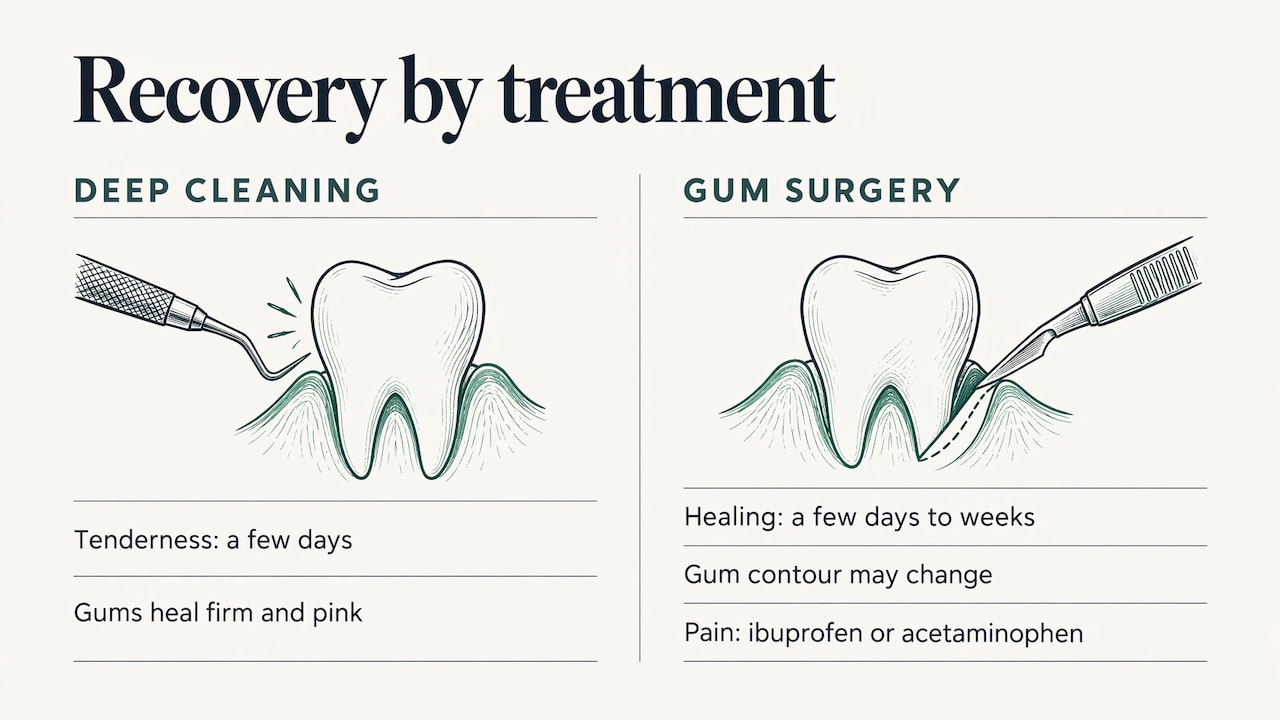
After deep cleaning, gums can be tender for a few days. With good care afterward, Alberta Health Services says gums should heal to become firm and pink. Eat softer foods if the gums feel sore, keep brushing gently along the gumline, and keep your follow-up visit.
If you do need gum surgery such as a gingivectomy with a specialist, healing is longer. HealthLink BC says gums take a few days to weeks to heal and the gum contour may change, and pain can be managed with ibuprofen or acetaminophen. The Canadian Dental Association says to call your dentist or surgeon right away after oral surgery for heavy bleeding 4 or more hours after surgery, fever, vomiting, pain that doesn’t improve after a full day, or swelling that keeps worsening after 2 days.
Home care between visits
Treatment resets your mouth. Daily habits decide whether it stays reset. The Canadian Dental Hygienists Association recommends:
- Brushing twice a day for two minutes with an electric or soft-bristled brush, angled along the gumline.
- Cleaning between your teeth daily with floss, an interdental brush or a water flosser.
- Using an antibacterial mouthrinse for 30 to 60 seconds daily.
- Eating a healthy diet and managing conditions such as diabetes.
- Quitting smoking, vaping, tobacco and marijuana.
All of this comes from the CDHA’s patient guide on periodontitis. The FDI recommends fluoride toothpaste and daily interdental cleaning, too. Your hygienist can show you which size of interdental brush fits your gaps, a small detail that makes a big difference.
A word on products from the pharmacy: they support your routine, but tartar can’t be removed by brushing and flossing. It needs professional removal.
Keeping gum disease under control
Periodontitis is a chronic condition, so the care continues. The CDHA says a personalized plan may include appointments every 3 to 4 months to remove plaque and calculus on and below the gumline, plus home care coaching, pocket medications and help quitting smoking. A European guideline from the EFP suggests supportive periodontal care visits every 3 to 12 months, tailored to your risk. The right interval is your dentist’s call, based on how your gums respond.
For most people with healthy gums, the Canadian Dental Association says a dental exam every six months is the goal, adjusted by your dentist.
Is a dental cleaning worth it when you have gum disease?
Yes. Removing plaque and tartar is what gives gums the chance to recover, and prevention is the most important factor in the fight against gum disease. Regular cleanings and exams let your dentist catch trouble before the infection destroys gum tissue. If cost is on your mind, our page on dental cleaning cost in Calgary explains fees.
When gums have already receded
Gum disease can leave gums pulled back from the teeth, which exposes roots and can cause sensitivity. Treating the infection comes first, and then the options for the recession itself can be looked at. We cover them in our guide to gum recession treatment. If you are also thinking about your smile, healthy gums are the foundation for cosmetic work such as veneers, which is why we treat gum health first.
Booking gum care at Vigée Dental
If your gums bleed, your breath won’t clear up, or it has simply been a long time since your last visit, start with a new patient exam. We offer dental hygiene and teeth cleanings, proactive dentistry, sedation dentistry and emergency dentistry at our Calgary clinic, so gum care, comfort and any urgent problem can be handled in one place. Our proactive dentistry approach is built around catching problems before they become big ones.

If you are nervous, tell us when you book. Comfort and a judgment-free visit are part of how we practise.
Our perspective
Most of the patients who come to us with advanced gum problems say the same thing: nothing hurt, so they waited. Gum disease is quiet. That is exactly why we believe in looking at the whole picture of your health, not only the tooth that is bothering you today.
We practise evidence-based dentistry that looks for root causes. With gums, that means asking why the inflammation is there: plaque and tartar that need professional removal, habits such as smoking, or a health condition such as diabetes that affects healing. Treating only the bleeding and not the cause is how people end up back in the chair.
We also know that for many people the hardest part is walking through the door. We offer sedation options and we keep the conversation honest and free of judgment, because you will only come back for your maintenance visits if the experience was a good one. And the maintenance visits are what protect your teeth for life.
Deane
FAQ
Can gum disease be reversed?
Gingivitis, the early stage, can be reversed with professional cleaning and consistent brushing and flossing. Periodontitis can’t be cured, but it can be managed with ongoing care from a dental hygienist or dentist, with referral to a periodontist for severe cases.
Does gum disease treatment hurt?
Usually very little. The gums and roots can be numbed with a local anesthetic for scaling and root planing, and the procedure typically causes little or no discomfort. Gums may feel tender and numb for a few hours afterward, and sedation is available at our clinic if anxiety is the main obstacle.
How often will I need follow-up visits after treatment?
It depends on your gums. Professional guidance describes visits as often as every 3 to 4 months after treatment for periodontitis, with the interval tailored to your risk and how well your gums respond. Your dentist will set the schedule after reevaluating you.
What can I buy to treat gum disease at home?
An electric or soft-bristled toothbrush, floss, interdental brushes or a water flosser, and an antibacterial mouthrinse all support daily care. None of them removes tartar, which needs professional cleaning, so pair your home routine with a dental visit.
When should I see a dentist about my gums?
Book within a week or two if your gums bleed regularly, look red or swollen, or your breath won’t improve. Call right away if you notice pus, a loose tooth or a change in how your teeth fit together when you bite.
Sources
- Periodontitis: Don’t Wait Until It’s Too Late, Canadian Dental Hygienists Association
- Toothache and Gum Problems, HealthLink BC
- Gum Disease FAQs, Canadian Dental Association
- Gum Disease, Alberta Health Services
- Root Planing and Scaling for Gum Disease, Alberta Health Services
- How to Spot Trouble, Canadian Dental Association
- Dental / Oral Health, Government of Saskatchewan
- Periodontitis, Merck Manual Professional Edition (Canada)
- Treatment Procedures, Alberta Academy of Periodontics
- Periodontal Diseases, FDI World Dental Federation
- Standard of Practice: Minimal and Moderate Sedation, College of Dental Surgeons of Alberta
- Gingivectomy for Gum Disease, HealthLink BC
- Oral Surgery, Canadian Dental Association
- Supportive Periodontal Care, European Federation of Periodontology