
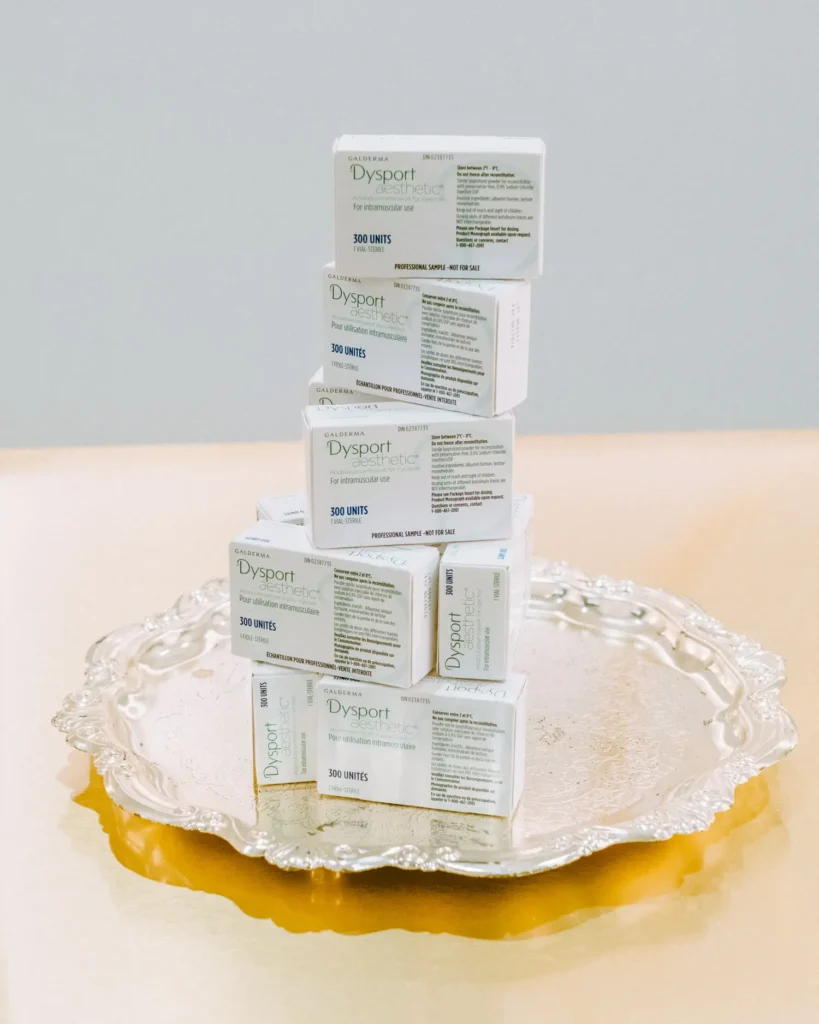
Cosmetic Botox for frown lines, forehead lines and crow’s feet usually lasts about 3 to 4 months, while a lip flip often lasts about 2 months. How long your own result lasts depends on the area treated, the dose and how strong the muscle is, and movement returns gradually rather than all at once.
Here is what to expect for each area, why Botox wears off, what can make it fade sooner and how often to book.
How long Botox lasts by area
These are the usual timelines for treatments at Vigée Dental. Your own result can be a little shorter or longer.
| Area | How long it usually lasts |
|---|---|
| Frown lines (between the brows) | About 3 to 4 months |
| Forehead lines | About 3 to 4 months |
| Crow’s feet | About 3 to 4 months |
| Lip flip | Often about 2 months |
| Gummy smile | About 3 to 4 months |
| Masseter and TMJ (clenching, grinding, jawline slimming) | 3 to 4 months |
| Trap Botox | Results last 3 to 6 months; the change in shape shows at 4 to 6 weeks |
| Chronic migraine | Treatment is repeated every 12 weeks |
When does Botox start working?
Botox is not instant. Muscles start to soften within 3 to 7 days, and the full result usually shows at about 2 weeks. That is why results are judged at the two-week mark rather than in the first few days.
Why does Botox wear off?
Botox works by blocking the signal from a nerve to the muscle it controls, so the muscle cannot contract as strongly. Your body does not stay blocked forever. Over the following weeks, the nerve grows new endings that gradually restore the signal, and later the original nerve ending recovers. A 2023 clinical study describes this sprouting of new nerve endings as the main reason the effect wanes.
This is a normal process, not a sign that something went wrong. It is also why Botox is reversible: when it wears off, the area returns to how it was before treatment.
What makes Botox wear off sooner?
- Dose. A lighter dose gives a softer, more natural look, but it may not last as long as a fuller dose in the same area.
- Muscle size and strength. Larger, stronger muscles need more units. The masseter, the chewing muscle at the angle of the jaw, needs more units than the forehead.
- Your first treatment. The American Society of Plastic Surgeons notes that first-timers often find Botox does not last as long at first, and may find it lasts longer after a second treatment.
- Metabolism. You will often read that a faster metabolism breaks Botox down sooner. It is a common observation, but it has not been well studied, so treat it as a possibility rather than a rule.
- Exercise. This one is debated. In the 2023 study above, 60 women were grouped by activity level, and the effect on forehead and frown lines held up better in the low-activity group. It was a small study, and more research is needed before anyone can say exercise shortens your result. We would never suggest skipping exercise to make Botox last.
Crow’s feet, forehead lines and bunny lines
Three areas come up often, and each comes from a different muscle:
- Crow’s feet are the lines at the outer corners of the eyes when you smile or squint. Botox for crow’s feet usually lasts about 3 to 4 months.
- Forehead lines are the horizontal lines that appear when you raise your brows. Forehead lines Botox also usually lasts about 3 to 4 months. Because the forehead muscle also lifts your brows, the dose there is planned with care.
- Bunny lines are the small diagonal lines on the sides of the nose when you scrunch it. They often show up alongside frown lines. If they bother you, ask about them at your consultation and we will tell you whether they suit your plan.
Signs your Botox is wearing off
- You can frown, raise your brows or squint a little more than you could at two weeks.
- Fine lines start to show again when you make an expression, even though they are not there at rest.
- After a lip flip, your upper lip rolls back in when you smile.
- After a gummy smile treatment, more gum shows again when you smile.
- After masseter Botox, clenching, jaw tiredness or morning tension starts to creep back. Our guide to Botox for teeth grinding explains what to watch for.
How often should you get Botox?
For cosmetic areas, many patients book their next visit at around 3 to 4 months, when movement has started to return, to keep results steady. A lip flip is usually repeated sooner. Masseter and TMJ Botox also follows a 3 to 4 month rhythm, and the appointment itself takes about 10 to 15 minutes.
Botox for chronic migraine follows a set schedule of treatment every 12 weeks. Our guide to Botox for migraines in Calgary covers who qualifies.
Botox is not given during pregnancy or breastfeeding, or with certain neuromuscular conditions, so tell us about any changes in your health before each visit.
At Vigée Dental, Botox is done by Dr. Nicole Robins, a University of Alberta dental graduate with additional training in esthetic and therapeutic Botox. Explore Botox at Vigée Dental, including cosmetic Botox, TMJ and masseter Botox and trap Botox, or book an appointment online.
Frequently asked questions
How long does Botox last for crow’s feet?
Usually about 3 to 4 months. Movement returns gradually, so the lines come back slowly rather than all at once.
How long does a lip flip last?
Often about 2 months. The muscle around the lips is small and moves constantly, so a lip flip wears off sooner than forehead or frown line treatment.
Does Botox last longer the more you get it?
Some people find their first treatment wears off sooner and later treatments last a little longer. Results vary from person to person.
Does exercise make Botox wear off faster?
It might. One small 2023 study found the effect lasted longer in less active people, but the evidence is limited and more research is needed.
What happens if I stop getting Botox?
The treated muscles gradually return to how they worked before, and your lines return to how they were before treatment. Stopping is not harmful.