
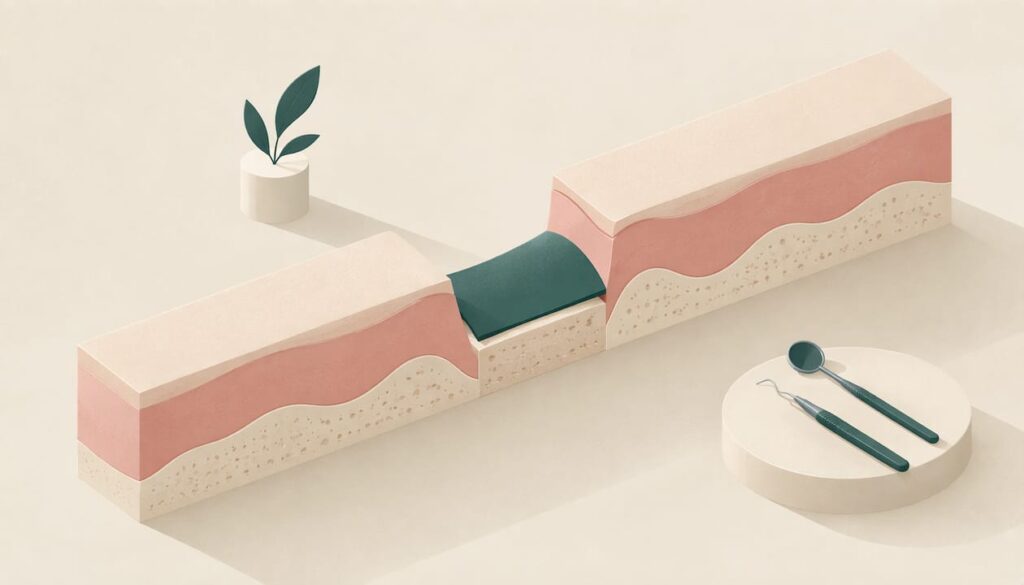
Gum recession is treated according to its cause and how far it has progressed. Mild cases often respond to a professional deep cleaning and better home care. Significant recession may need a gum graft. Gum tissue that has receded does not grow back on its own, so the aim of treatment is to stop further loss and, where needed, rebuild coverage over exposed roots. The earlier a dentist sees it, the more options you keep.
This guide explains what causes recession, how each treatment works, how to protect your gums day to day, and what to do about the gaps that sometimes appear between teeth.
TL;DR
- Receding gums cannot regenerate, but treatment can stop further recession, and grafts can replace missing tissue and cover exposed roots.
- Mild recession is commonly treated with scaling and root planing (a deep cleaning below the gumline). Advanced cases may need gum graft surgery.
- A soft-bristled toothbrush, gentle technique and a night guard for grinding all help protect the gums you have.
- Gaps between teeth can come from gum disease, tooth size or habits. The right fix depends on the cause, so get the cause checked first.
- Book an assessment if you notice bleeding, sensitivity or teeth that look longer than before.
Table of Contents
- What gum recession is and why it happens
- Signs that mean it is time for an assessment
- Gum recession treatment options
- Can receding gums grow back?
- How to protect receding gums every day
- Gaps between teeth: when gums are involved and what to do
- When to see a dentist, and when a periodontist
- Perspective: why we treat the cause, not just the gum line
- Book a gum assessment in Calgary
- FAQ
- Sources
What gum recession is and why it happens
Gum recession means the gum edge pulls back from the crown of the tooth and exposes more of the tooth, and eventually the root. It is usually slow and painless at first, which is why many people notice it only when a tooth turns sensitive to cold or looks longer in the mirror.
The causes are rarely a single thing. A peer-reviewed review lists the main susceptibility factors: thin gum tissue, little or no firmly attached (keratinized) gum, a history of progressive recession or inflammatory gum disease. The same review names factors you can change: plaque build-up, gum inflammation, traumatic brushing habits, restoration margins that sit below the gumline, smoking and systemic conditions such as diabetes.
In plain terms, the usual drivers are:
- Plaque and gum disease. Plaque hardens into tartar, and the Canadian Dental Association explains that infection at the gum attachment can lead to attachment loss and bone breakdown as the disease advances.
- Brushing too hard. Aggressive brushing wears gum tissue away over years. The Ottawa Dental Society lists brushing too aggressively, grinding (bruxism) and acidic foods among the causes of a lifetime of wear that exposes roots and creates sensitivity.
- Grinding or clenching. Heavy forces on teeth can contribute to tissue loss and sensitivity.
- Thin gum tissue. Some people are simply born with thinner gums that retreat more easily.
- Hormonal shifts. Puberty, pregnancy and menopause can trigger gum problems, including recession. If you are in midlife and noticing changes in your mouth alongside other symptoms, these perimenopause symptoms to watch for are worth knowing about, and your dentist should hear about them too.
- Smoking and vaping. Smoking is a recognized modifiable risk factor in the review above.
Why it is worth acting now
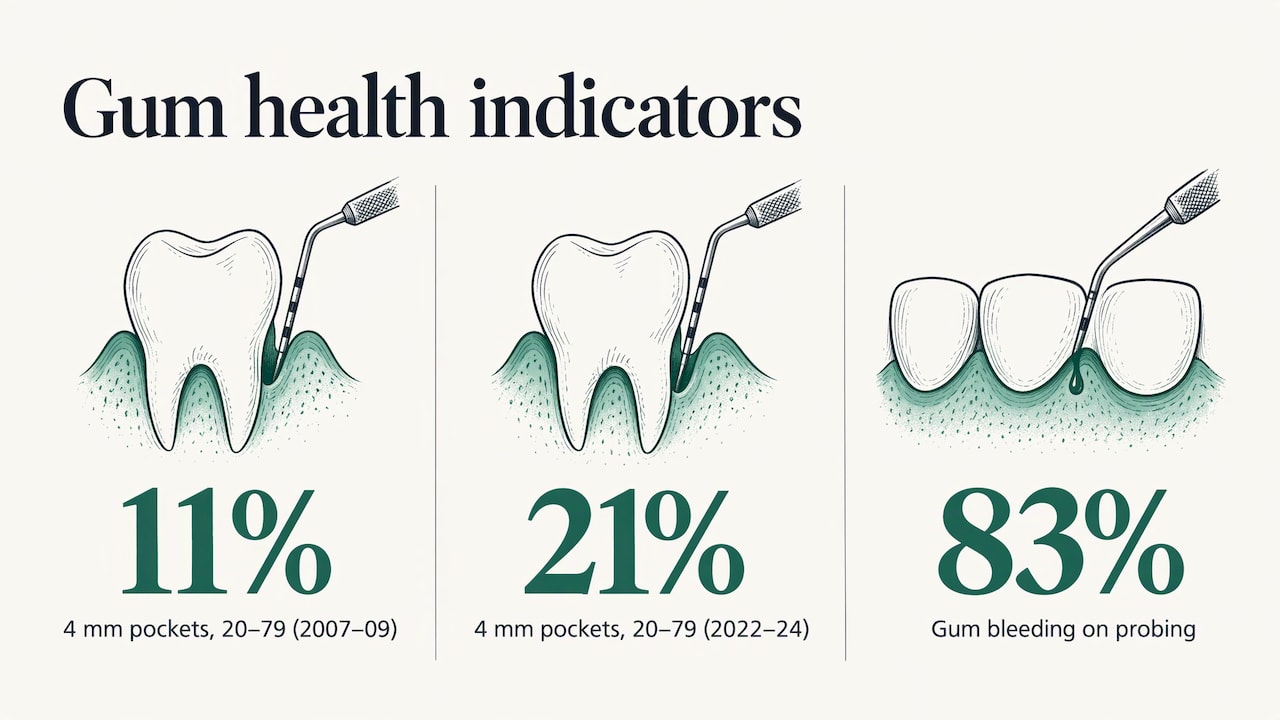
Gum health is a national concern. Statistics Canada reported in December 2025 that between 2007 to 2009 and 2022 to 2024, 4 mm periodontal pockets in adults aged 20 to 79 rose from 11% to 21%, and 83% of Canadians showed gum bleeding at one or more teeth during probing. Gum problems are common, and catching them early is the most reliable way to keep treatment simple.
Signs that mean it is time for an assessment
See a dentist promptly if you notice any of the following. The Canadian Dental Association lists a change in gum colour, red gums around the teeth, gums that bleed every time you brush or floss, persistent bad breath, a metallic taste, shiny, puffy or sore gums, and teeth that are sensitive for no reason.
On recession specifically, also watch for:
- A tooth that looks longer than its neighbours
- A visible notch or ridge near the gumline
- Sensitivity to cold air, water or sweet foods
- Teeth that feel loose or look like they are shifting
- A darker, yellower band of root showing at the gum edge
Bleeding that happens every time you brush is a signal, not a normal side effect. Our guide on bleeding gums when brushing explains the usual causes and what to do. For a fuller overview of how we approach the condition, see our page on gum recession causes, signs and treatment options.
Gum recession treatment options
The right treatment depends on whether the recession is active, whether gum disease is present, and how much root is exposed. The Alberta Academy of Periodontics lists scaling and root planing, topical antibiotics, antimicrobial mouth rinses and bonding as options, with tissue grafts for significant recession.
| Situation | Typical approach | What it aims to do |
|---|---|---|
| Early recession with plaque or tartar below the gumline | Scaling and root planing | Remove bacteria and deposits, calm inflammation |
| Recession from brushing habits | Technique change, soft brush, monitoring | Stop further tissue loss |
| Grinding or clenching | Night guard | Reduce forces on teeth and gums |
| Sensitive exposed root, no active disease | Desensitizing care or bonding | Protect the root and reduce sensitivity |
| Significant recession or thin tissue | Gum graft (periodontist) | Cover exposed roots and add tissue |
| Gum disease under control | Periodontal maintenance | Keep the result stable |
Deep cleaning: scaling and root planing
Scaling and root planing is a professional deep cleaning that reaches below the gumline. Per the Alberta Academy of Periodontics, it can decrease gum tissue inflammation. Scaling removes plaque and tartar from the tooth and root surfaces. Root planing smooths the root so bacteria have a harder time clinging to it.
This is the first step when recession comes with gum disease, because inflamed, infected gums do not stabilize until the bacterial load is dealt with. You can read what the visit involves and how recovery goes in our guide to scaling and root planing. If you are anxious about the visit, tell us beforehand: sedation dentistry is part of how we care for patients who find dental work stressful.
Bonding and desensitizing care
When recession has exposed root surface and caused sensitivity or a visible notch, a dentist can sometimes cover the area with tooth-coloured bonding material. It protects the root and can improve appearance. Bonding does not rebuild gum tissue, so it is usually paired with the habit changes and cleaning described elsewhere in this guide. Our restorative dentistry page covers how worn or exposed areas can be repaired.
Gum grafts
When recession is significant, grafting is the established route. The 2021 review in PMC describes coronally advanced flap and tunneling procedures combined with connective tissue grafts as predictable surgical options for single or multiple recession defects. In a graft, tissue is placed over the exposed root and the gum is repositioned to cover it. The grafted tissue can be taken from the roof of the mouth, or a collagen matrix may be used in some cases.
Periodontists usually perform this surgery. The Canadian Dental Association notes that a periodontist has at least three years of extra university training in treating gum disease and restoring lost bone and gum tissue, and that a dentist may refer you when gum disease is more serious. Your general dentist is the right first stop: they can tell you whether your recession is stable, whether it needs a specialist, and what to do in the meantime.
Keeping results stable
Treatment is not a one-time event. After gum disease has been treated, regular periodontal maintenance cleanings keep bacteria from rebuilding below the gumline. We explain what these visits include and how often they are scheduled in our guide to periodontal maintenance.
Can receding gums grow back?
No. According to the Alberta Academy of Periodontics, receding gums cannot regenerate. What treatment can do is stop further recession, and grafts can replace missing tissue and cover exposed roots.
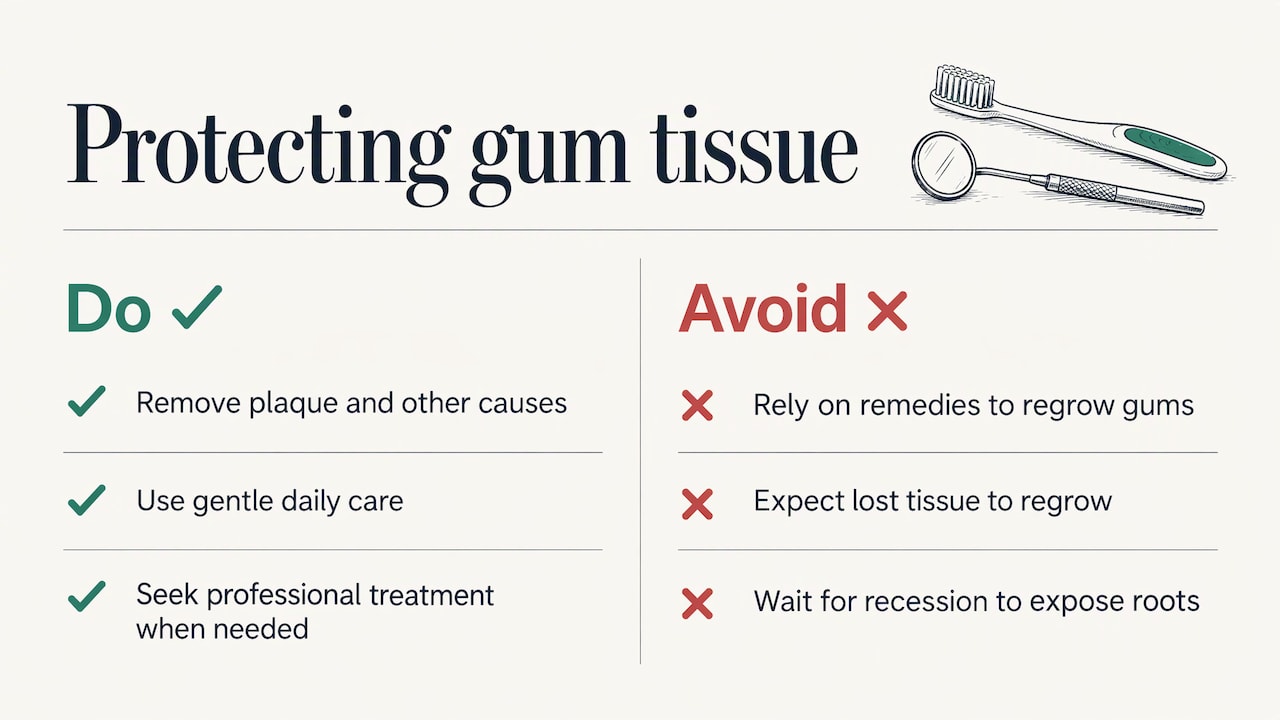
You may come across home remedies, oil pulling or supplements that claim to regrow gums. None of these replaces a clinical assessment, and none can rebuild tissue that has already been lost. What helps is removing the cause: plaque, harsh brushing, grinding. Gentle daily care protects the gum you have, and professional treatment addresses what home care cannot reach.
There is good news on the other end of the disease spectrum. The Canadian Dental Association says gum disease can almost always be prevented, and if it starts, it can be treated and even reversed in its early stages. Early gum inflammation (gingivitis) is far easier to turn around than recession that has already exposed roots, which is the best argument for not waiting.
How to protect receding gums every day
For gum recession, the Alberta Academy of Periodontics states that prevention is the best treatment. These habits do most of the work:
- Switch to a soft-bristled brush. Colgate Canada advises a soft-bristled toothbrush and proper brushing technique to protect receding gums.
- Brush gently, at an angle. Angle the bristles toward the gumline and use small, light strokes. Let the bristles do the cleaning. A brush that frays in a few weeks is a sign of too much pressure.
- Clean between teeth daily. The Canadian Dental Association recommends brushing at least twice a day and flossing at least once a day. Interdental brushes can be easier on some mouths. Ask your hygienist which size fits.
- Wear a night guard if you grind. A professional may recommend a night guard for grinding or clenching, per the same Colgate Canada page.
- Go easy on acid. Frequent acidic drinks soften enamel and make exposed roots more sensitive.
- Quit smoking. It is a modifiable risk factor for recession and gum disease.
- Keep regular exams and cleanings. The CDA suggests regular exams, which for many people means every six months, so small problems are caught early. Your dentist may set a different schedule based on your gum health.
At our clinic, this is the idea behind proactive dentistry: look for the cause of a problem and deal with it before it needs bigger treatment. Our wider preventive and proactive care page shows how the pieces fit together.
Gaps between teeth: when gums are involved and what to do
Many people searching for help with receding gums also notice spaces opening between their teeth. Gaps can appear for several reasons, and the fix depends entirely on which one applies.
Medical News Today lists these among the causes of a gap (diastema):
- Teeth that are small relative to the jawbone
- Missing or undersized teeth
- A large labial frenum, the tissue joining the upper lip to the gum
- Gum disease, where inflammation damages the supporting bone and teeth can loosen and drift
- Habits such as pushing the tongue against the front teeth when swallowing
The gum-related cause matters most for this article. If teeth have moved or opened up in an adult who did not have gaps before, that can point to gum disease and bone loss rather than a cosmetic issue. Closing the gap first, without treating the gums, would mean building on an unstable foundation. A gum assessment comes first.
Once the gums are healthy, there are several ways to close or disguise gaps. The Canadian Dental Association notes that bonding and veneers can improve how teeth look by changing their colour, shape or spacing. In practice:
| Option | Best for | Good to know |
|---|---|---|
| Clear aligners | Gaps caused by tooth position, with healthy gums and bone | Moves the teeth rather than covering the gap. See our clear aligners page |
| Veneers | Gaps along with shape, size or colour concerns | Cosmetic coverage over the front of the teeth. Learn about veneers in Calgary |
| No-prep veneers | Patients who want a minimal-drilling approach | Details on our no-prep veneers page |
| Bonding | Small gaps and quick cosmetic fixes | Tooth-coloured material shaped to close the space |
Aligners are only appropriate when the gum and bone support is sound, so a gum check comes before any orthodontic plan. If you are curious about the look of veneers before committing, our First Look preview lets you see them on your own smile.
When to see a dentist, and when a periodontist
Book a dentist visit if you notice bleeding, sensitivity, visible root, or teeth that look longer or have started to shift. Do not wait for pain, because recession and early gum disease are often painless.
Your dentist will measure how deep the spaces around your teeth are, check the thickness and width of your gum tissue, look at your bite and any grinding wear, and review your brushing and medical history. From there, the plan may involve a deep cleaning, habit changes, a night guard, restorative work, or a referral for grafting. Periodontists, as the Alberta Academy of Periodontics notes, provide deep cleaning below the gumline and typically perform gum graft surgery.
If you have diabetes, smoke, are pregnant or are going through menopause, mention it. These conditions affect gum health and the treatment plan, and your dentist and physician can coordinate.
If you are still choosing a practice, our guide to choosing a family dentist in Calgary covers what to look for.
Perspective: why we treat the cause, not just the gum line
Recession is rarely only a gum problem. When a patient comes to us with sensitive, longer-looking teeth, we want to know why the tissue pulled back: plaque below the gumline, a heavy hand with the toothbrush, clenching at night, thin tissue, or a hormonal change. A treatment that skips the cause tends to leave the patient back in the chair.
That is why our approach is whole-body and evidence-based. We look at the mouth in the context of your general health, your habits and your comfort. We would rather catch recession early, when a thorough cleaning and a few changes at home can steady things, than wait until the options narrow.
We also know that many people put off gum care because dental visits make them anxious, or because they fear being judged about their brushing. Our clinic is built to be judgment-free, and sedation options are available when you want them. Proactive care, regular hygiene visits and clear explanations at every step are how we help patients keep the gums and teeth they have.
Deane
Book a gum assessment in Calgary
If your gums are receding, bleeding or sensitive, a proactive check now can save you from more involved treatment later. At Vigée Dental in Calgary we offer dental hygiene and teeth cleanings, proactive dentistry, sedation dentistry and new patient exams, along with cosmetic options for patients who want to address gaps or uneven gum lines once their gums are healthy. Pricing is not published online, so ask our team about your plan when you book.

Start with our teeth cleanings and dental hygiene page, or visit vigeedental.ca to book an appointment.
FAQ
How do you fix receding gums?
It depends on the cause and severity. Mild recession may be managed with scaling and root planing, better brushing technique and sometimes bonding. Significant recession may be treated with a gum graft, which replaces missing tissue and covers exposed roots. A dental exam is the way to find out which applies to you.
Can I reverse gum recession at home?
No. Gum tissue that has receded does not regenerate, so home care cannot bring it back. What you can do is stop it from getting worse with a soft-bristled brush, gentle technique, daily flossing and regular cleanings. Early gum inflammation, before recession, can be reversed with good care.
Does a gum graft hurt, and is it the only option?
Grafting is surgery performed by a periodontist, and your periodontist will explain what to expect and how to manage recovery. It is not the only option: many cases of mild recession are treated without surgery. Your dentist can help you decide whether a graft is warranted or whether monitoring and a deep cleaning are enough.
What causes gaps between teeth in adults?
Common causes include small teeth relative to the jaw, missing teeth, a large frenum, tongue-thrusting habits and gum disease, which can damage the bone that supports teeth so they drift apart. If gaps appear suddenly, have your gums checked before choosing a cosmetic fix.
How often should I see a dentist if my gums are receding?
Many people are advised to have an exam every six months, but if you have recession or gum disease your dentist may recommend more frequent cleanings or periodontal maintenance visits. Follow the schedule your care team sets for you.
Sources
- Gum Disease, Canadian Dental Association
- Dental Procedures, Canadian Dental Association
- Treatment Procedures, Alberta Academy of Periodontics
- Treatment of Gingival Recession: When and How?, PMC
- Oral Health and Seniors, Ottawa Dental Society
- Receding Gums: Treatment and Causes, Colgate
- Can Receding Gums Grow Back?, Colgate Canada
- The Daily, Statistics Canada
- Diastema: Causes, treatment, and prevention, Medical News Today
Recommended
- Gum Recession: Causes, Signs And Treatment Options
- Periodontal Maintenance: What It Is, What It Includes And How Often
- Bleeding Gums When Brushing: Causes And What To Do
- Scaling And Root Planing: Deep Cleaning Steps And Recovery
- Oral Health and Overall Health: How Your Mouth and Body Are Connected
- Black Triangles Between Teeth: Causes and How to Close Them