
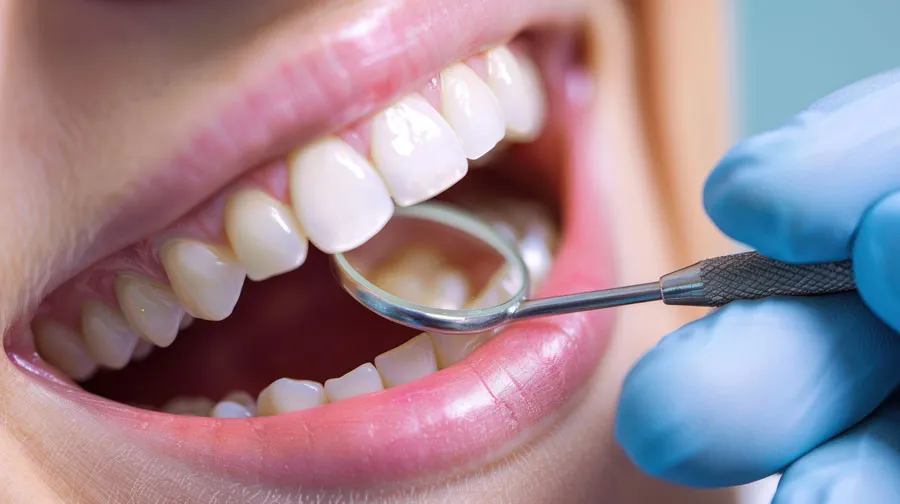
White spots on teeth are patches of enamel that look chalky or opaque because they hold less mineral than the enamel around them, or because the enamel formed differently while the tooth was developing. The common causes are early decay, fluorosis, developmental enamel defects and temporary drying out, and many spots can be made less noticeable once the cause is known.
Some white spots are harmless and purely cosmetic. Others are the very first stage of a cavity, which is worth catching while it can still be reversed.
What white spots on teeth are
Healthy enamel is slightly translucent. When part of it loses mineral or forms with a different structure, it scatters light differently and looks whiter and more matte than the surrounding tooth.
Common causes of white spots
- Demineralization. Bacteria in plaque turn sugars into acid, and the acid draws minerals out of the enamel. The result is a chalky white patch, often along the gumline. A 2022 review in The Open Dentistry Journal describes these white spot lesions as the earliest stage of demineralization on the enamel surface and notes they are common during treatment with fixed braces, because brackets make cleaning harder.
- Fluorosis. Taking in too much fluoride while adult teeth are still forming under the gums can leave faint white lines, streaks or flecks. According to the American Dental Association, the chance of developing fluorosis exists until about age eight, and it is not a disease and does not affect the health of the teeth.
- Enamel hypoplasia and hypomineralization. These are developmental defects where enamel forms thinner or softer than usual. They can be linked to illness or high fevers in early childhood, nutritional problems, premature birth or an injury to a baby tooth that affected the adult tooth underneath. The spots are often well defined and can be cream or yellow brown as well as white.
- Drying out. Teeth can look patchy and bright white after sleeping with your mouth open, after a long dental appointment or straight after whitening. This fades within hours once saliva rehydrates the enamel. If you often wake with a dry mouth, our post on mouth breathing explains why it matters.
How to tell the causes apart
A dentist can usually tell the cause from the look, the location and your history. As a general guide:
| Cause | Typical look | Where it shows up | Can it improve on its own? |
|---|---|---|---|
| Demineralization | Chalky, matte, may feel rough | Along the gumline or where braces brackets sat | Early spots can improve with fluoride and better cleaning |
| Fluorosis | Faint lacy lines, streaks or flecks | Often several teeth, on both sides of the mouth | No, but it is stable and cosmetic |
| Enamel defects | Well defined patches, sometimes cream or brown, occasionally pitted | One or a few teeth | No, and the enamel may be weaker or sensitive |
| Drying out | Bright white, patchy | Anywhere, especially front teeth | Yes, usually within hours |
Do white spots go away?
Some do. Early demineralization has not yet become a hole, so the enamel can take minerals back in from saliva and fluoride. Brushing twice a day with fluoride toothpaste, cleaning well around the gumline and cutting down on how often you sip sugary or acidic drinks all help.
Spots that appear during braces often fade after the brackets come off. The same Open Dentistry Journal review says it is normal for these lesions to regress after treatment, and that if a spot is still prominent around six months later, in-office treatment may be needed.
Fluorosis and developmental defects are part of the enamel structure, so they do not fade with time. They can still be treated cosmetically.
Have a white spot checked if it turns brown, feels rough or soft, catches floss, or becomes sensitive. Those can be signs that early decay is progressing towards a cavity.
Treatment options for white spots
The right option depends on the cause, how deep the spot goes and how much it bothers you.
- Fluoride and remineralization. Professional fluoride varnish and fluoride toothpaste help early demineralization harden and can make it less visible.
- Microabrasion. A dentist gently polishes away a very thin layer of the surface enamel with a mild abrasive paste. It suits shallow spots.
- Resin infiltration. A thin resin is drawn into the porous enamel so it reflects light more like the healthy tooth around it. A 2021 systematic review found it masked white spot lesions and fluorosis more than natural remineralization did, while noting the conclusion rests on only a few well conducted trials.
- Teeth whitening. Whitening lightens the rest of the tooth, which can help some spots blend in. Spots can look brighter for a day or two afterwards, so it is worth an assessment first. Our post on how long teeth whitening lasts covers what to expect.
- Bonding. Tooth coloured composite can cover a spot, sometimes after a small amount of the affected surface is removed. Read more in our guide to composite bonding.
- Veneers. When spots are widespread or deep, porcelain or composite veneers cover the front of the teeth.
Preventing white spots
- Brush twice a day with fluoride toothpaste, paying attention to the gumline.
- Take extra care with braces or aligners. Brush around every bracket, and brush before putting aligners back in so you are not sealing plaque against your teeth.
- Limit sipping. Have sugary or acidic drinks with meals rather than slowly through the day.
- Use the right amount of toothpaste for children. The ADA recommends a smear the size of a grain of rice for children under three and no more than a pea sized amount for ages three to six, with brushing supervised.
- Keep up regular cleanings, since hardened tartar holds plaque against the teeth. Our post on plaque vs tartar explains the difference.
At Vigée Dental, we start by working out what is causing the spots, because that decides which treatment makes sense. Depending on the cause, options can include fluoride varnish at your hygiene appointment, teeth whitening, or composite or porcelain veneers. You can see all our cosmetic dentistry options or book an appointment online.
Frequently asked questions
Are white spots on teeth a cavity?
Some are the earliest stage of decay, before a hole forms, and can often be reversed with fluoride and better cleaning. Others come from fluorosis or how the enamel developed and are not decay at all. A dentist can tell the difference.
Can teeth whitening remove white spots?
Whitening does not usually remove white spots, but by lightening the rest of the tooth it can help them blend in. Spots may look brighter for a short time afterwards, so ask for an assessment before you start.
Why do I have white spots after braces?
Plaque collects around brackets and its acid draws minerals out of the enamel. Many of these spots fade over the months after braces come off. If they are still noticeable around six months later, there are in-office options.
Why are there white spots on my child’s teeth?
Common causes are fluorosis, developmental enamel defects and early decay. It is worth having them checked, and using a rice grain smear of toothpaste under age three and a pea sized amount from three to six.