

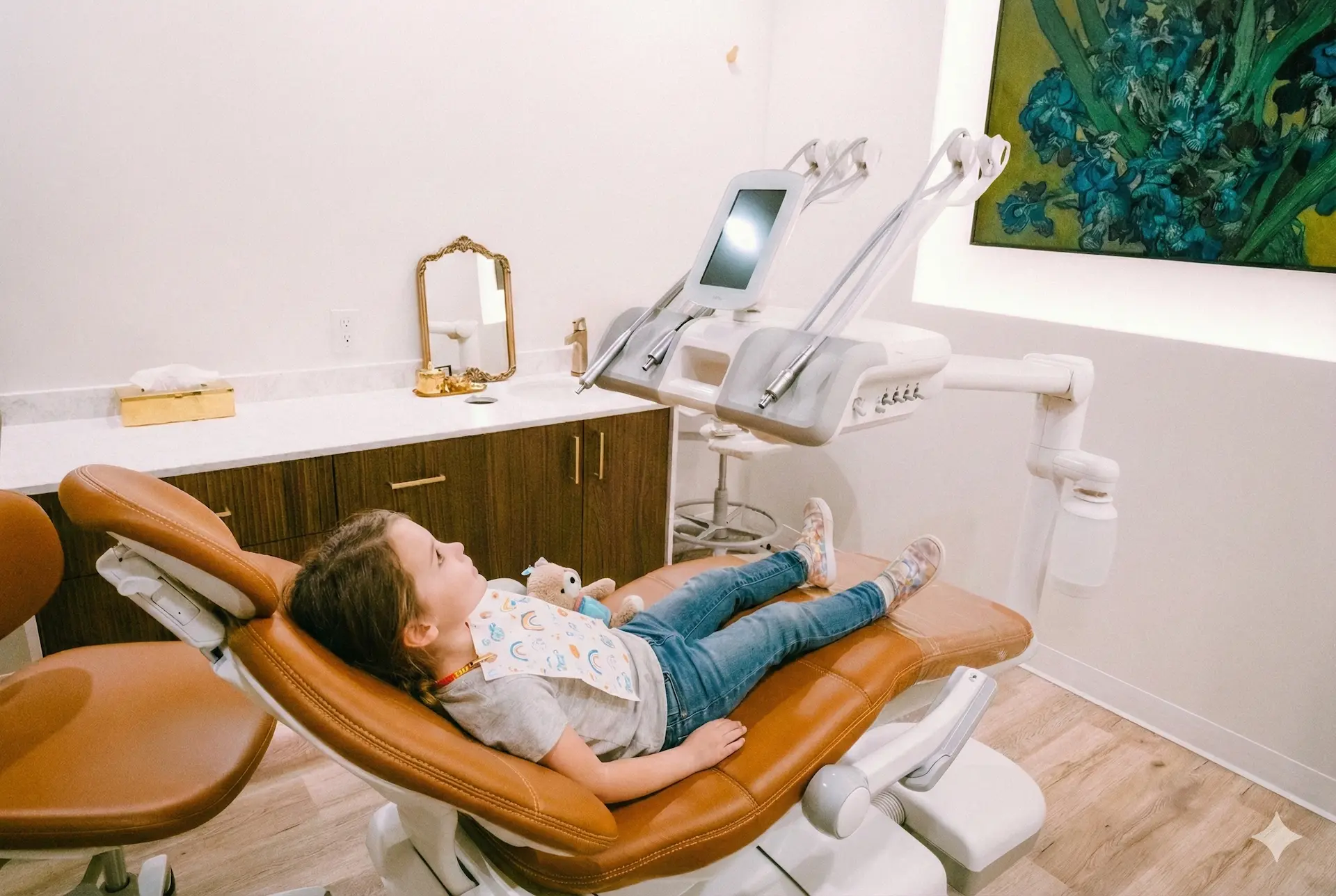
Why Pediatric Care Matters
Prevents cavities and gum problems before they start
Guides jaw and tooth development during rapid growth
Builds confidence with friendly, stress-free visits
Teaches brushing, flossing, and diet habits that last
First Visits and Checkups: Growth and cavity risk assessment, bite evaluation, and home-care coaching.
Cleanings and Polish: Gentle removal of plaque and tartar, plus stain polishing for a fresh feel.
Fluoride Treatments: Strengthen enamel, reduce sensitivity, and lower cavity risk.
Dental Sealants: Thin protective coatings for back molars to block decay in deep grooves.
White Fillings: Tooth-coloured repairs for small to moderate cavities.
Pulp Therapy (Baby Root Canal): Pain-relieving treatment to save an infected baby tooth when appropriate.
Space Maintainers: Hold space after early tooth loss to help adult teeth erupt correctly.
Habit and Ortho Guidance: Thumb or finger habit counselling, early orthodontic screening, and referrals when needed.
Sports Mouthguards: Custom protection for contact and wheeled sports.
Emergency Care: Same-day help for toothaches, chips, knocked-out or displaced teeth, and soft-tissue injuries.
Gentle Behaviour Management: Tell-show-do, positive reinforcement, and short, kid-paced visits. Nitrous oxide is available when appropriate.

Ages and Milestones
Age 1 to 3: First tooth to full baby dentition. Focus on parent coaching, brushing with a rice-sized smear of fluoride toothpaste, and early habit guidance.
Age 4 to 6: Sealants for first adult molars as they erupt, reinforce flossing, and monitor bite.
Age 7 to 9: Orthodontic screening window, hygiene reinforcement, sports mouthguards for active kids.
Age 10 to 13: Second molars, growth changes, and teen-friendly hygiene strategies.
Age 14 to 17: Wisdom tooth monitoring, diet and sports protection, stain management for coffee and braces.
Healthy Habits at Home
Brush twice daily for two minutes with fluoride toothpaste
Rice-sized smear for under 3
Pea-sized amount for ages 3 and up
Floss once a day where teeth touch
Water first, juice and sticky snacks in moderation
Wear a mouthguard for sports
Regular checkups every 6 months, or more often for higher cavity risk

By age 1, or within six months of the first tooth coming in.
Yes. They guide speech, nutrition, and space for adult teeth. Healthy baby teeth reduce future orthodontic and dental problems.
We use digital sensors and take x-rays only when necessary, following age and risk-based guidelines.
We use kid-friendly explanations, short appointments, and positive reinforcement. Nitrous oxide can help some children relax.
Yes. We tailor visits to each child’s sensory and medical needs, coordinate with physicians when needed, and schedule extra time for a calm experience.