

If your mouth started feeling sticky and dry after you began a new prescription, the medicine is a likely suspect. Saliva is your teeth’s main natural defence, so when a medication reduces it, cavities, gum problems and infections become more likely. The good news is that dry mouth is manageable, and the earlier a dental team knows about it, the more it can do to protect your teeth. At Vigée Dental in Calgary, proactive dentistry is built around finding the root cause of a problem rather than only treating its symptoms, and a dry mouth is exactly that kind of problem.
TL;DR
- Medication is the most common cause of dry mouth in older adults, according to the Public Health Agency of Canada, but it affects adults of any age.
- Less saliva means less protection: Alberta Health Services says dry mouth can lead to infections, gum disease and tooth decay over time.
- Do not stop a prescription on your own. Talk to your prescriber about changing the dose, timing or type.
- Sipping water, sugar-free gum, fluoride and more frequent dental visits all help protect your teeth.
- Mouth breathing can add to the dry feeling, especially at night.
Table of Contents
- Why medications dry out your mouth
- Signs your dry mouth may be medication-related
- What dry mouth does to your teeth and gums
- Mouth breathing makes it worse
- Talking to your prescriber
- Daily habits that protect your teeth
- Why a dental team matters here
- Book a dry mouth review in Calgary
- FAQ
- Sources
Why medications dry out your mouth
Dry mouth, called xerostomia, happens when your salivary glands do not make enough saliva. Many medicines interfere with the nerve signals that tell those glands to work. Dental Hygiene Canada lists antianxiety drugs, anticholinergics, anticonvulsants, antidepressants, antihistamines, blood pressure medications, antipsychotics, painkillers, bronchodilators, decongestants, diuretics and sedatives among the types frequently linked to dry mouth. Alberta Health Services names diuretics, antihistamines and decongestants as common examples.
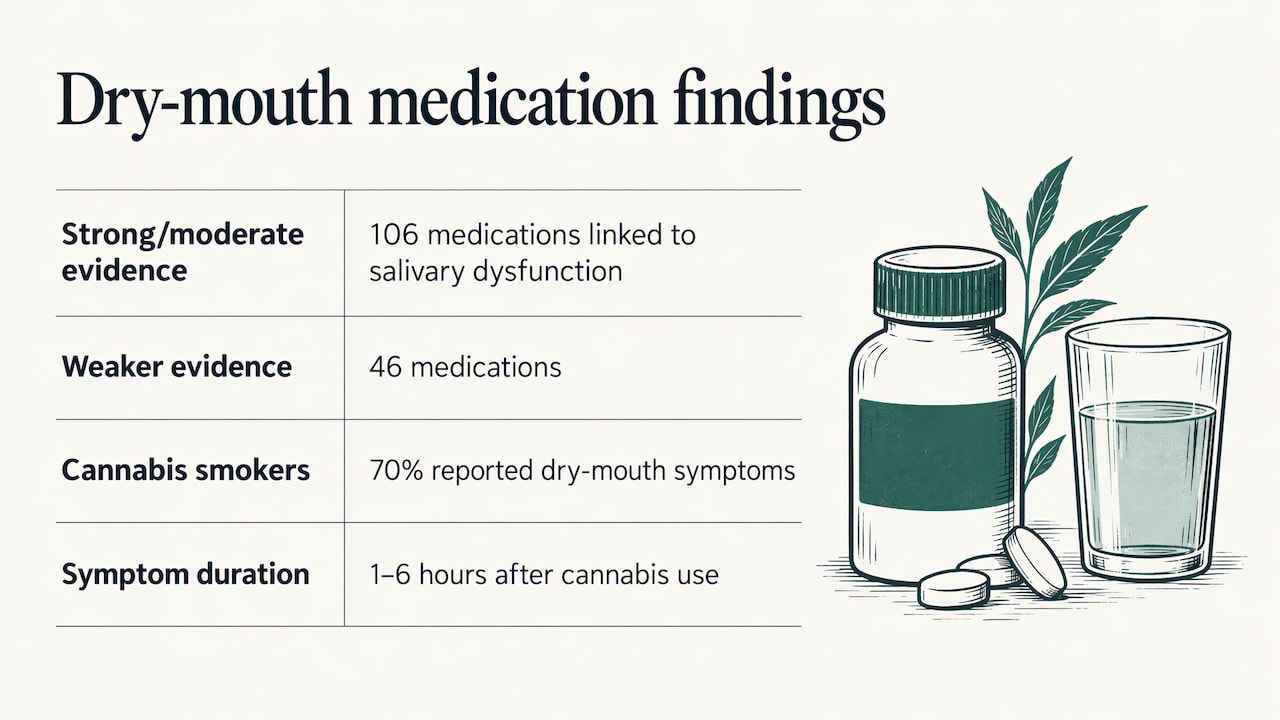
The scale is large. A systematic review summarized by the American Dental Association found 106 medications with strong to moderate evidence of an association with salivary gland dysfunction, plus 46 with weaker evidence. The same page notes that some drugs within a class differ: SSRI antidepressants tend to cause less dry mouth than tricyclic ones. That is a conversation for your prescriber, not a switch to make yourself.
Medication is not the only cause. The Public Health Agency of Canada also lists dehydration, head and neck radiation, Sjögren’s syndrome, smoking (tobacco or cannabis) and alcohol, including alcohol-based mouthwash. A JCDA review reports that in one study 70% of cannabis smokers had dry mouth symptoms starting right after use and lasting one to six hours.
Signs your dry mouth may be medication-related
The Journal of the Canadian Dental Association describes the typical signs:
- a sticky, dry feeling in the mouth and throat
- frequent thirst
- burning or tingling
- trouble speaking, tasting, chewing or swallowing
- bad breath, a sore throat or hoarseness
- cracked lips and split skin at the corners of the mouth
- a dry, red, raw tongue, sometimes with a yeast infection
Timing is your best clue. If the symptoms began or got worse after you started a new medicine, raised a dose or added an over-the-counter allergy or cold product, tell your dentist and your prescriber. The JCDA advises that a dental professional review your full medical history, medications included.
The feeling and the measurement do not always match. The ADA notes that people can report a dry mouth even when measured saliva flow is normal. Veterans Affairs Canada adds that dehydration, mouth breathing, depression and anxiety can add to the sensation even when saliva production is normal. That is why a proper assessment beats guessing.
What dry mouth does to your teeth and gums
Saliva neutralizes acids, rinses away food and keeps the mouth’s bacteria in balance. Without enough of it, Alberta Health Services says the mouth is more prone to infections, gum disease and tooth decay. The JCDA notes that root surface cavities are the most common type in patients with xerostomia, which matters if your gums have started to pull back. Our page on gum recession explains why exposed roots are so vulnerable.
You may also notice:
- Bad breath. Dry mouths cannot wash away odour-causing bacteria. See our guide to bad breath causes.
- Sensitivity and new cavities. If fillings keep appearing, our list of early cavity signs helps you catch them sooner.
- Oral yeast infections. The JCDA lists a red, raw tongue with candida as a common finding, and recommends prompt treatment.
The mouth is part of the body, and a mouth that is chronically dry is worth treating seriously. Our overview of how oral health connects to overall health covers the bigger picture.
Mouth breathing makes it worse
If you wake with a parched mouth, you may be breathing through it at night. An orthodontic continuing-education review reports that mouth breathing is associated with lower resting saliva flow, lower plaque pH, more candida and greater cavity risk. It also describes mouth breathing as a predisposing factor for gum disease, because gum tissue dries out and plaque is cleared less well.
Persistent mouth breathing is often a way of compensating for a blocked nose, and it is linked with sleep-disordered breathing. A 2025 review in Seminars in Orthodontics advises that dental professionals screen adults for signs such as snoring, witnessed pauses in breathing, daytime sleepiness and teeth grinding, and refer higher-risk patients to a sleep physician for testing. If that sounds like you, read how mouth breathing affects your teeth and airway, then mention it at your next visit. A cold-air humidifier can also help people who breathe mainly through the mouth, as the Merck Manual notes.
Talking to your prescriber
Never stop a medication because of dry mouth. Instead, book a conversation. The JCDA advises that when a systemic medication is the cause, the patient is referred to the treating physician to discuss changing or discontinuing it, in favour of one with less drying effect. Alberta Health Services says a doctor may change the type or dose, or prescribe something that helps you make more saliva.
Timing can matter too. The ADA says taking anticholinergic medications during the day in divided doses rather than in one large dose at night may reduce symptoms. The Merck Manual adds that night-time dryness is more likely to cause cavities. Ask your prescriber whether a schedule change is possible for your medicine.
Two prescription saliva stimulants, pilocarpine and cevimeline, are approved in Canada, according to a University of New Brunswick review. Whether they suit you is a decision for your physician.
Daily habits that protect your teeth
Alberta Health Services recommends:
- Take frequent sips of liquid. Water is best.
- Suck on ice chips or sugar-free candy, or chew sugar-free gum.
- Avoid spicy or salty foods, caffeine, tobacco and alcohol.
- Brush twice a day and floss daily.
- Try an over-the-counter saliva substitute.
Its oral care guideline also advises against sipping fruit juice, soft drinks or flavoured water, because acidity worsens enamel erosion. If you chew xylitol gum, a JCDA patient handout suggests keeping to no more than 10 to 12 grams of xylitol a day, since more may cause diarrhea. Use alcohol-free mouthrinses, as alcohol dries the mouth further.
Fluoride does the heavy lifting
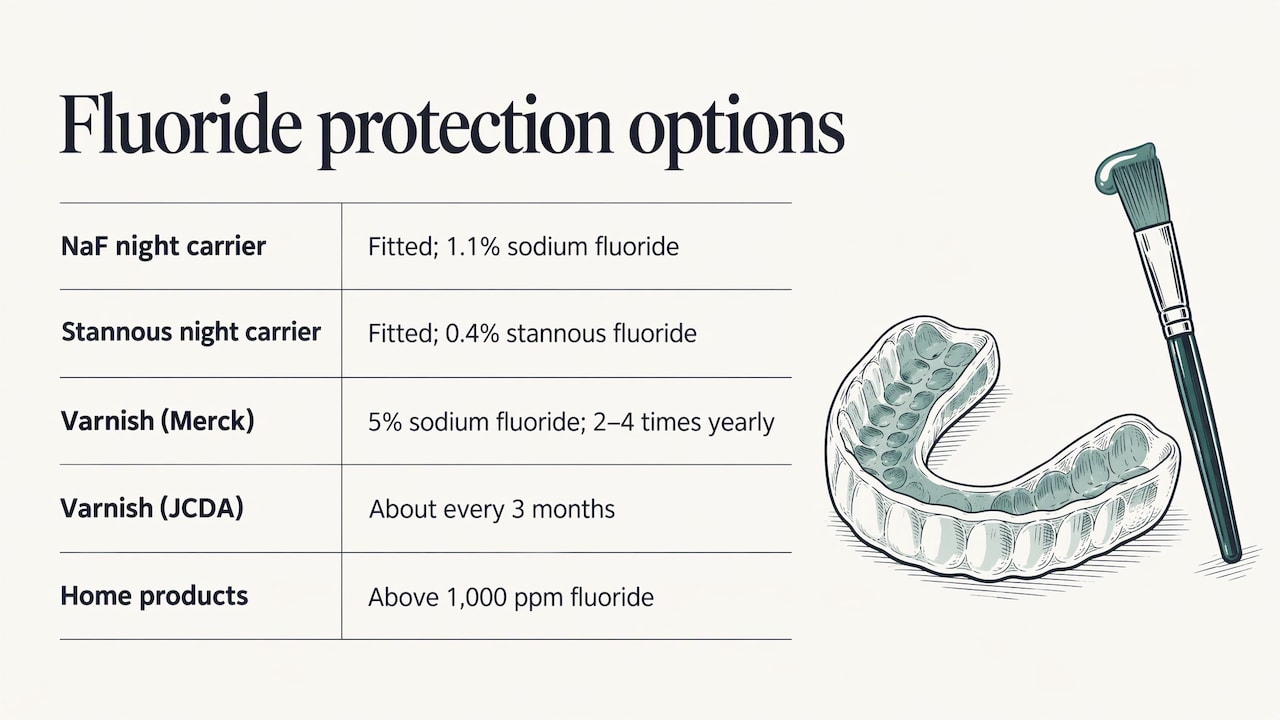
Fluoride is the core of dental protection when saliva is low. The Merck Manual describes sleeping with individually fitted carriers containing 1.1% sodium fluoride or 0.4% stannous fluoride as the most effective way to prevent cavities, and says a dentist can apply 5% sodium fluoride varnish two to four times a year. The JCDA handout suggests professional varnish about every three months, or more often if your dentist recommends, along with home products above 1,000 ppm fluoride. Your dentist will set the right plan for your risk level.
Why a dental team matters here
Dry mouth is rarely solved by one product. It takes a review of your medications, your habits, your breathing and your teeth, followed by regular monitoring. Dental Hygiene Canada calls for comprehensive medical histories and individualized care rather than a one-size-fits-all approach, and says plaque control and topical fluoride are central for people at cavity risk. The ADA suggests dental visits at least twice a year for people with dry mouth, with yearly bitewing X-rays.
Our perspective
We see dry mouth as a root-cause problem. A medication, a blocked nose, a habit or a dehydrated routine is usually behind it, and treating only the dry feeling leaves your teeth exposed. Our approach is whole-body and evidence-based: we start by understanding your health history, including what you take, and build a personalized plan around it.
For patients who feel anxious about dental visits, a dry, sensitive mouth can make appointments uncomfortable. We offer sedation options and a judgment-free environment, so you can get the cleanings, fluoride care and checkups that protect your teeth without dreading them.
If you are planning cosmetic work such as veneers, tell us about your dry mouth first. A healthy, well-protected foundation is what makes a smile last.
Deane
Book a dry mouth review in Calgary
If you take a medication that dries your mouth, a preventive visit is the practical next step. Our team at Vigée Dental offers a new patient exam, dental hygiene and teeth cleanings, and proactive care in Calgary, all aimed at spotting problems early. You can learn more about our preventive and proactive care or book through our site.

For gum health that has already been affected, our periodontal maintenance page explains what ongoing care includes.
FAQ
Which medications most often cause dry mouth?
Antihistamines, decongestants, antidepressants, antipsychotics, blood pressure drugs, diuretics, painkillers and sedatives are all commonly linked to it. The reaction varies by person and dose. Your pharmacist or prescriber can tell you whether your specific medicine is a likely contributor.
Can dry mouth damage my teeth?
Yes, over time. With less saliva to neutralize acid and rinse the mouth, decay, gum disease and infections become more likely. Regular checkups, fluoride and good home care lower that risk.
Does mouth breathing cause dry mouth?
It can add to it, particularly overnight, and it is associated with lower resting saliva flow and higher cavity risk. If you breathe through your mouth most of the time, have it assessed, since a blocked nose or sleep-disordered breathing may be involved.
How can I increase saliva naturally?
Frequent sips of water, sugar-free gum or lozenges and ice chips are the first steps Alberta Health Services recommends. Avoid caffeine, tobacco and alcohol. If your mouth stays dry, ask your dentist and prescriber about further options.
Sources
- Oral health for seniors, Public Health Agency of Canada
- Dry Mouth: Care Instructions, Alberta Health Services
- Xerostomia, Dental Hygiene Canada
- Xerostomia (Dry Mouth), American Dental Association
- Oral Health in the Age of Cannabis, JCDA
- How do I Manage a Patient with Xerostomia/Dry Mouth?, JCDA
- Salivary Gland Hypofunction Disorder (Xerostomia), Veterans Affairs Canada
- Mouth breathing, affecting all ages
- Screening sleep-disordered breathing, Seminars in Orthodontics
- Xerostomia, Merck Manual Professional Edition
- Management of drug induced xerostomia in older adults, University of New Brunswick
- Symptom Management Summary: Oral Care, Alberta Health Services
- Handout About Dry Mouth, JCDA