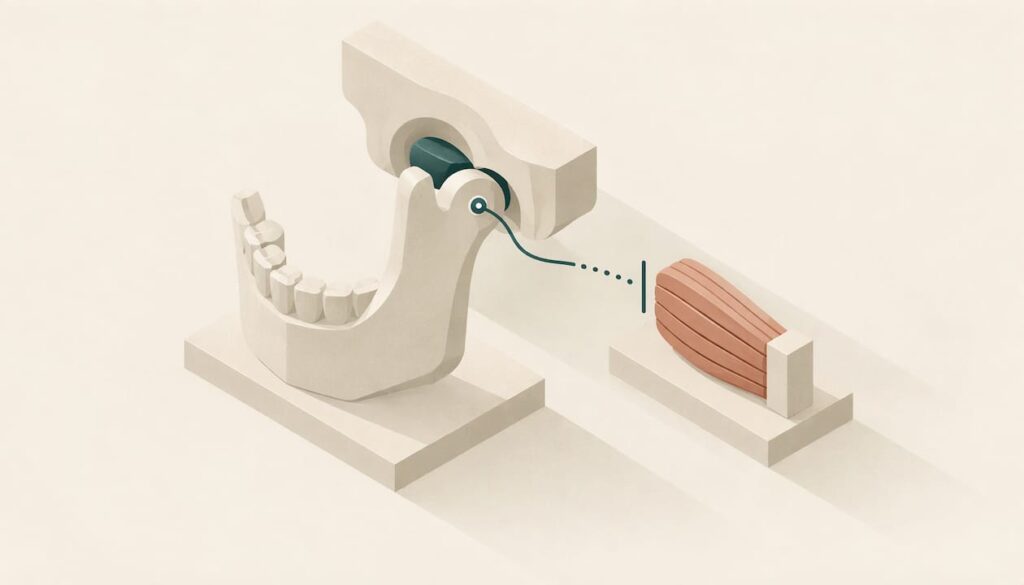
TMJ Botox is a treatment in which a small amount of botulinum toxin is injected into the jaw muscles that do the clenching, so they relax and stop overworking. People usually look into it for jaw pain, tight muscles, headaches and teeth grinding that have not settled with other care. It is a short appointment, and the effect is temporary and wears off gradually over the following months. At Vigée Dental in Calgary, we offer TMJ and masseter Botox as part of a wider look at why your jaw is overloaded in the first place.
TL;DR
- TMJ Botox relaxes the jaw muscles (mainly the masseter and often the temporalis) by blocking the nerve signals that tell them to contract.
- It is often considered when other conservative care has not given enough relief, and it works best when the cause of the clenching is assessed first.
- Treatment is a series of small injections with a fine needle. Movement starts to return from about 8 to 12 weeks, and this varies from person to person.
- Common side effects are mild and temporary: tenderness, bruising, swelling, and occasionally headache or a change in how your smile looks.
- Only a trained, regulated provider using a Health Canada authorized product should inject you. Ask about the product and who will treat you.
Table of Contents
- What TMJ Botox actually is
- Symptoms TMJ Botox is used for
- How Botox relaxes the jaw
- What happens at an appointment
- How soon it works and how long it lasts
- Is TMJ Botox safe? Side effects and who should wait
- Why dentists are well placed to treat TMJ problems
- Botox is one part of TMJ care
- Can stress cause TMJ symptoms?
- Other uses of Botox that sit near TMJ care
- A perspective from our team
- Treating TMJ with Botox in Calgary
- What to do before and after your appointment
- FAQ
- Sources
What TMJ Botox actually is
TMJ stands for temporomandibular joint, the hinge on each side of your face where the lower jaw meets the skull. When people say “TMJ” they usually mean a temporomandibular disorder (TMD): pain or dysfunction in the joint, the muscles around it, or both. Cedars-Sinai describes TMD as a group of conditions affecting the jaw muscles, the joints and the nerves linked to facial pain, with symptoms such as jaw soreness, clicking or popping, locking, and clenching or grinding.
TMJ Botox means injecting botulinum toxin into the jaw muscles to temporarily reduce nerve signaling. According to Cleveland Clinic, this relaxes hyperactive muscles and may relieve jaw pain, grinding (bruxism) and clenching. It is often considered a supplemental therapy for people who have not found relief with other conservative treatments.
The same injection sites are used for what many people call masseter Botox, which is also used to soften a square or heavy jawline. The goal is what differs. For a therapeutic treatment, the aim is comfort and less muscle strain. We cover both on our Botox page.
Symptoms TMJ Botox is used for
Botox does not treat every jaw problem. It is aimed at problems driven by overactive muscles. Typical reasons patients ask about it:
- Jaw pain or tightness, often worst in the morning or late in the day
- Clenching or grinding, especially during sleep
- Tension headaches around the temples
- Muscle fatigue when chewing
- Worn or chipped teeth from grinding
Clicking, popping and locking can come from the joint itself rather than the muscle, so they need a proper assessment before anyone decides injections are the right tool. Our guide to TMJ symptoms: jaw pain, clicking and headaches explains how to tell the patterns apart.
If grinding is your main concern, our page on Botox for teeth grinding goes into how it works and how long it lasts.
How Botox relaxes the jaw
Muscles contract when nerves send them a signal. Botulinum toxin interrupts that signal at the point where nerve meets muscle. The Royal Free NHS patient leaflet explains that neurotoxins temporarily relax muscles by blocking nerve signals, and that small quantities are injected into the muscles with a fine needle.
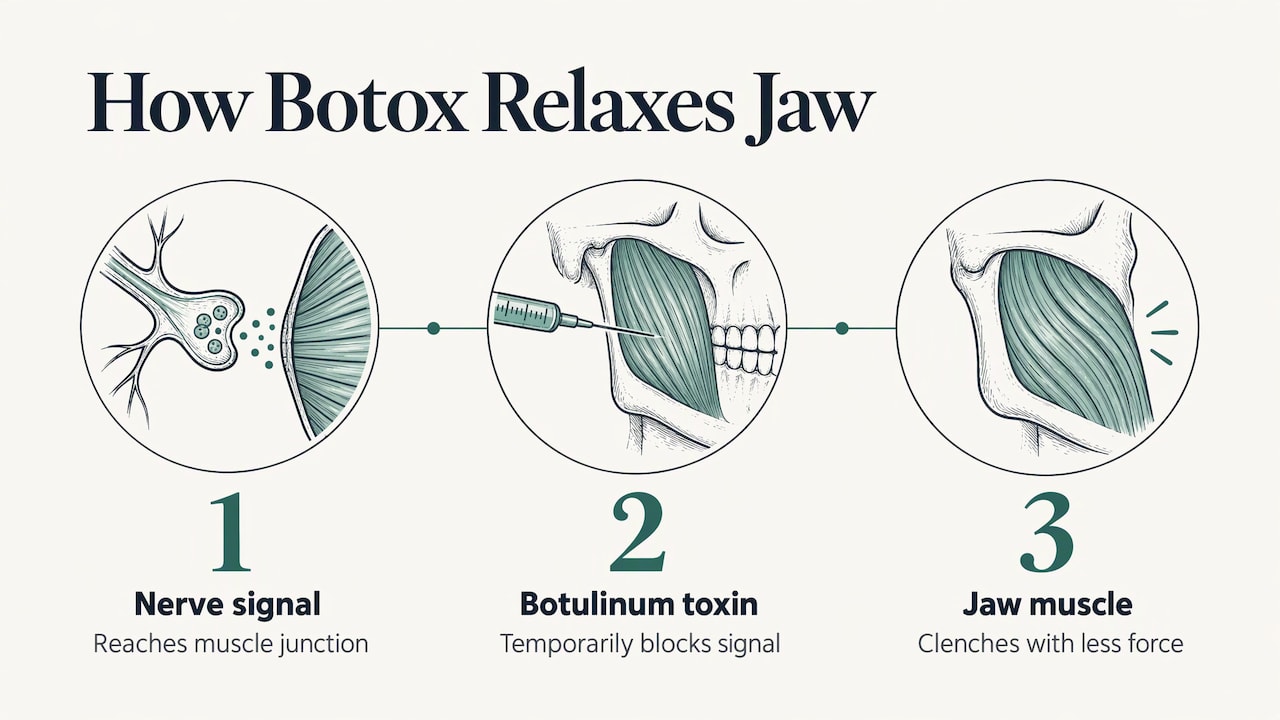
When the masseter and related muscles can no longer clench at full strength, the load on the joint and on your teeth drops. The muscle is still there and you can still chew and speak. It simply cannot squeeze as hard for a while.
What happens at an appointment
A well-run TMJ Botox visit follows a predictable order:
- Assessment. We review your symptoms, health history and medications, feel the jaw muscles, check how your jaw opens and closes, and look at your teeth for signs of wear.
- Planning. We identify which muscles are overworking and map the injection points. Muscle size and clenching pattern differ between people, so the plan is individual.
- Injections. Small amounts are placed with a fine needle. The injections themselves take only minutes.
- Aftercare. You go home with instructions and can usually return to normal activity.
Do not massage or rub the treated areas for up to 48 hours, because this can move the Botox and lessen its effect. We will go through the rest of the aftercare at your visit.
How soon it works and how long it lasts
Botox is not instant. Most people notice the muscles easing over the first days to weeks as the toxin takes full effect. It is also not permanent. The Royal Free leaflet notes that movement begins to return from 8 to 12 weeks, though this varies by individual.
Because results fade gradually, many patients plan repeat visits at intervals that suit how their symptoms behave. We set that rhythm with you after seeing how you respond, rather than on a fixed schedule.
One thing to keep in mind about timing: clinical guidelines define chronic TMD pain as pain lasting three months or longer, and the same guideline panel stresses that recommendations for chronic pain do not apply to acute cases. If your pain is recent or sudden, see a dentist or physician for a diagnosis first, so you know what you are treating.
Is TMJ Botox safe? Side effects and who should wait
When it is given by a trained provider, TMJ Botox has a well-understood side effect profile. The Royal Free leaflet lists temporary tenderness, bruising, swelling, mild headaches, and facial weakness or asymmetry. It also says to contact your provider if you have difficulty swallowing. If you notice that, call the clinic or seek medical care promptly.
For a deeper look at what to watch for after masseter injections, this guide to masseter Botox risks and warning signs covers adverse effects and the reasons someone may not be a suitable candidate.
Who should not have Botox
Hospital guidance lists these common contraindications: pregnancy, breastfeeding, a known allergy to botulinum toxin, and neuromuscular disorders such as myasthenia gravis. Tell your provider about all of these, and about any medication you take, before any injection. If you have a neuromuscular condition, speak to your physician before booking.
Check the product and the provider
Health Canada has warned that unauthorized injectable health products can pose serious health risks and advises checking for a DIN or NPN number before treatment. It also says authorized botulinum toxin type A products should be used under specialist supervision when the benefits outweigh the risks. In practice, that means two questions are always fair to ask any clinic: which product is being used, and who is placing the injections.
The jaw is also a place where anatomy matters. Good injection technique depends on knowing where the masseter and temporalis sit and how they work together. That is a natural fit for dental professionals, who study the bite, the joint and the facial muscles every day.
Why dentists are well placed to treat TMJ problems
Jaw muscles do not work in isolation from your teeth. How your teeth meet, whether you grind at night, and how worn your enamel looks all tell a story about where the strain is coming from. A dental team can look at the muscles, the joint and the bite in one visit, and can follow up on dental damage caused by grinding.
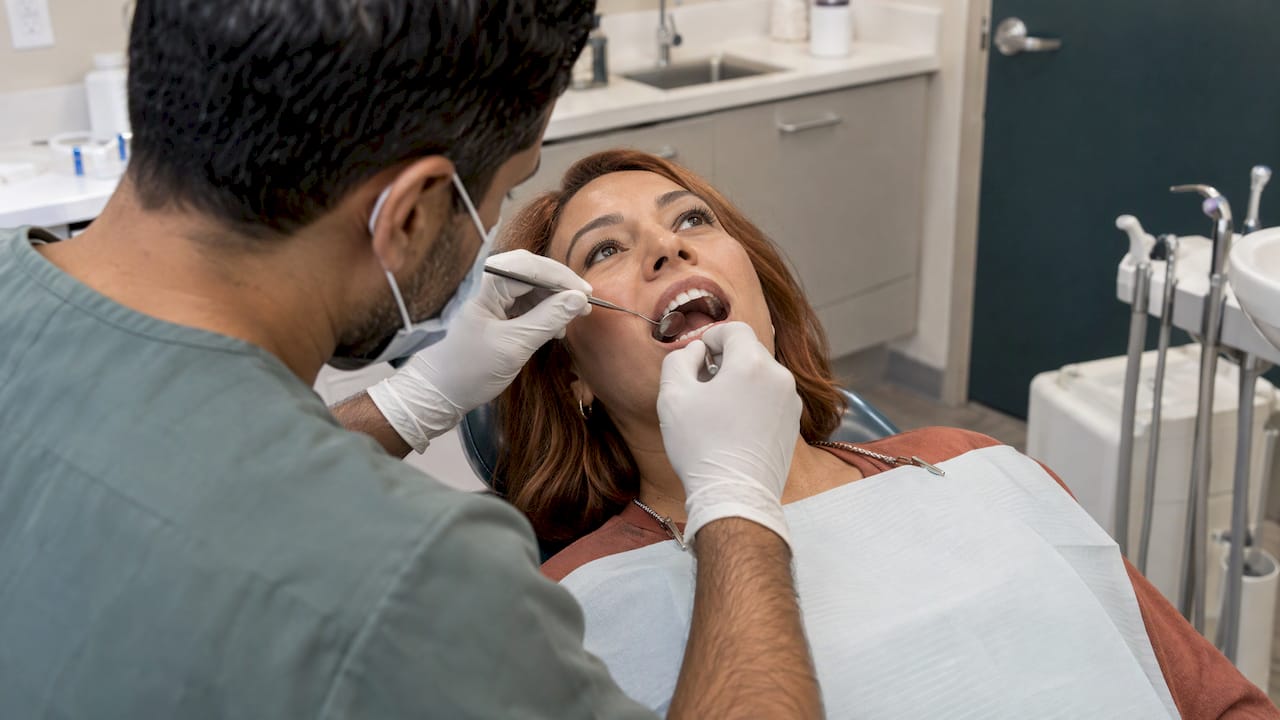
That is the idea behind the way we work. Botox can relieve the muscle overactivity, and we also look at why the muscles are overworking.
Botox is one part of TMJ care
Botox rarely needs to be the whole plan. The 2023 guideline on chronic TMD pain strongly recommends cognitive behavioral therapy, supervised jaw exercise and stretching, and supervised postural exercise. The same guideline lists usual care such as home exercises, stretching, reassurance and education.
Here is how these pieces can fit together:
| Approach | What it does | How it can pair with Botox |
|---|---|---|
| Botox injections | Temporarily relaxes overactive jaw muscles | Lowers the muscle load while other habits change |
| Jaw exercises and stretching | Improves movement and reduces stiffness | Often easier to do comfortably once muscles are relaxed |
| Posture work | Reduces neck and shoulder strain that feeds jaw tension | Helps results last |
| Stress management or CBT | Targets the clenching habit itself | Addresses the driver rather than the symptom |
| Myofunctional therapy | Retrains tongue, lip and jaw patterns | Supports a calmer resting jaw position (see our guide) |
| Dental protection and restorative care | Protects or repairs worn teeth | Treats the damage that grinding has caused |
If you grind at night and your teeth show wear, ask us about restorative dentistry as well, so the damage is repaired while the cause is managed.
Can stress cause TMJ symptoms?
It can contribute. Cedars-Sinai notes that the habitual, involuntary clenching or grinding of teeth is one cause of TMD, and lists relaxation methods and stress management among the usual self-care steps, alongside changing clenching behaviors and eating softer foods to rest the jaw. Many people notice their jaw tightens during busy weeks, long screen days or poor sleep.
That is why a good plan looks beyond the injection. Notice when you clench: while concentrating, while driving, while reading email. Keep your lips together and teeth slightly apart at rest. Those small habits make the effect of treatment easier to keep.
Other uses of Botox that sit near TMJ care
The muscles of the head, neck and jaw are connected, and some patients come to us with more than one concern. We also offer Botox for migraines, trap Botox for tension in the trapezius, and gummy smile Botox. If you are curious about softening lines as well, see cosmetic Botox. Each has its own assessment, and we will tell you honestly which treatment suits which concern.
A perspective from our team
We see jaw tension every week, and it rarely starts in the jaw. It often begins with stress, sleep, a bite that does not sit comfortably, or a habit the patient has carried for years without noticing.
That is why we approach TMJ care as part of whole-body dentistry. A dentist can look at your teeth, your muscles and your joint together, and that is a real advantage when you are deciding whether Botox makes sense. We aim to address root causes, not only symptoms, and Botox can be a very effective part of that when the muscles are the problem.
We also know that many people feel anxious about injections. Our team works in a judgment-free way, explains each step before it happens, and can talk to you about comfort options. You set the pace.
Deane
Treating TMJ with Botox in Calgary
At Vigée Dental, TMJ and masseter Botox is part of our therapeutic Botox services, offered in the same clinic where you can have your teeth, bite and gums assessed. Your first visit is about understanding what is behind your symptoms, then deciding together whether Botox, other care or a combination is right for you.
If you live in Calgary and your jaw has been sore, tight or noisy, you can read more on our TMJ Botox page or get in touch through our main site to book a visit.

A new patient exam is a good place to start if you are not sure whether your symptoms are muscle, joint or tooth related. For more reading, our dental health blog covers related topics.
What to do before and after your appointment
A little preparation makes the visit smoother:
- Write down when your jaw hurts, what you were doing, and whether you wake with a sore jaw or headache.
- List medications, supplements and any neuromuscular or allergy history.
- Tell us if you are pregnant, planning pregnancy or breastfeeding.
- Mention any past Botox treatments and how long they lasted.
Afterward, avoid rubbing or massaging the treated area for 48 hours. Give it a few weeks before judging the full result. If something feels wrong, such as trouble swallowing, contact us or seek medical care right away.
FAQ
What is TMJ Botox?
TMJ Botox is an injection of botulinum toxin into the jaw muscles, usually the masseter and sometimes the temporalis. It temporarily reduces nerve signals so the muscles relax. Patients typically consider it for jaw pain, clenching, grinding and tension headaches.
How long does TMJ Botox last?
Movement usually begins to return from about 8 to 12 weeks, and this varies by person. Because the effect fades gradually, we discuss a repeat schedule with you after seeing how you respond.
Does TMJ Botox hurt?
Most people describe it as a quick pinch from a fine needle, with some tenderness afterward. Minor bruising and swelling can happen and settle on their own. If you are nervous about needles, tell us beforehand and we will talk through options for keeping you comfortable.
Can stress cause TMJ?
Stress can contribute, mainly through clenching and grinding, which overload the jaw muscles. Relaxation methods and stress management are standard parts of TMD self-care. We look at both the muscle and the habit behind it.
Is Botox the only treatment for TMJ?
No. Guidelines support exercise, stretching, posture work and cognitive behavioral therapy, and dental care can protect or repair teeth. Botox is often used alongside these when muscle overactivity is a main driver.
Sources
- Botox for TMJ: What To Expect, Cleveland Clinic
- Neurotoxin for treatment of temporomandibular joint dysfunction, Royal Free NHS
- Management of chronic pain associated with temporomandibular disorders, clinical guideline
- Unauthorized injectable health products, Health Canada
- Having botulinum toxin A in the facial muscles, Leicester’s Hospitals
- Temporomandibular Disorders (TMD), Cedars-Sinai